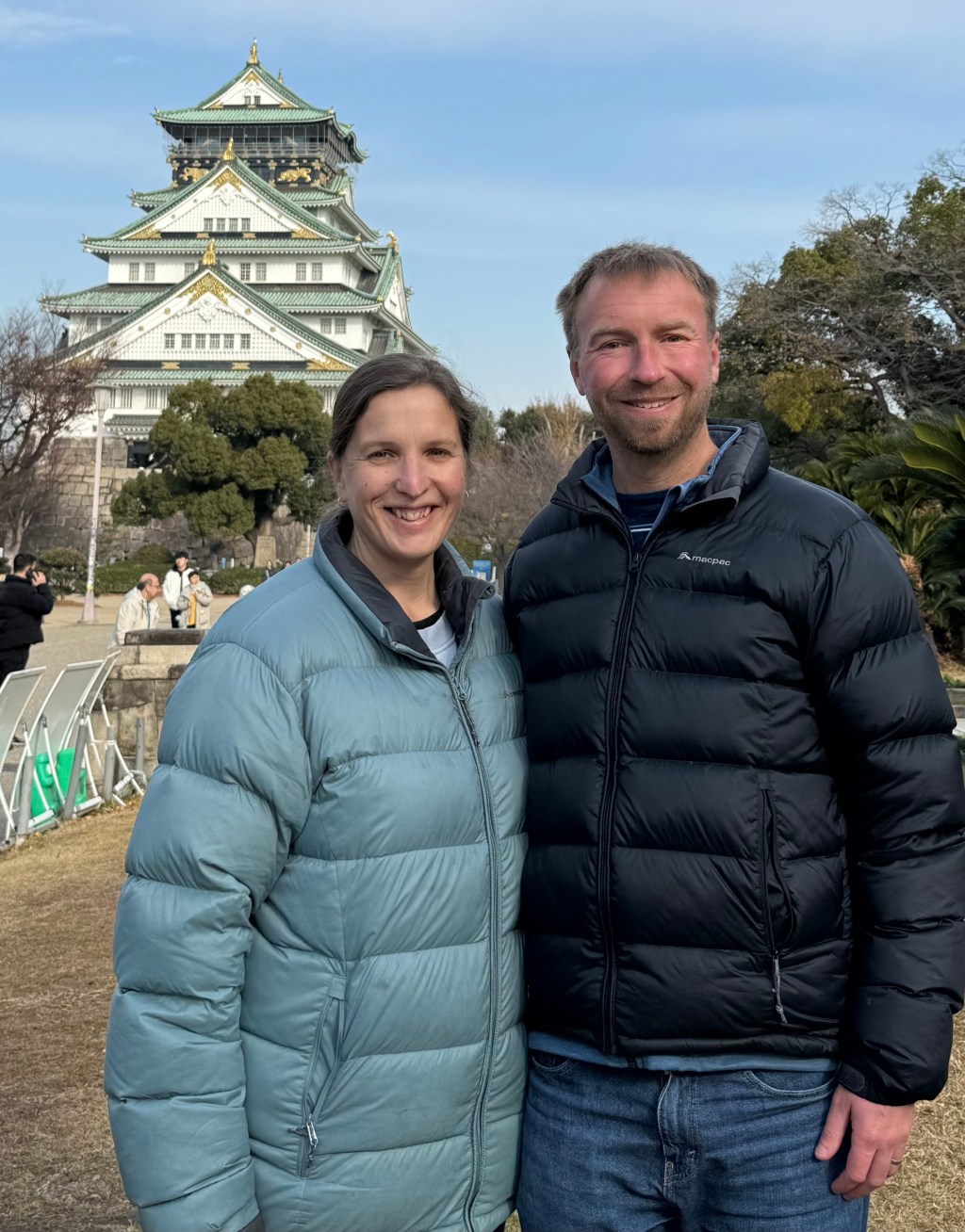
13 December 2025
We are off to Osaka today. Lisa was concerned about us taking our bags on the metro considering how busy it has been at times so we took an Uber to the train station. Wow – best Uber ever! The seats were like business class on a plane with heating, reclining controls and everything. It was interesting seeing Tokyo from the perspective of a car – very easy to get around and not a lot of traffic on the road.
The bullet train was fast and efficient if a bit soulless. We didn’t get any drinks or snacks before boarding as I assured Lisa there would be a dining car of some kind or at least vending machines onboard. There was not. For a country that has one vending machine per thirty people it seems insane there was none on a 2.5 hour train where you have a captive market.
The Osaka train station was nuts but thankfully we managed to get a seat on the metro to our hotel. We are staying in the main Osaka city centre and we wandered along the wide and very fancy main street. It reminded me of Champs Elysees in Paris with many of the same upmarket shops. Our hotel was a block and half away from the Fendi store on the main drag. It isn’t as nice as the one in Tokyo but it will be sufficient.
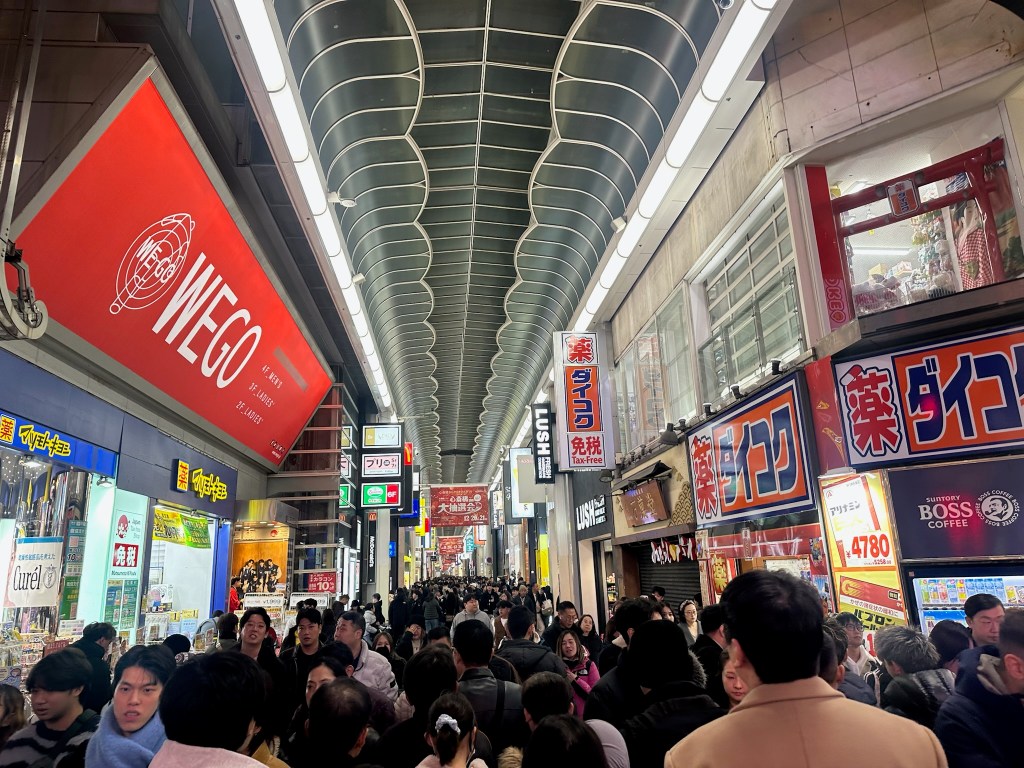
We then headed out to explore. Everything was very busy because it is a Saturday. It feels very vibrant and exciting with massive crowds, big screens and much to look at. There was a long covered shopping street that ran parallel to the Main Street. It was filled with an array of known and unknown shops – and packed with crowds. We slowly wandered our way along. We went into a pachinko parlour (after reading the book and watching the TV show it had been something on our list). Times have clearly changed since the show as it was filled with machines with videos on them. And it was loud! We tried not to stare and it was hard to work out what was going on. It wasn’t clear how to get started so we didn’t end up playing. It certainly had a casino like feel with the lack of natural light, loud noises, bright screens and sleep deprived, desperate looking people.
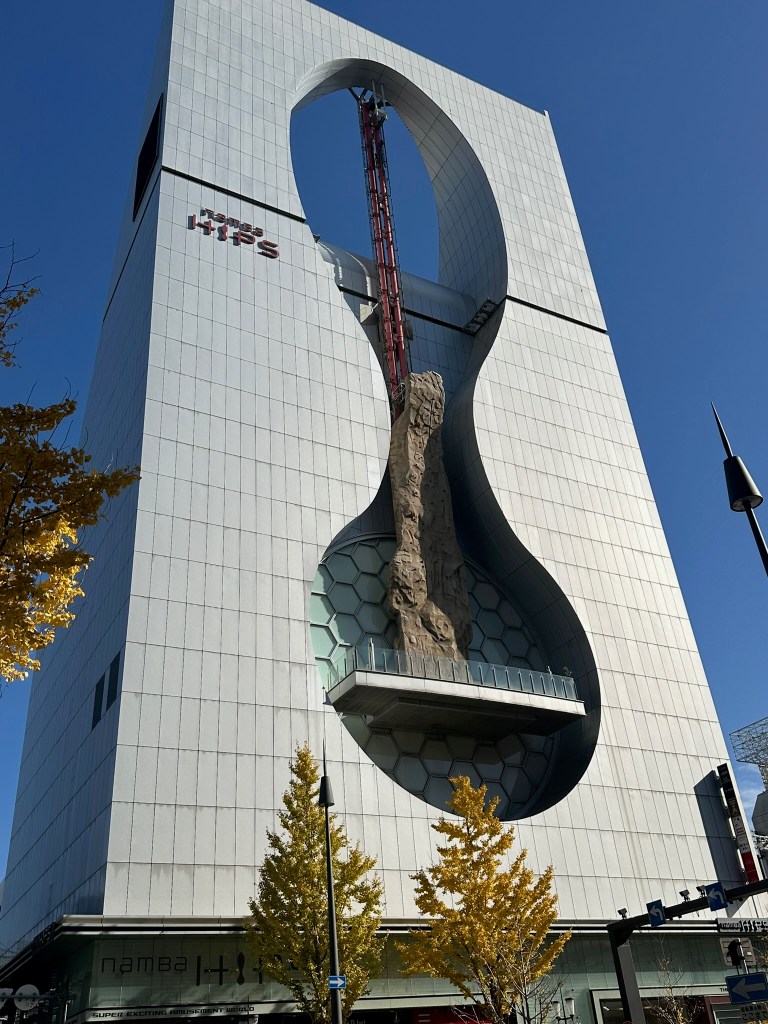
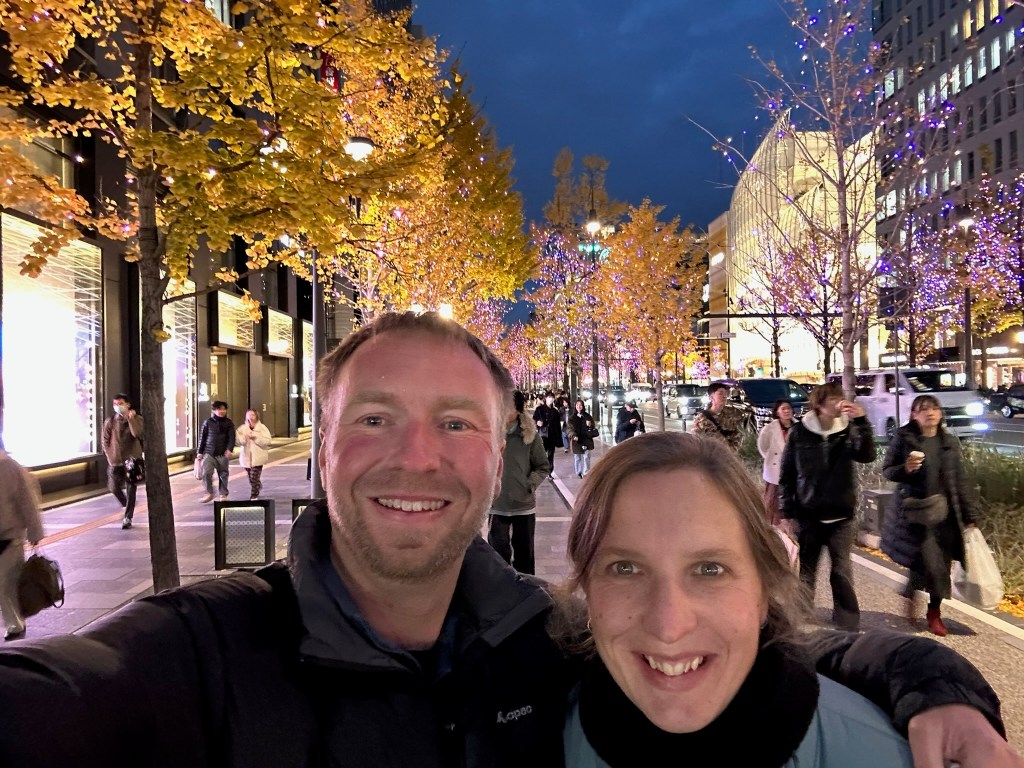
After a bit of a rest at the hotel we headed out to a British bar for a beer. Japan didn’t really do the bar culture quite the same as home and so a British pub felt like a good idea.
For dinner we went to a grill place that Lisa had found while searching for somewhere that satisfied both our requirements (Japanese for me and western for Lisa). It achieved this as I had Japanese beef steak and Lisa had a pizza. After paying we realised the charge was too high and after a quick conversation with the staff and a few apologies we were refunded and charged the correct amount.
The city seemed even more vibrant and manic at night than during the day. Thousands of people out and about including party boats going up and down the canals. They were playing loud music and there were people on board but it didn’t seem like there was a lot of partying going on!
14 December 2025
Sleep in today as the city doesn’t get going early in the morning. Lisa had been very excited for soufflé pancakes and talking about them ever since we started planning the trip. We walked to Elk cafe and had some pancakes with strawberry and cream – I have to admit it was pretty good!

We then met up with our guide German for our highlights of Osaka walking tour. German (said as Herman) was originally from Argentina but had lived in Christchurch near the mosque so he would have been living in the same vicinity as us when we were at Brockworth Place – such a small world! We had a group with a few Americans, a couples of Israelis and one Turkish guy who kept answering questions (wrongly) which annoyed Lisa to me: “He is not the guide. Shut your mouth bro.”
- Osaka used to be the capital of Japan but after different transitions of power and battles it was moved by a new emperor to Tokyo. This pissed off the Osaka people and so there has been a rivalry between the cities ever since.
- Osaka has a very different vibe to it than Tokyo. It is grittier – there is graffiti, people don’t always follow the rules (within the confines of Japanese society) and there is a sense of more vibrancy and excitement.
- In the rest of Japan people stand on the left on escalators. However, in Osaka they stand on the right. It was changed during the 1970s for the World Expo and was meant to change back after the expo ended – never happened.
- There is a cool American neighbourhood that used to play American music and sell American fashion back in the 1970s when that was very different for Japan. This neighbourhood still has trendy shops and thrift stores with clothes from overseas. People hang out there if they are a bit unusual or counter culture. Some people even smoke in non designated areas and rode skateboards – strangely this was right next to a police station so I don’t think this is getting policed that hard.
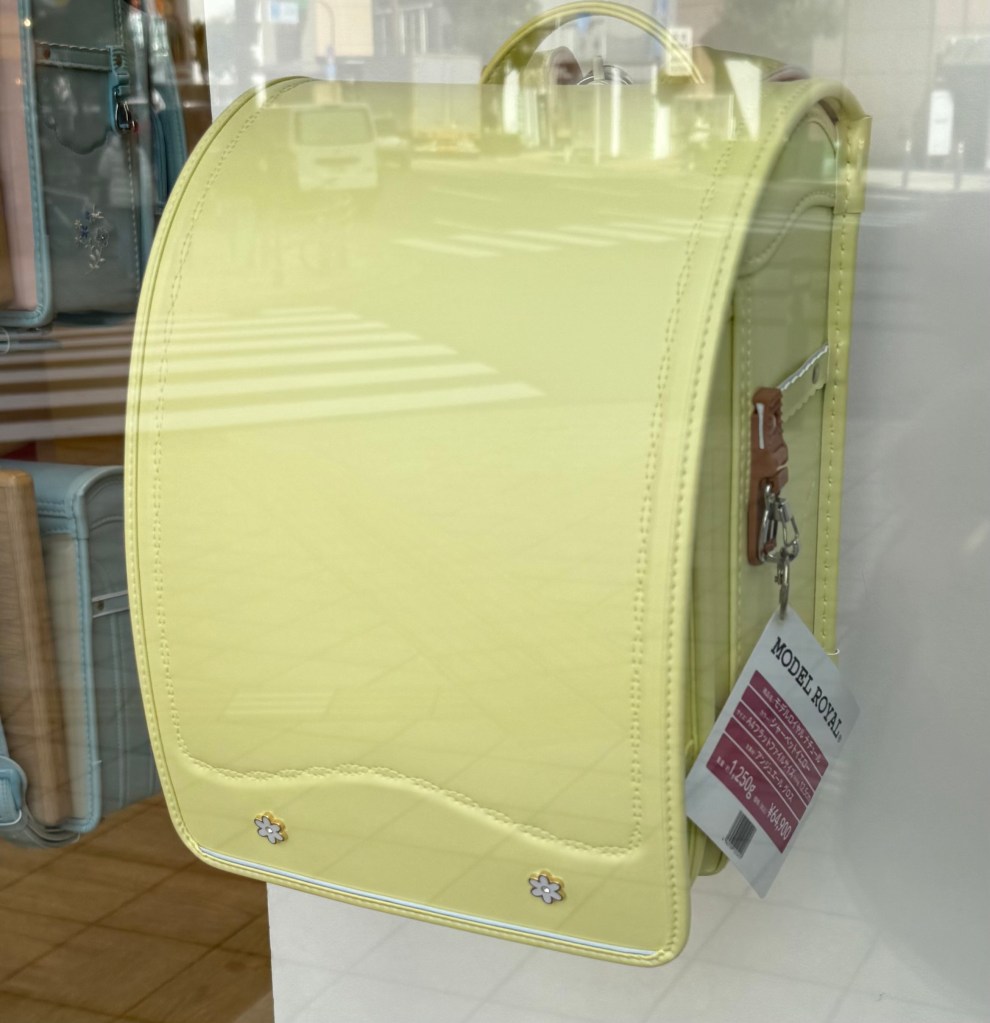
- Children in Japan all get the same basic design for their elementary school backpack. This was based on the design for Dutch soldiers’ backpacks as the Dutch still had some contact during Japan’s isolation years. The backpacks are well made and last throughout their elementary schooling. They can also double as head protection in the case of an earthquake and if a child falls over backwards (which apparently happens a lot) then the backpack will protect them. They are also very expensive, about NZ$600 and selecting one is a big coming of age movement for the child and their family.
- Osaka is known for its comedy with most Japanese comedians coming from the area. There were two guys standing under a bridge chatting and German said they were practicing their comedy as it was good to do that outside. We didn’t get to hear, so he could have been making that up as his own joke.
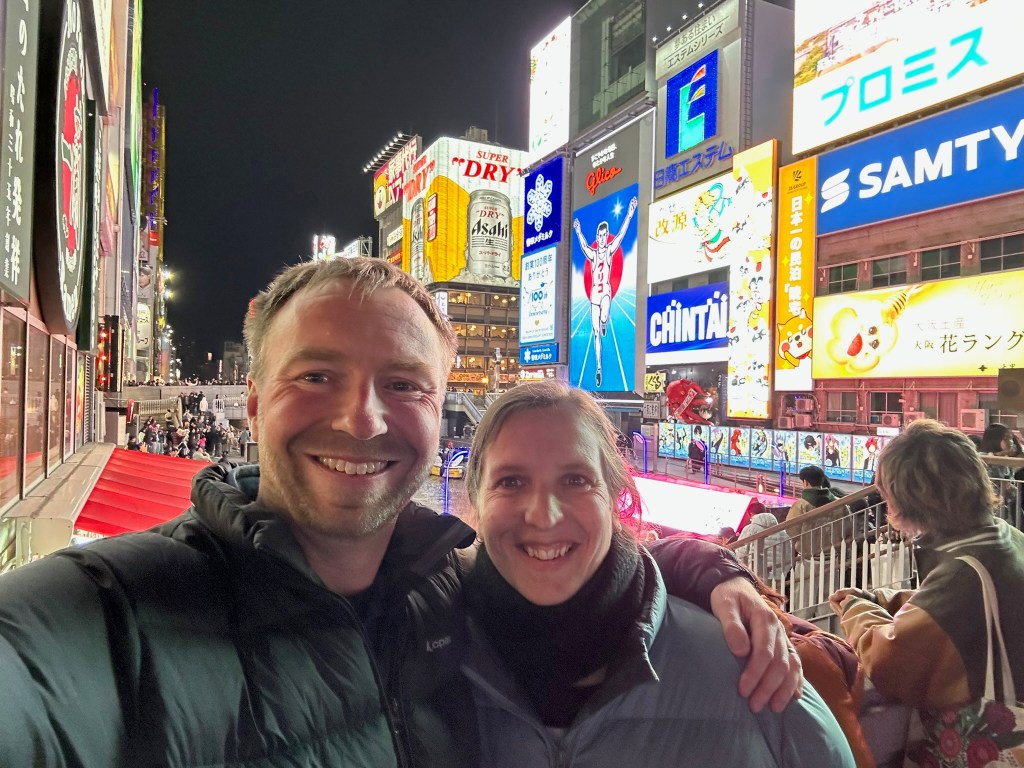
- The Glico man is a famous massive sign along the canal. There are lots of other signs there but Glico man was the first in the 1940s and is the most famous. Glico makes chocolate and sweets – we got to try a couple of strawberry sticks called Pocky. The poster is based on a Filipino runner and his pose as he crossed the finish line of a race.
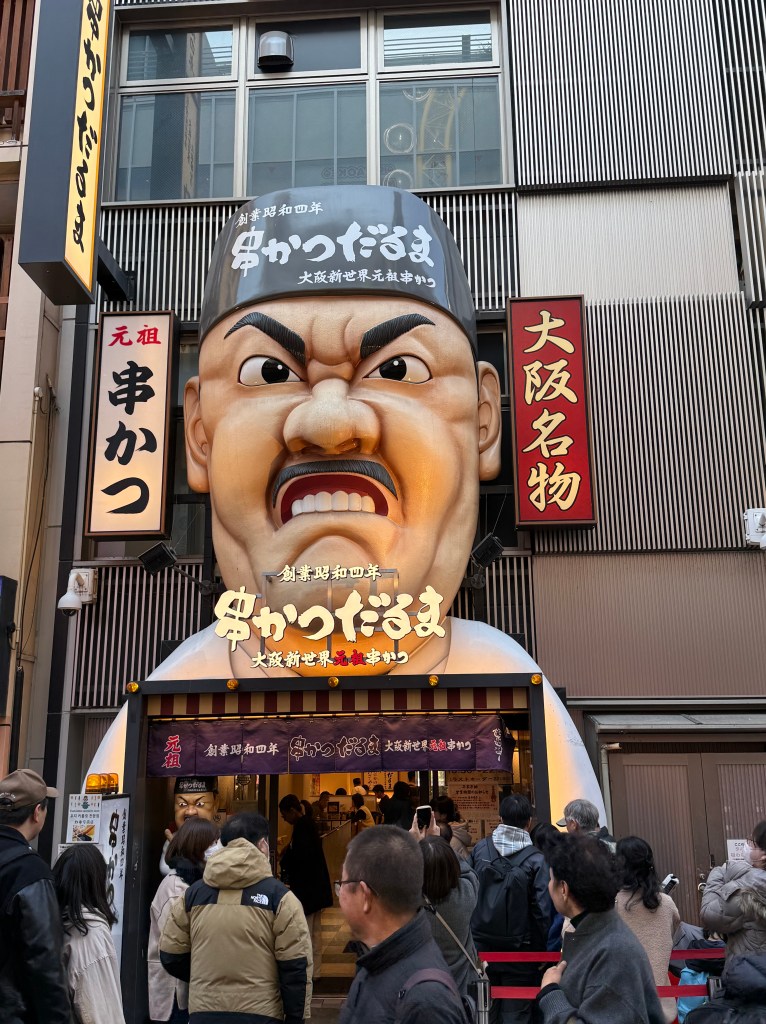
- We walked through Dotonburi which is the main commercial area with masses of people and manic energy. There are lots of massive signs above shops and restaurants. The angry chef was for a common chain that sells deep fried sticks of food (e.g. meat). The sticks are to be dipped into a communal sauce but you can’t double dip. He is angry (and has his arms crossed) to tell people not to double dip, as many people forgot (especially when they are drunk).
- German told us more about pachinko and in particular how it gets around the laws against gambling. People can trade in their balls in the parlour but not for money (as that would be illegal). Instead they get a prize chit that they can take to another location (in no way affiliated with the parlour) that will trade the chit for money. The trade in location sits right next to the parlour – a weird system but it seems to work. Pachinko is huge in Japan, even though it is decreasing in importance it still accounts for about 4% of Japan’s GDP.
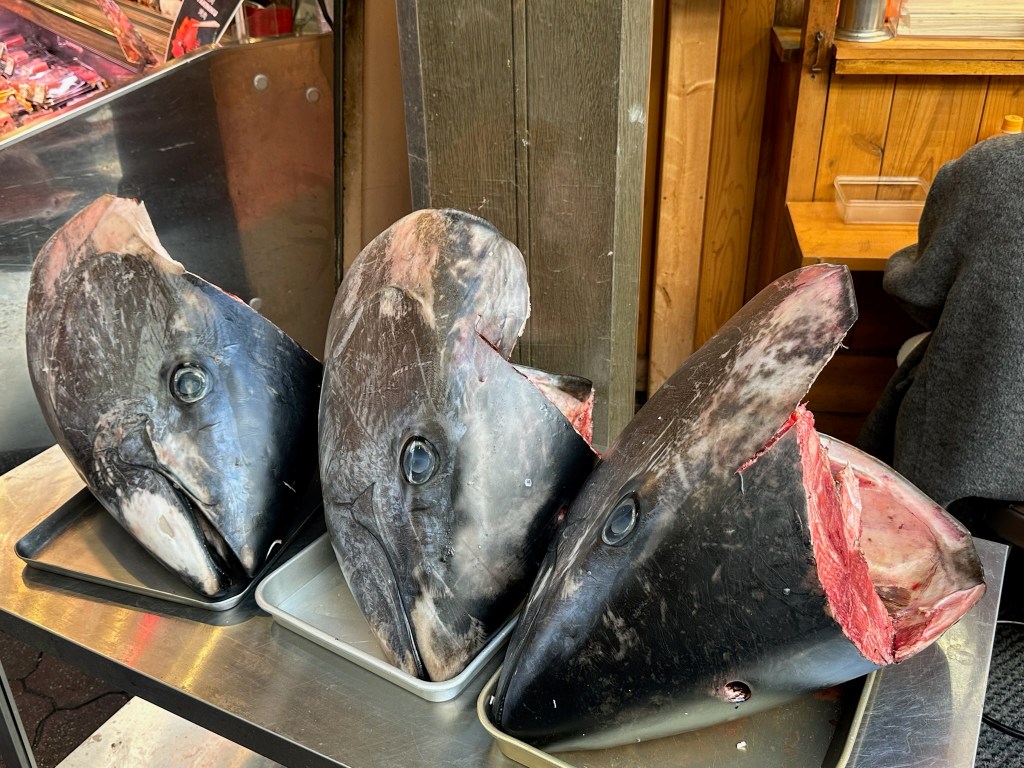
- We finished at the fish market which sold all sorts of interesting fishes and food. There was a stall selling Fuku, the potentially deadly puffer fish that needs to be prepared correctly for it to be safe. Each year about four people die, but none are from restaurants as the chef must be trained and licensed in order to serve it. They had tanks of live Fuku, and were killing them to order for sashimi but no one in our group was brave enough to try it.



The tour finished after 1pm and so we had lunch in the fish market. Lisa surprised me with her openness to trying new foods. We had:
- Sweet potatoes with butter – not adventurous.
- Gyoza – deep fried little dumplings with what Lisa hoped was pork.
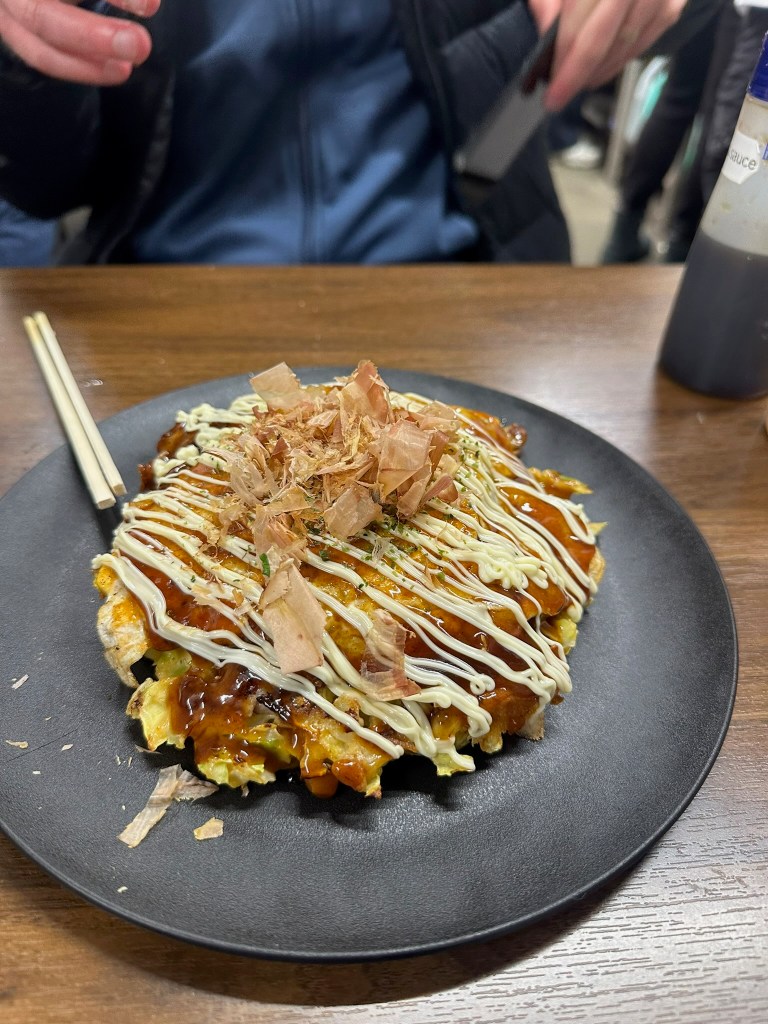
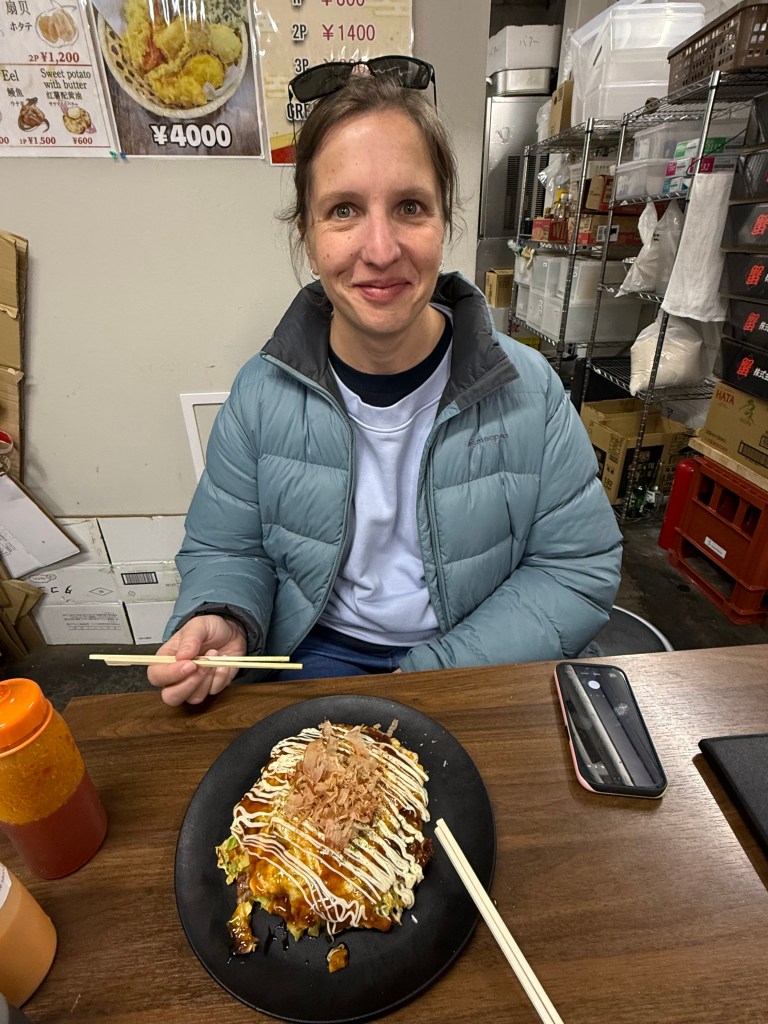
- Okonomiyaki with pork. These are savoury pancakes with cabbage that are a specialty in Osaka. These were really delicious and we both enjoyed them.
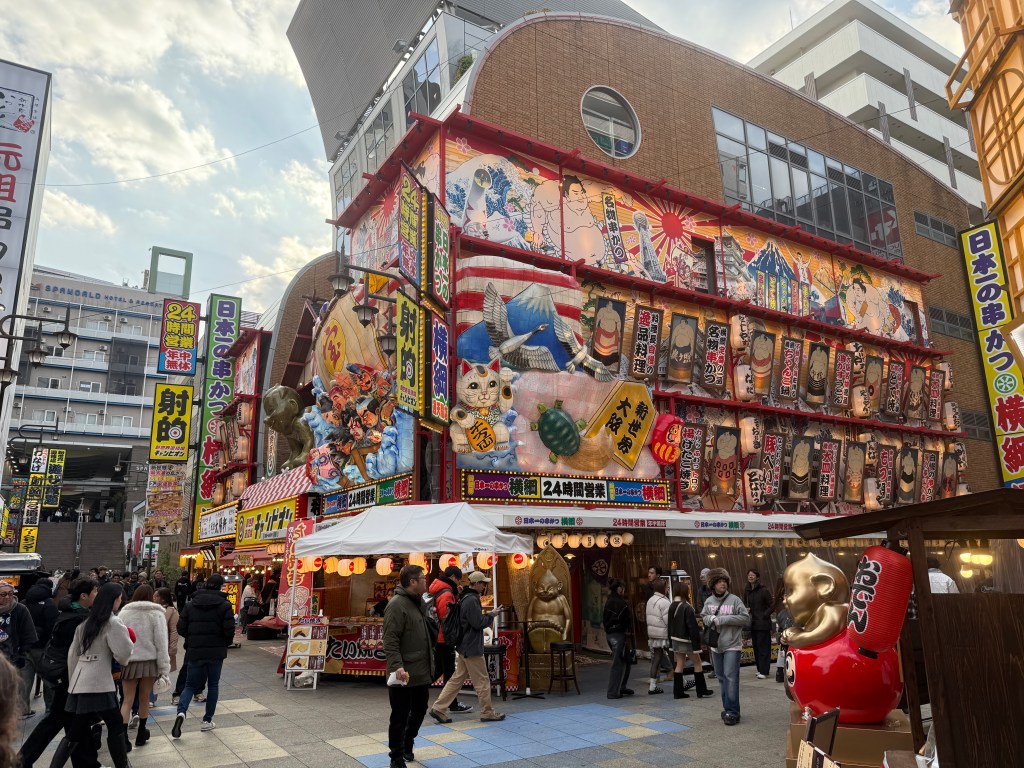
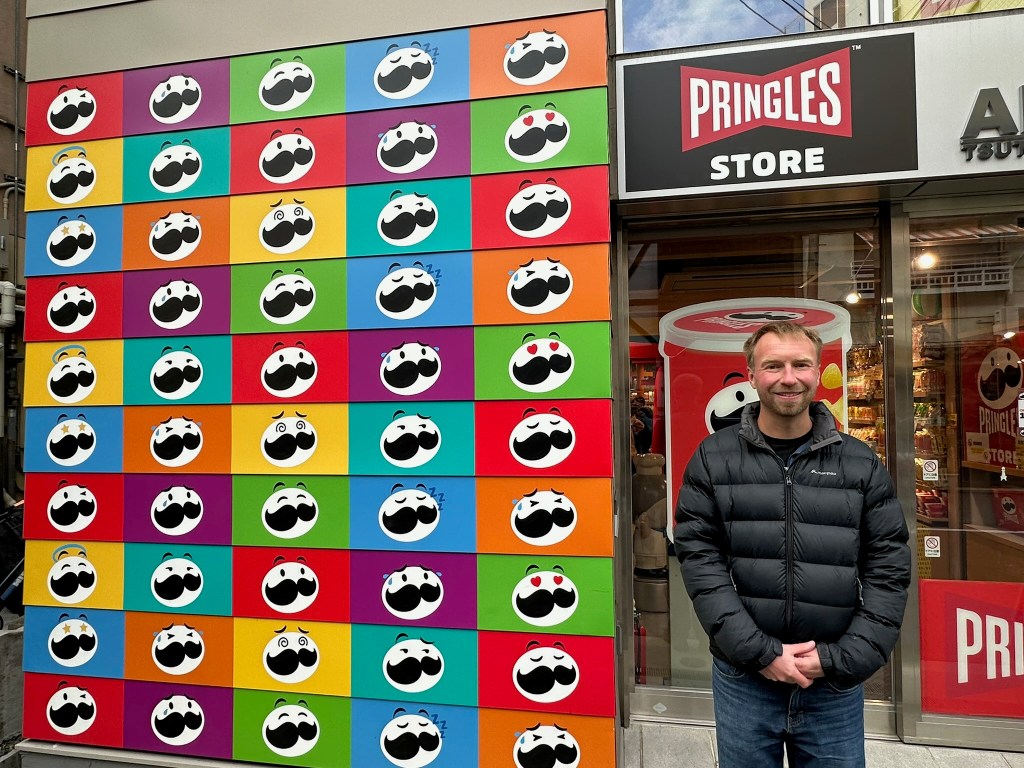
From there we walked to Shinsekai which is a thriving area with old school stalls and shops. There were lots of gaming areas with pachinko, shooting, archery, ninja stars and even old school video arcade games. Strangely there was also a Pringles store – not sure that deserves a whole store.
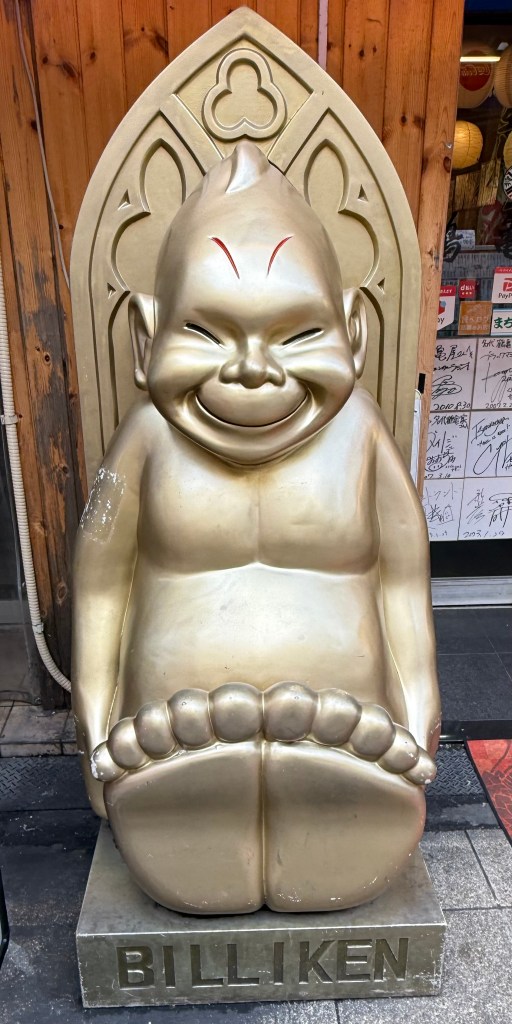
There were lots of statues of a character called Billiken. He was invented by an American and strangely became famous in Osaka (just this specific neighbourhood) and in one US college. But he was everywhere with lots of statues, merchandise and quotes from him.
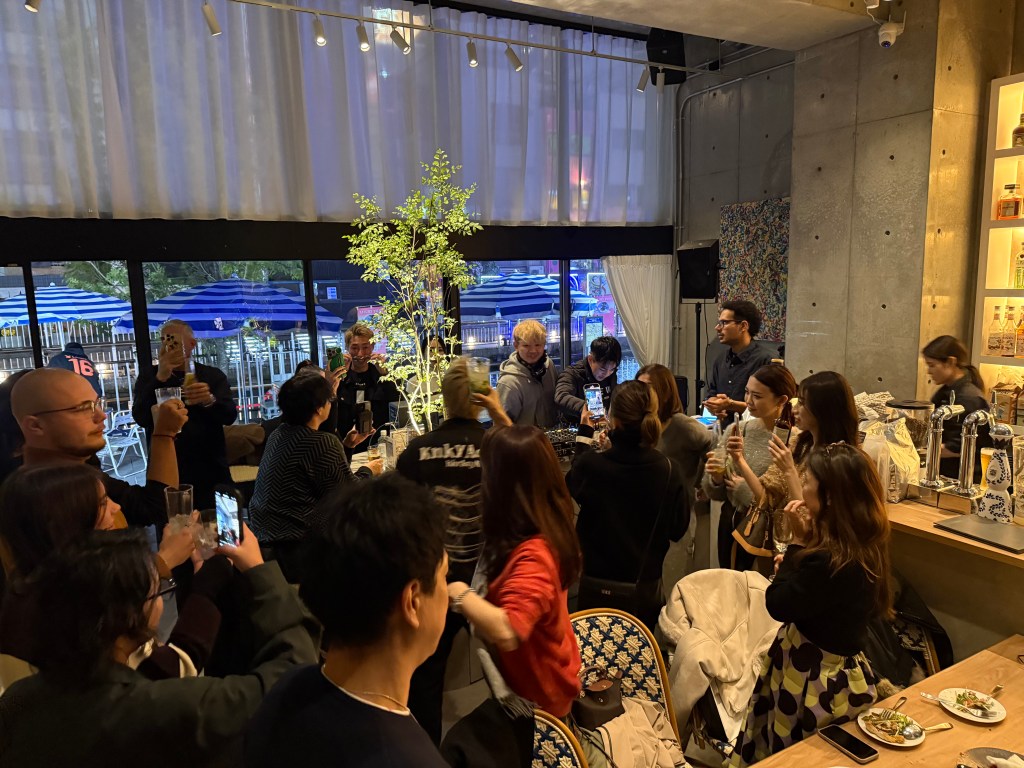
For dinner Lisa had found us a Casablanca grill restaurant that served Mediterranean food. When we arrived the place was heaving with loud music and a party atmosphere. Not sure what was being celebrated but they were damn loud doing it. We got a table outside where it was quiet but very cold despite a heater and blankets. The food was good but portions were on the small side.

15 December 2025
We had a convenience store breakfast of banana, grapes and pancakes. It is rude to eat while walking in Japan and there are no rubbish bins so we had to stand outside the Family Mart to eat. That meant we could dispose of our trash back in the store. It wasn’t classy and nowhere near the quality of our other breakfasts so far, but it was fast, easy and cheap.
Then it was off to Kyoto. This required several trains and over an hour to get there. Kyoto felt grimmer and less vibrant than Osaka. The streets were narrower and busier, with a lot more buses.
After a quick Starbucks we met our walking tour guide Kuzu. He was Japanese and his English was pretty good, if he did overuse a few phrases and loved to explain why things were named what they are.
We had four others in our group and they arrived late and were a bit distracted. They were slow through out which really annoyed Lisa. They also left to get coffee with two minutes to go – which REALLY annoyed Lisa. So rude. But, it was good having the extra peoples in there tour – always awkward if we’re the only people on the tour.
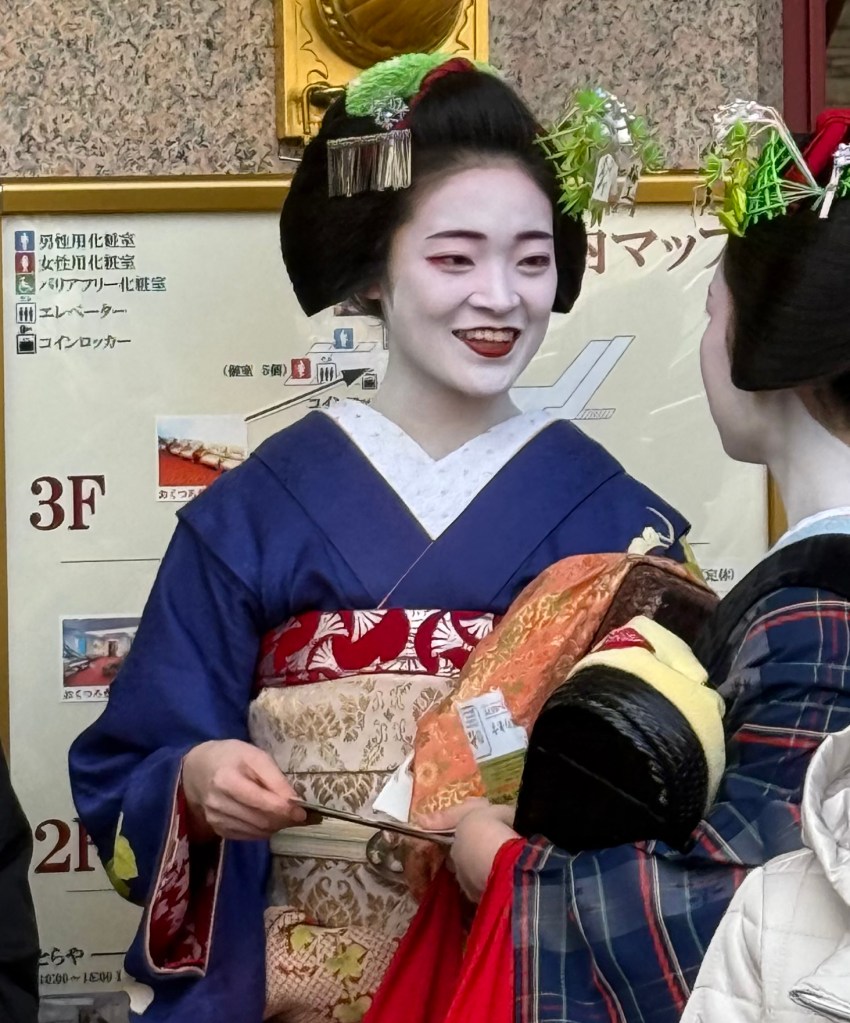
- We saw a Maiko which is someone who is training to be a geisha. It is quite unusual to see them out and about. We managed to get some photos before we got told “no photos”. She looked pretty normal apart from the white makeup.
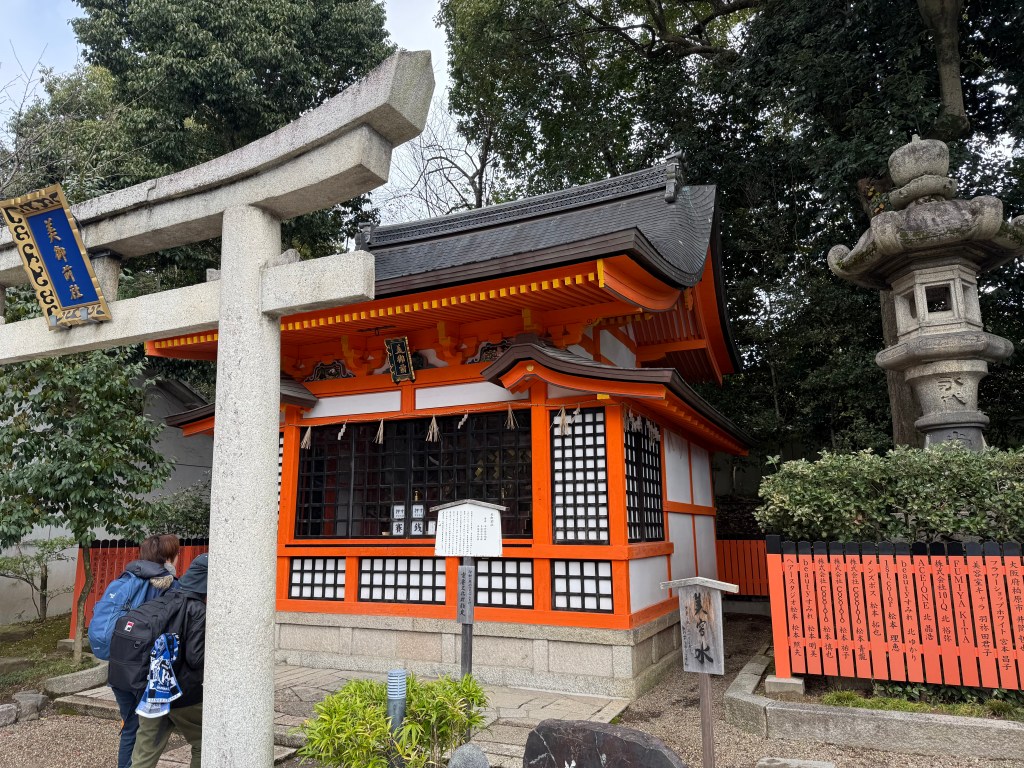
- We went to both a shrine and a temple. Learnt that shrines are for the Shinto religion while temples are for the Buddhist religion. Japan has 120 million people with 100 million practicing Shinto and 100 million practicing Buddhism. So, there is a lot of overlap – something that is difficult to understand as a Christian. It was explained that you went to the Shinto shrine to pray for your life and the lives of people around you. But, you went to the Buddhist temple to pray for your ancestors and family members who have passed. So, splitting the responsibilities in a way that makes senses – good division of labor.
- Shinto believes in lots of different gods for different purposes – over eight million gods in total. You can pray to lots of these different gods to get better outcomes and you don’t need to be Shinto for this to work. Our guide did say that the god needs your contact details otherwise they won’t be able to get in touch in order to fulfil the wish – so include your name, address and phone number along with your wish.
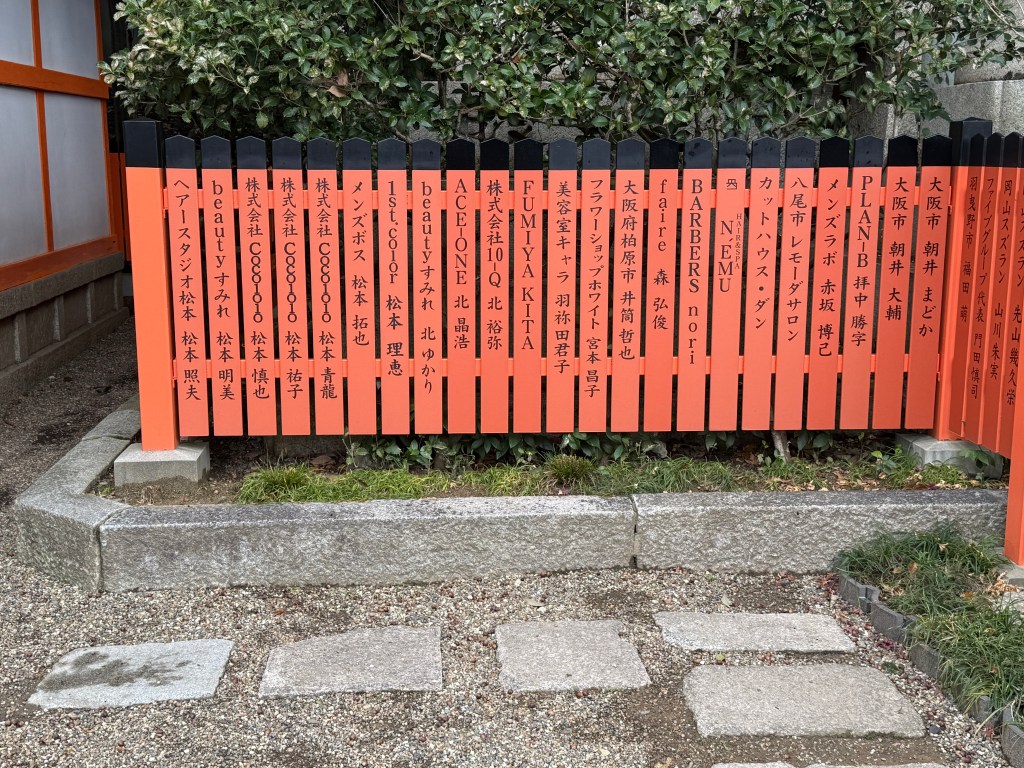
- The shrine has a main area dedicated to the big god. There were also little shrines around the pride for different other gods. There was one decided to beauty. This had sponsors which included the beauty brand Shiseido – makes sense I guess.
- At the entrance to the shrine there were two statues of dog like creatures called ahm and uhm. These represents the start and end of your lives with ahm having an open mouth and uhm a closed mouth. These are also the first and last letters of the Japanese alphabet.
- The temple has existed for eight hundred years but had to be rebuilt after it burnt down four hundred years ago. Buildings being destroyed by fire seems to come up a lot – the earthquakes probably don’t help the situation either.
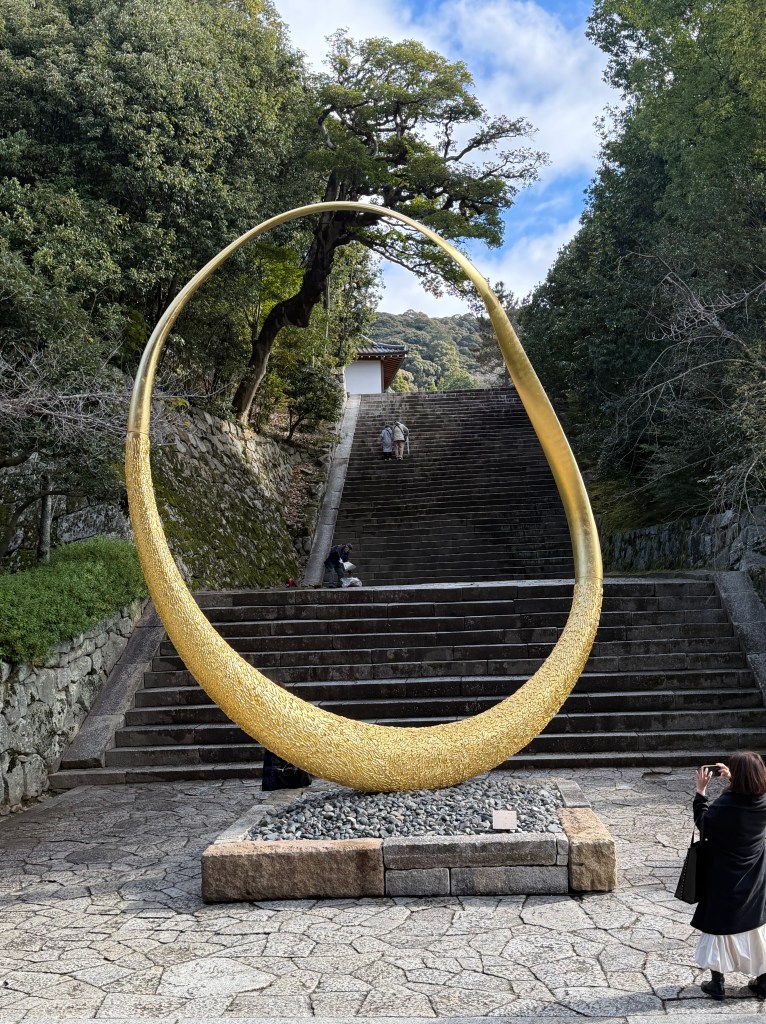
- There was a large gold circle sculpture outside the temple. This was part of the Irish exhibition at the Osaka 2025 Expo and had been gifted to the temple for a year after the expo. I just think they didn’t want to pay the cost of shipping it home!
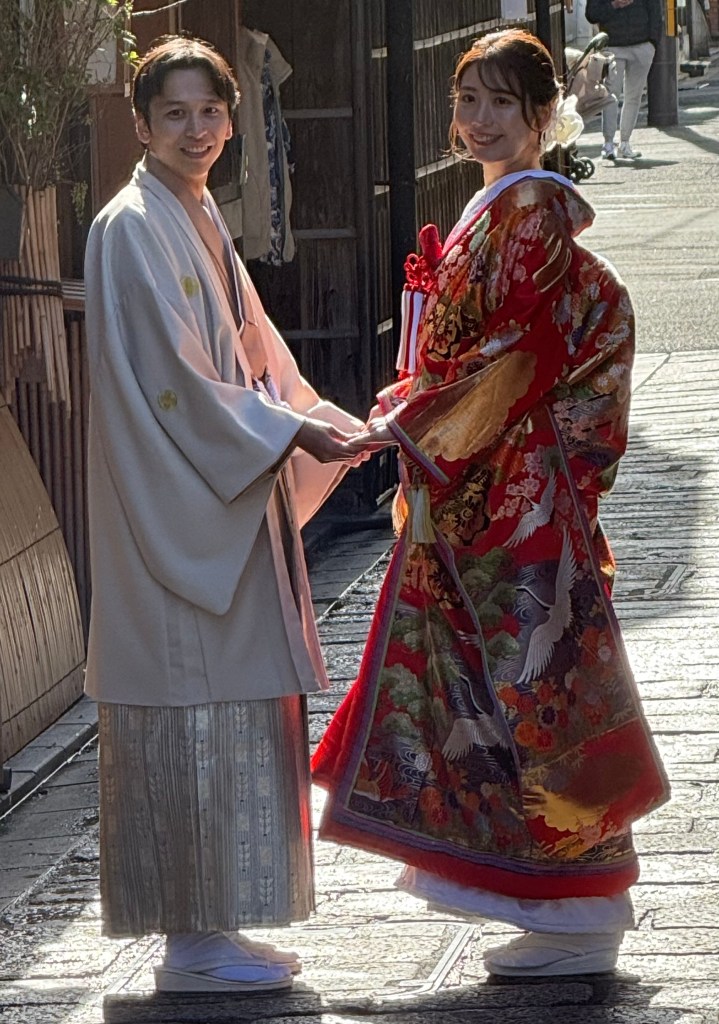
- Throughout the day we saw lots of young ladies in kimonos, sometimes with formally attired men but often not. It seemed to be a big thing to get photos in formal, traditional dress in the region. The looked very well done up, except for all of them wearing socks and sandals – no matter the culture there is no way that can look classy!
- Kyoto is famous for geishas who are women who train to entertain people by singing, dancing and playing guitar. They are not prostitutes – this was emphasized quite a bit. It takes many years of training to become a geisha but it is a very prestigious role in Japanese society. There are five geisha areas in Kyoto and there contain geisha houses where geishas live and train. Interestingly, geisha can get married and have children – many retire when they do this (don’t tell Lisa). But a geisha can continue working. The oldest current geisha is 80.



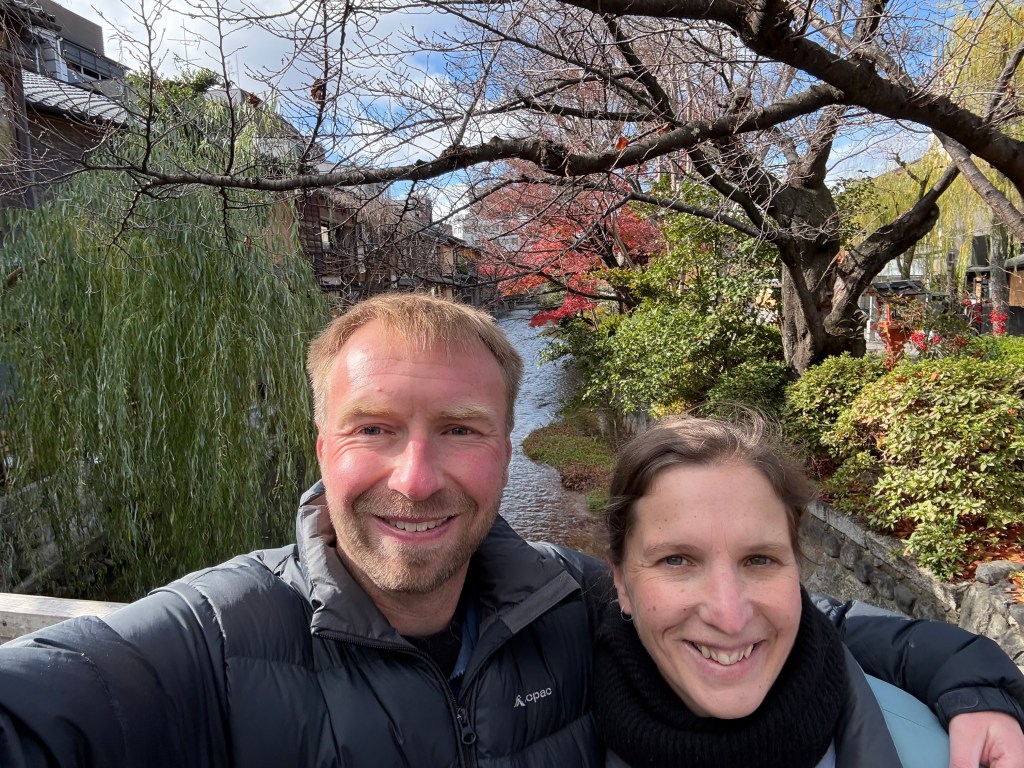
We wandered along the main street and found a nice market street for lunch. It was a challenge as I wanted Japanese for lunch and Lisa not so much. We decided we were better served by eating at different locations. Lisa went to a bakery – boring. I found a nice place that did some noodles with pork (not that exotic at all) and a sneaky midday beer.
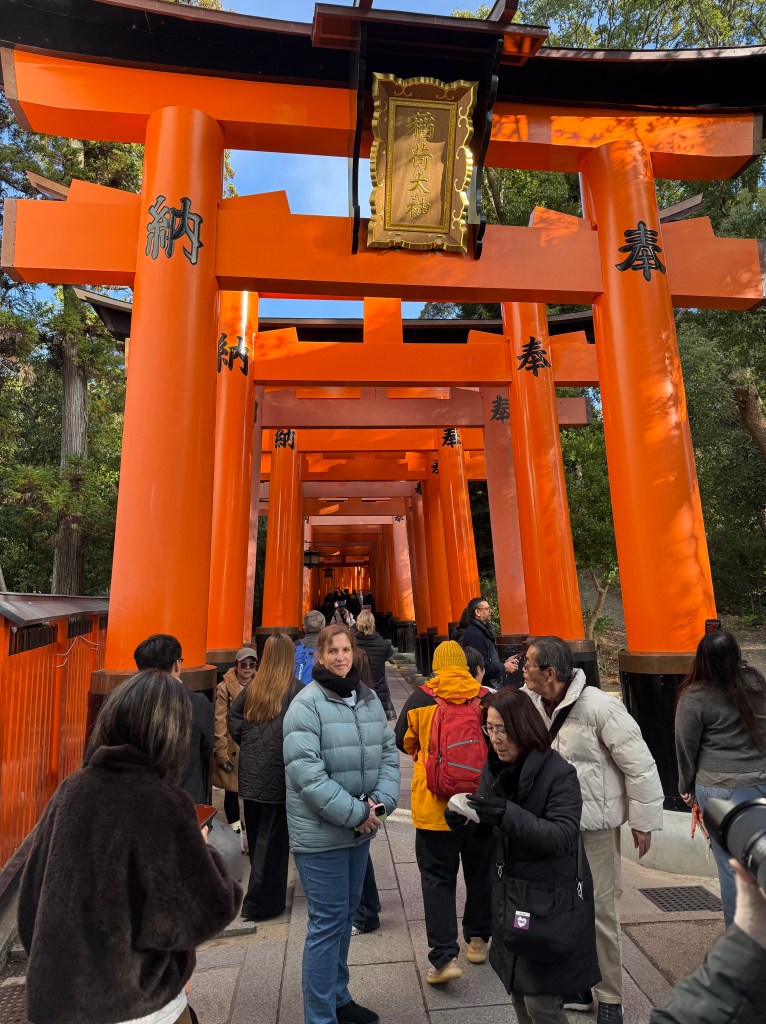
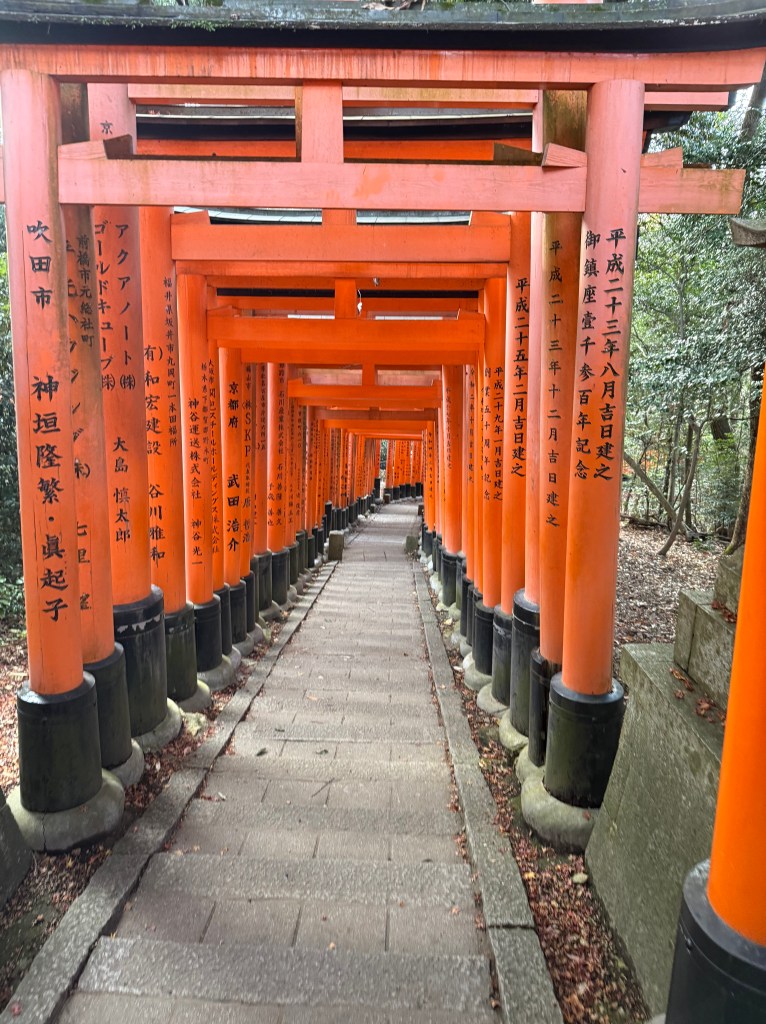
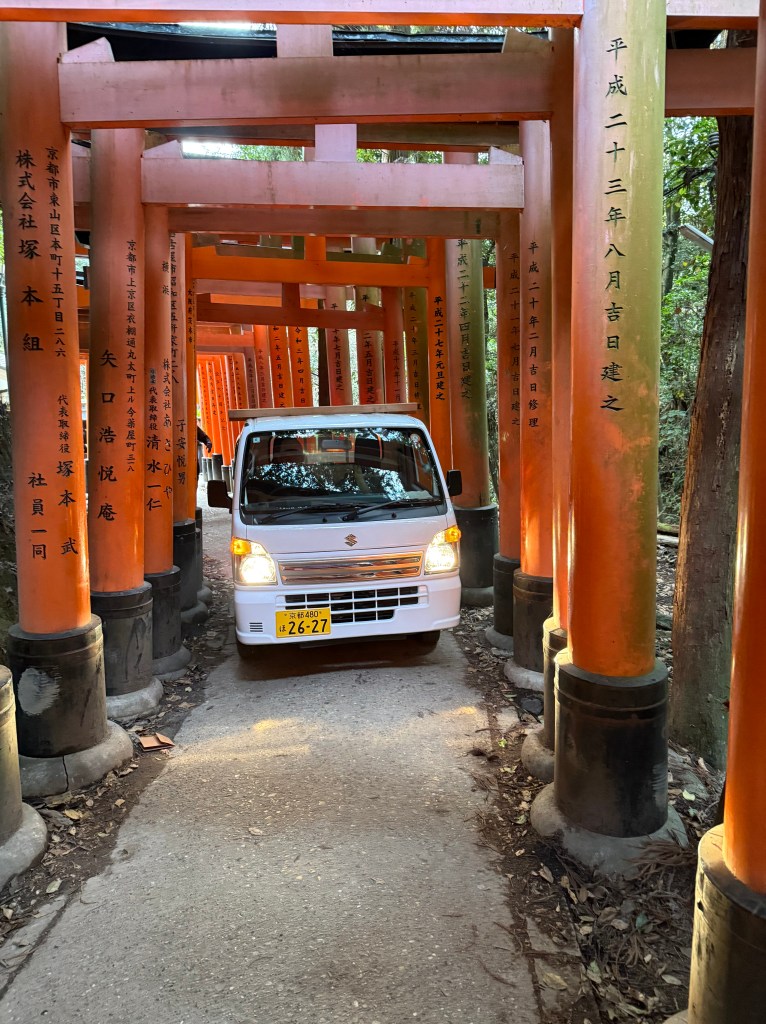
We then caught the train to Fushimi Inari Shrine. This is a large Shinto shrine on the side of a mountain in Kyoto. It is famous for having thousands of Torii gates as you walk up the mountain. There are some great pictures to be had of all the gates in a row from different perspectives and it makes for a very interesting walk. I thought it was busy but Lisa said from her research it is often so busy that it is hard to walk so we were obviously lucky. The gates were interesting, particularly with the different sizes and different locations. The gates are often donated by people and business which I guess is practical but it does feel like it lessens the impact knowing that.
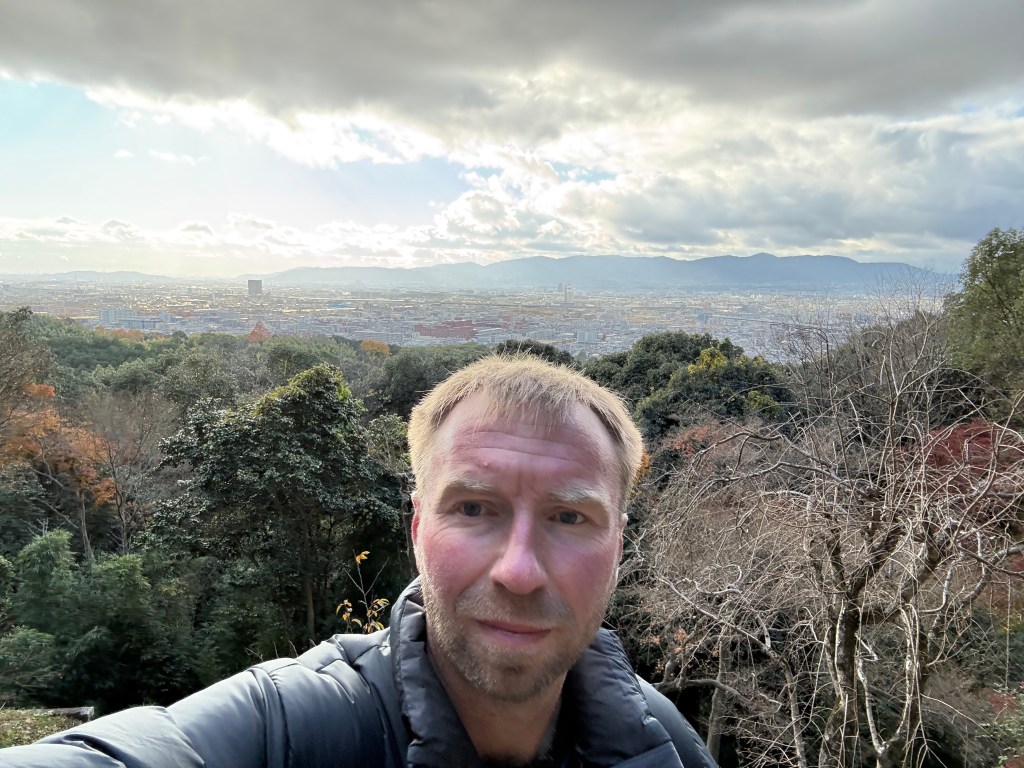
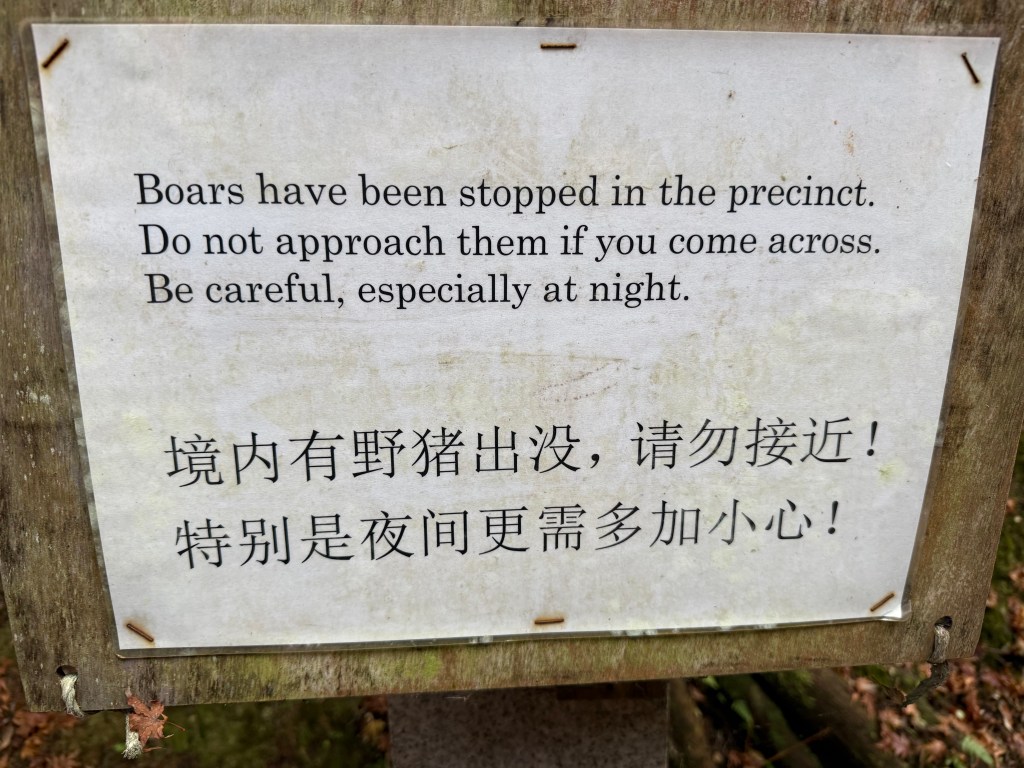
Lisa made a valiant climb before heading back down while I continued all the way to the top. It was a good walk and quite steep in sections. I got hot and had to take both the puffer jacket and jersey off – so you knew things were getting real! There are lots of side paths along the way and it would have been very easy to have gotten lost or mauled by the wild boars! There are dozens of individual shrines along the way, which I didn’t investigate. I was going to pray at the shrine at the top but the line was too long…
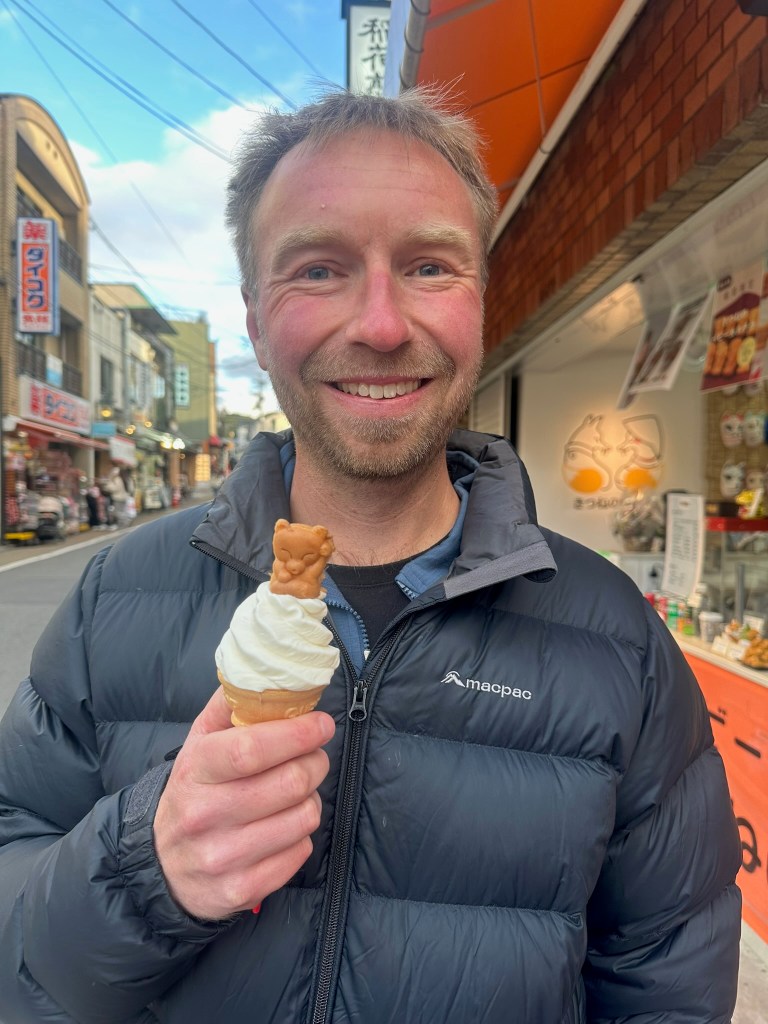
Poor Lisa was stuck waiting for me as it took me quite a bit longer than I had anticipated to summit the mountain and return. Once I did make it back down we had treats – I had Japanese soft serve ice cream, which Lisa had read was quite distinct but I thought was pretty much the same as at home. Lisa had a custard fish pastry thing – perhaps the better option.
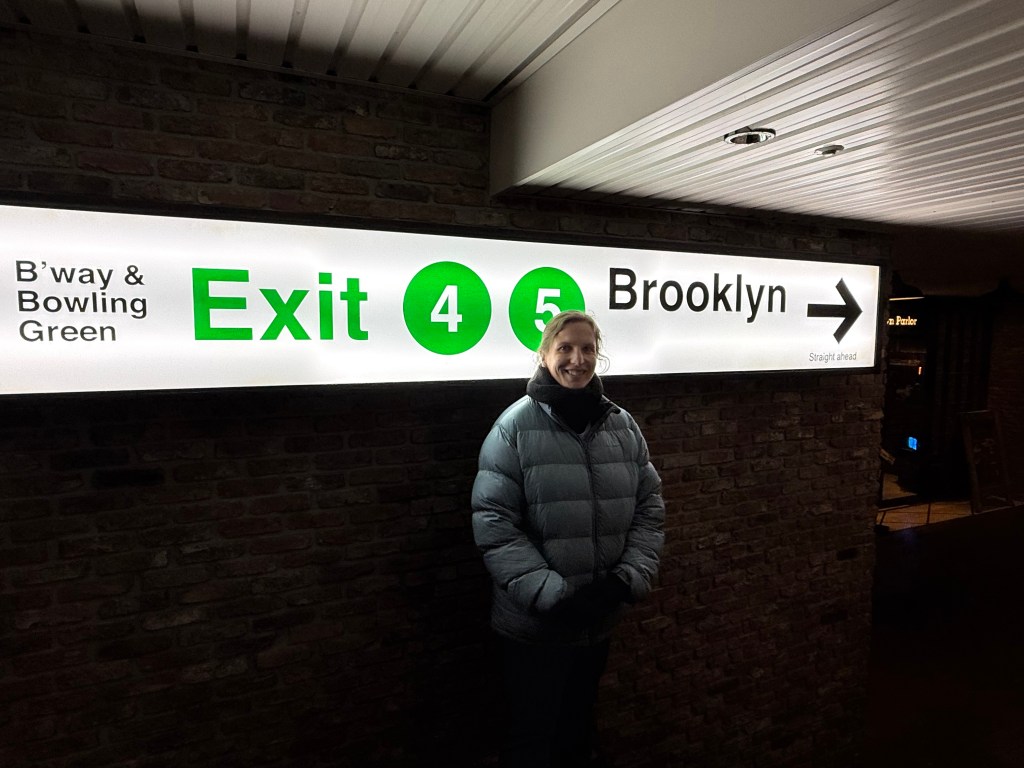
It was a long trip back on the train – Lisa got a seat and had a sleep but I was stuck standing up. Dinner was at the Brooklyn parlour. It was an excellent choice, says Lisa.
16 December 2025
Day trip to Hiroshima. Caught the bullet train down – such impressive technology, so easy to get around over massive distances and perfectly punctual.
On arrival we caught a street car (tram). There was general confusion (and not just by us) on how to pay. There was a machine when we boarded but it didn’t beep for our IC cards. After some googling we discovered that you could use the IC card when you left the tram only. But we watched lots of people try various approaches and some people were scanning QR codes, so who knows what they were doing.
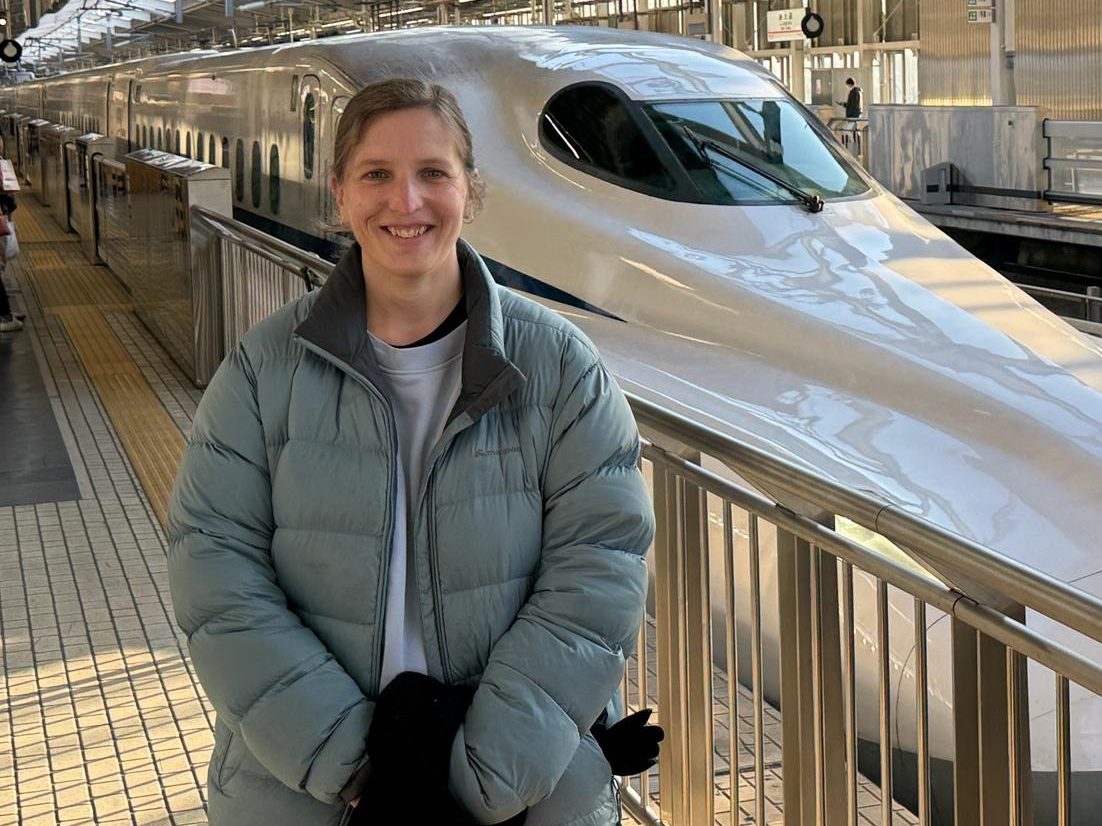
We had a walking tour around the Peace Park with Maria who was very talkative. She was from Pakistan and came to Hiroshima for her masters (in blood proteins) which she competed and is now working on her PHD in something to do with proteins in nuerons in the brain. She does the tours as she doesn’t know Japanese and this makes it difficult to get other jobs.
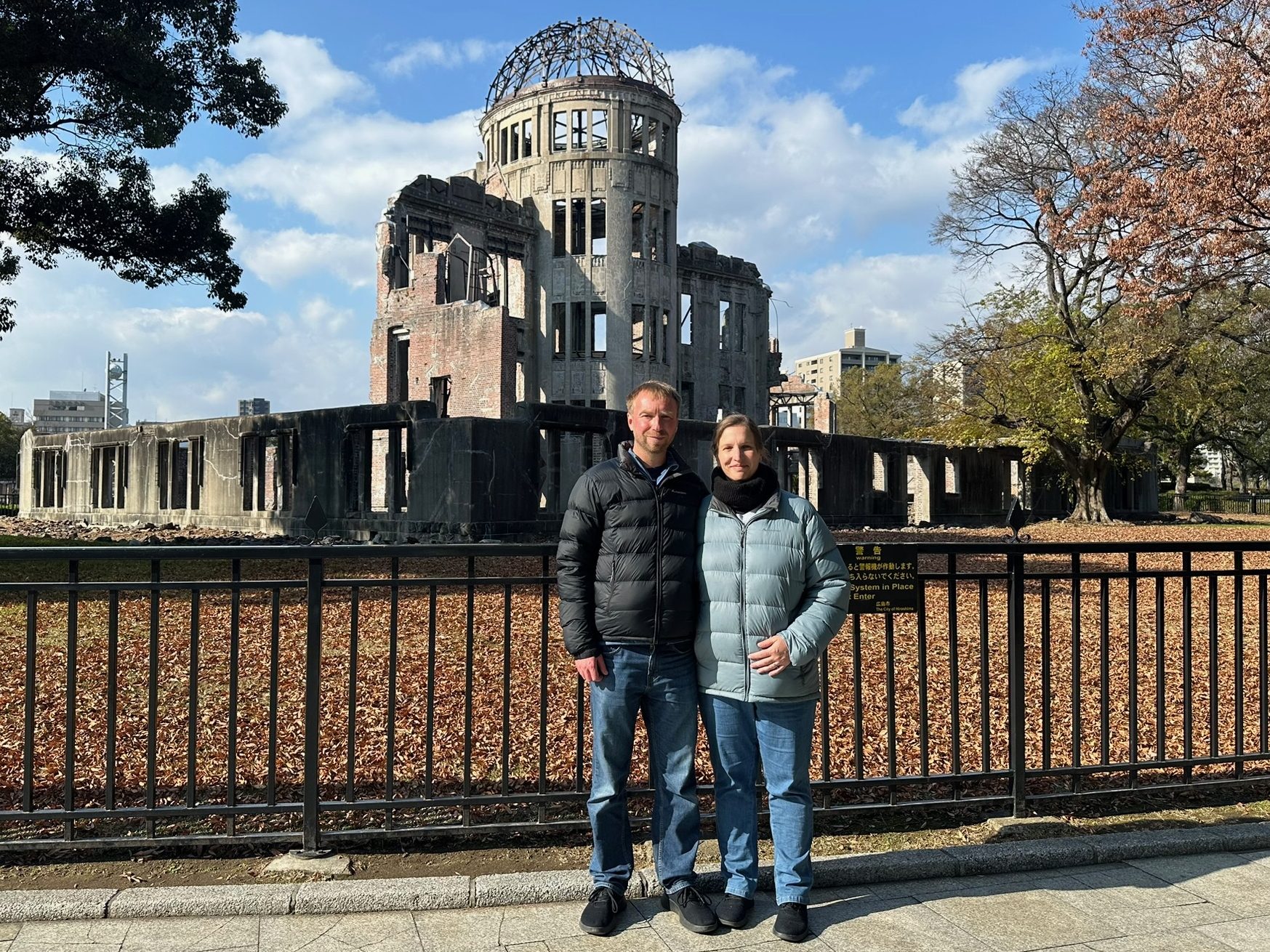
- Hiroshima had a population of 280k before the bombing. Approximately 70k people were killed in the initial blast – most of them vapourised when the temperature suddenly jumped to 4,000 degrees. Many more died in the fires, from injuries and from radiation. By the end of the year the death toll was 140k.
- The Hiroshima bombings was essentially a test for the USA. They chose Hiroshima in part because it hasn’t been extensively bombed before this and so it was easier for them to measure the power of the blast.
- The bomb contained 64kgs of uranium but only about 2kgs of that underwent nuclear fission. The scale of the destruction could have been so much worse had more of it exploded.
- There was a bank that was destroyed by the blast. When it reopened a week afterwards they didn’t have records on how much people had in their accounts. They allowed people to withdraw their money on an honesty system. When they got their records together they discovered that 99% of people took the money they had and the other 1% claimed less than they had. The Japanese are very honest.
- The target for the bomb was the “T bridge” which was a bridge that connected three pieces of land and was a key strategic point. The plane missed the target by 170 meters which wasn’t much of an issue considering the power of the bomb. However, if that had been a conventional bomb then 170m off target means you don’t hit the bridge or building you were targeting and so that’s not a great job.
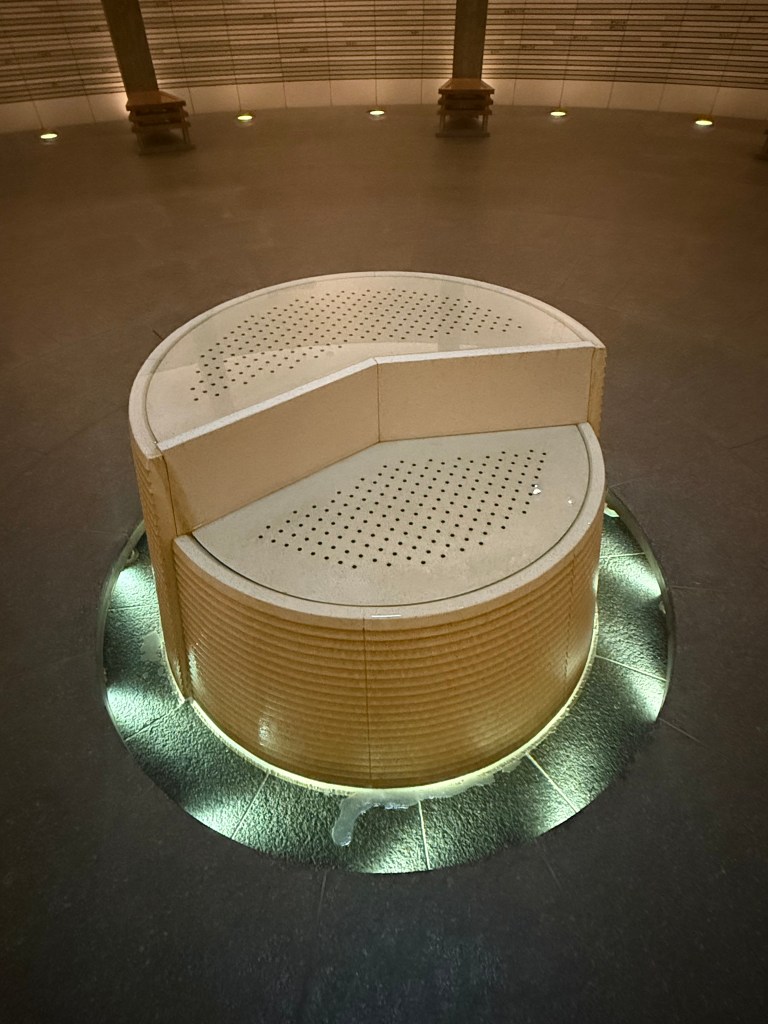
- There was a large memorial building with a 360 degree view of what the city looked like after the bombing. It has a small water feature in the middle of the room with clock hands that indicated 8:15am as that was the time to bomb was dropped. The water was because many of the survivors asked for water and it was often the last thing people said before they died.
- There was a building just 170m from the centre of the blast where a man survived. He was down in the basement when the bomb exploded and through a lot of luck was well shielded. When he came up he discovered the horrors including all of his colleagues in the building dead. He stopped speaking for five years but eventually shared his story of what he saw. He managed to live a full life having avoided both the blast and the radiation.
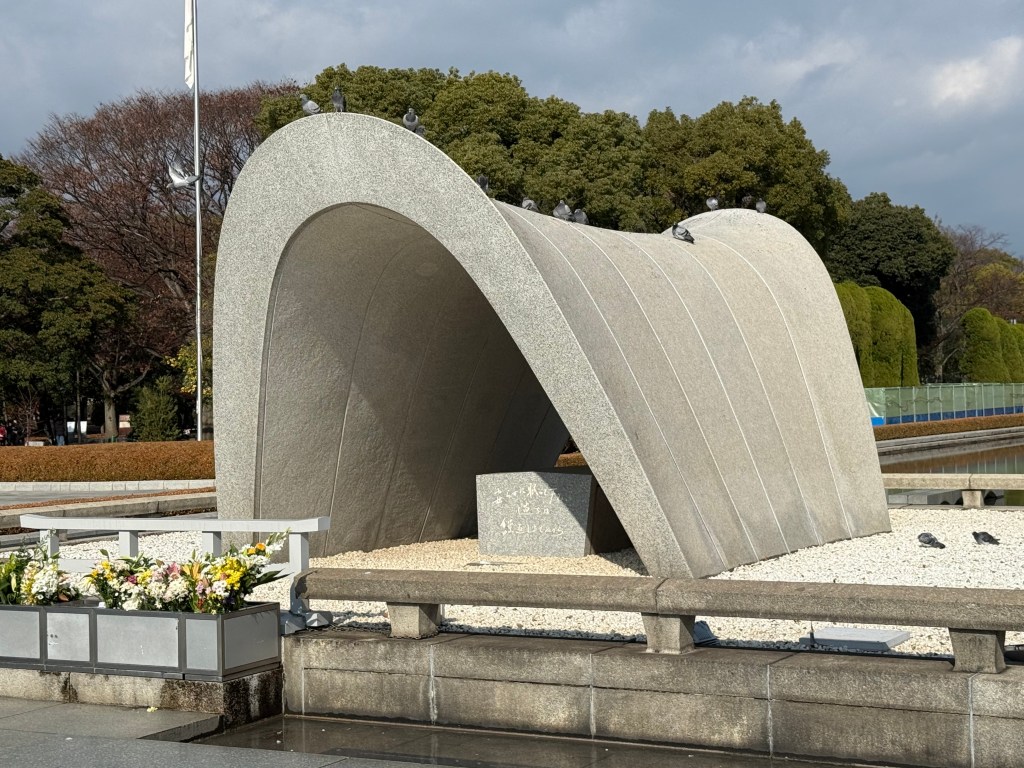
- There is a large concrete structure that houses boxes with the names of all those who were affected by the bombing. Each year in May it is opened and the names of people who have died in the past year are added. Having been 80 years on, you would expect that tradition to start coming to an end soon. There was also an area with photos of all the people in the book. You could then look them up on a computer to see their photos and personal details. Seeing the number of people who shared a surname really bought home the scale of the deaths.
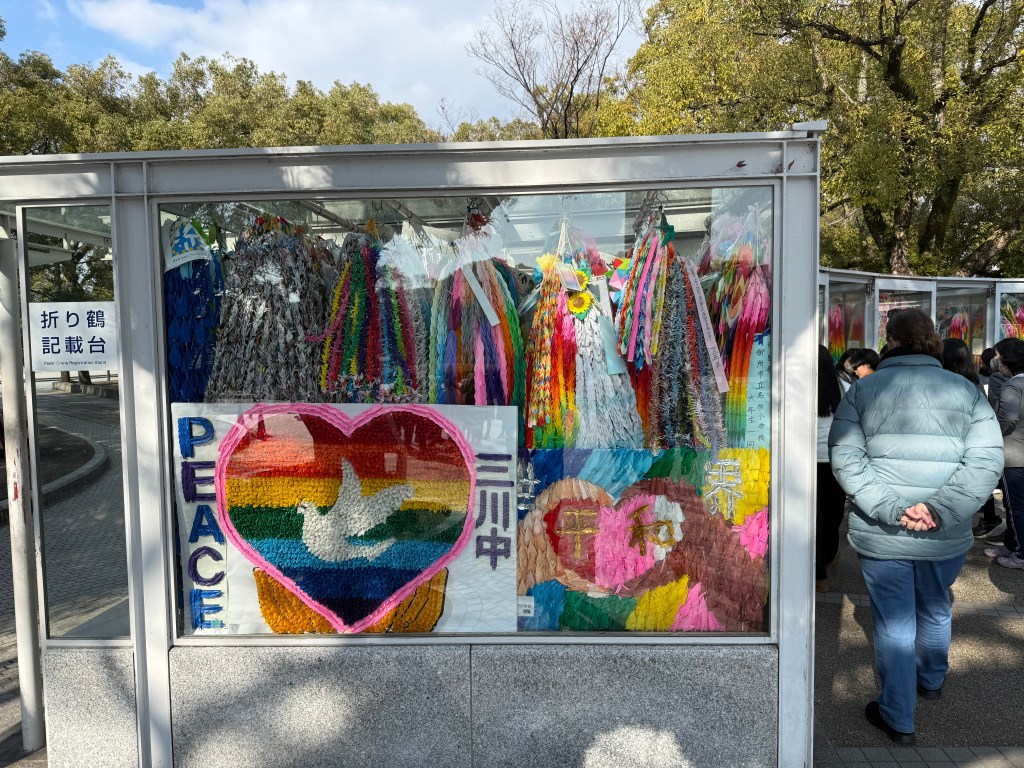
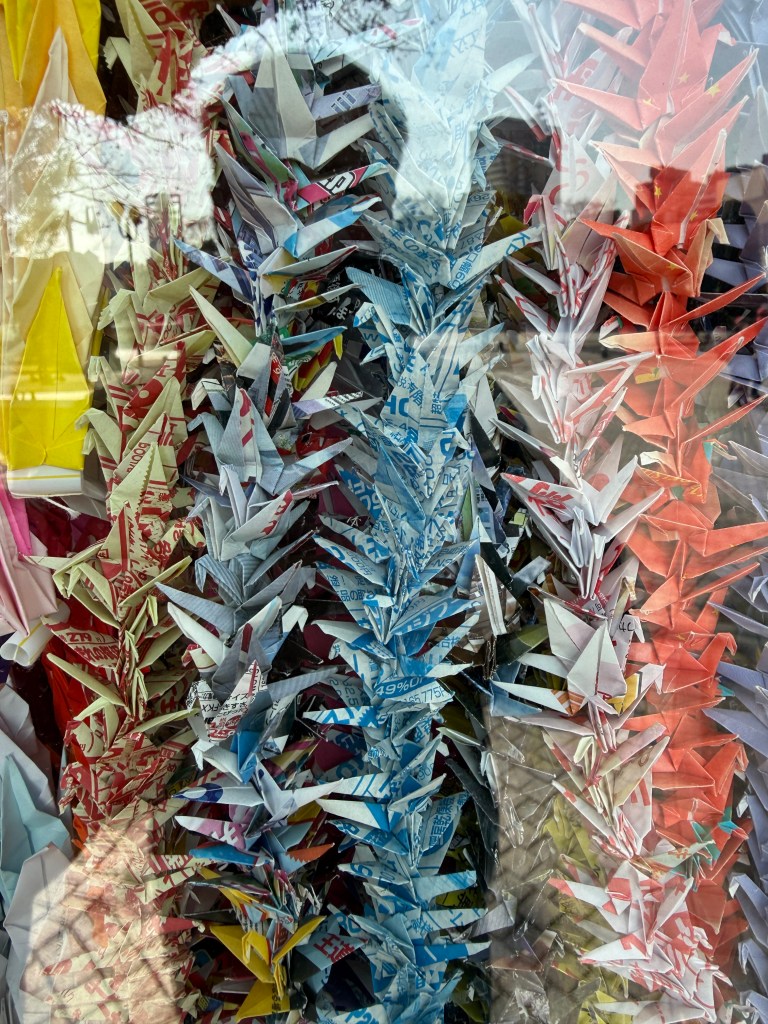
- There was a young girl who survived the bombings but got sick with leukaemia as a result of the radiation. In hospital she made origami cranes – hundreds of them. After she passed away children from all over Japan would make cranes in her honour. There was a large memorial to her and children still bring thousands of cranes each day. These are placed in large containers and when filled the cranes are recycled and turned into bookmarks, book pages and even university degrees.
- There were lots of groups of school children in class trips. They were easily identifiable by the matching caps they wore. I guess this made it easier for the teachers to work out which kids belonged to them. The children were quite funny as there would say “hello” as we walked past which led to us returning the greeting and as they continued more kids would continue with the hellos. It felt very friendly.


We didn’t have time to do the museum which was disappointing for me as I imagine I could have spent at least half a day there. Possibly longer if I didn’t have Lisa chasing me to go faster! I read too slowly in Lisa’s opinion.
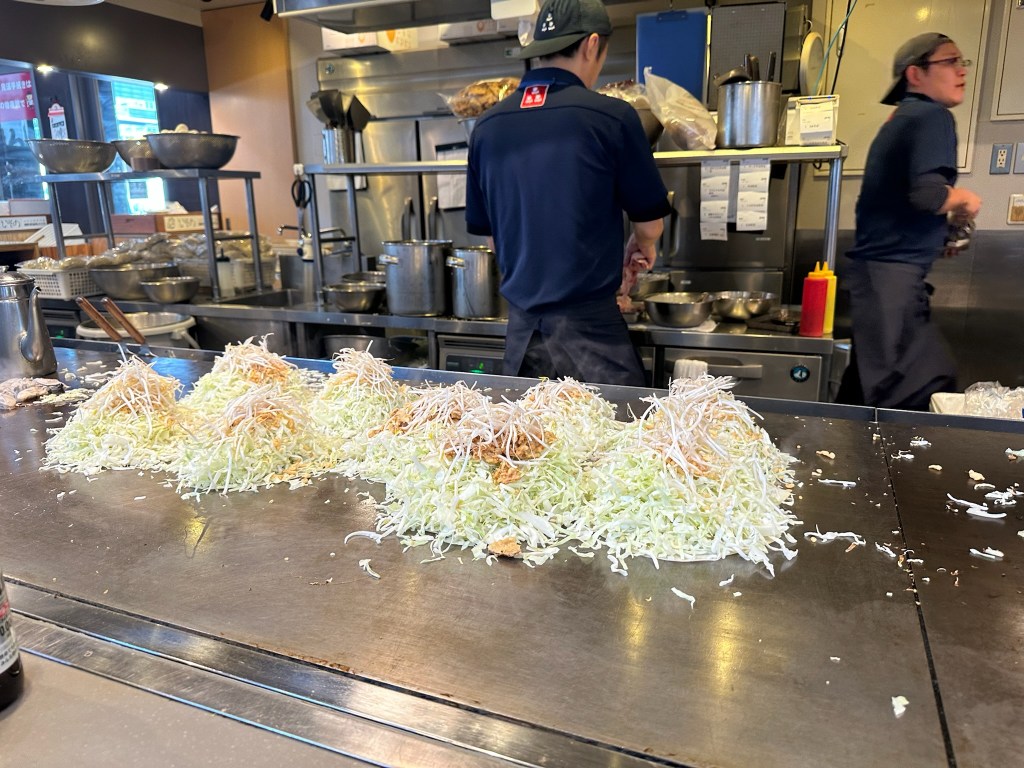
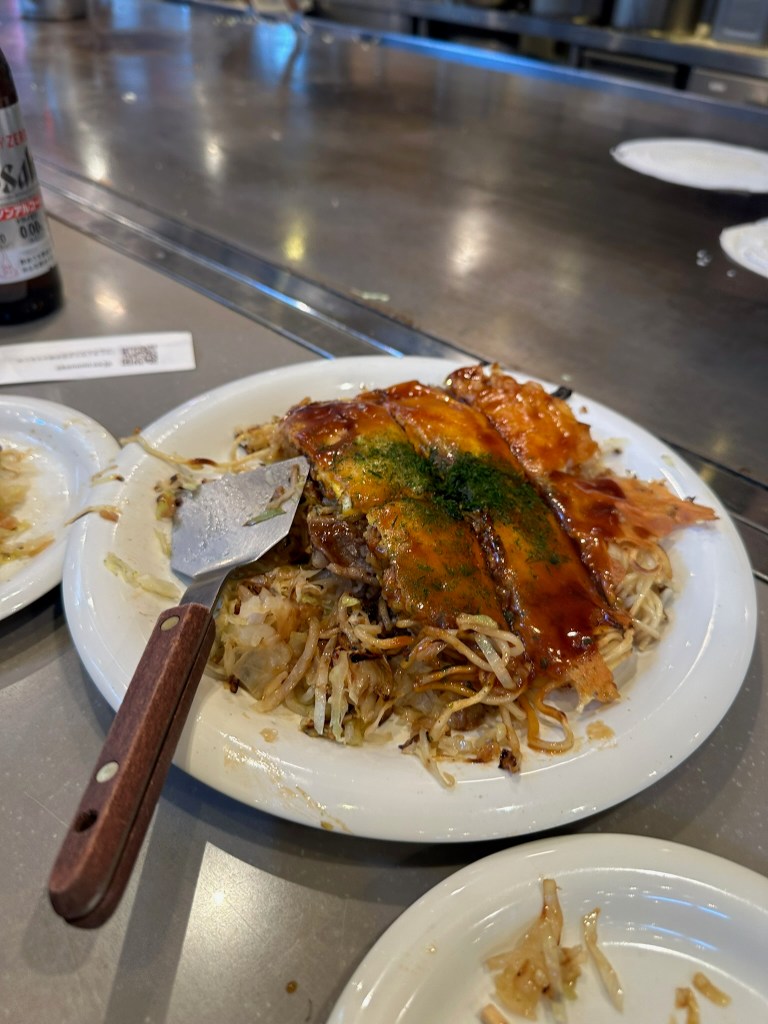
Lunch was Okonomiyaki at a restaurant that Maria had recommended. Osaka and Hiroshima each do this dish but with slightly different approaches – the main one being that Hiroshima includes noodles. We were sat at the grill and so watch them being made which was fascinating. It includes a pancake, a massive amount of cabbage and other vegetables, then an egg, noodles, meat (in our case beef but normally seafood of some kind) and then sauce. It looks like a giant weird pancake. It was delicious and we both enjoyed it.
We caught the ferry out to Miyajima island. The trip took 45 minutes and Lisa had a bit of a nap – I’m impressed with her ability to nap on all sorts of public transport. That is impossible for me.
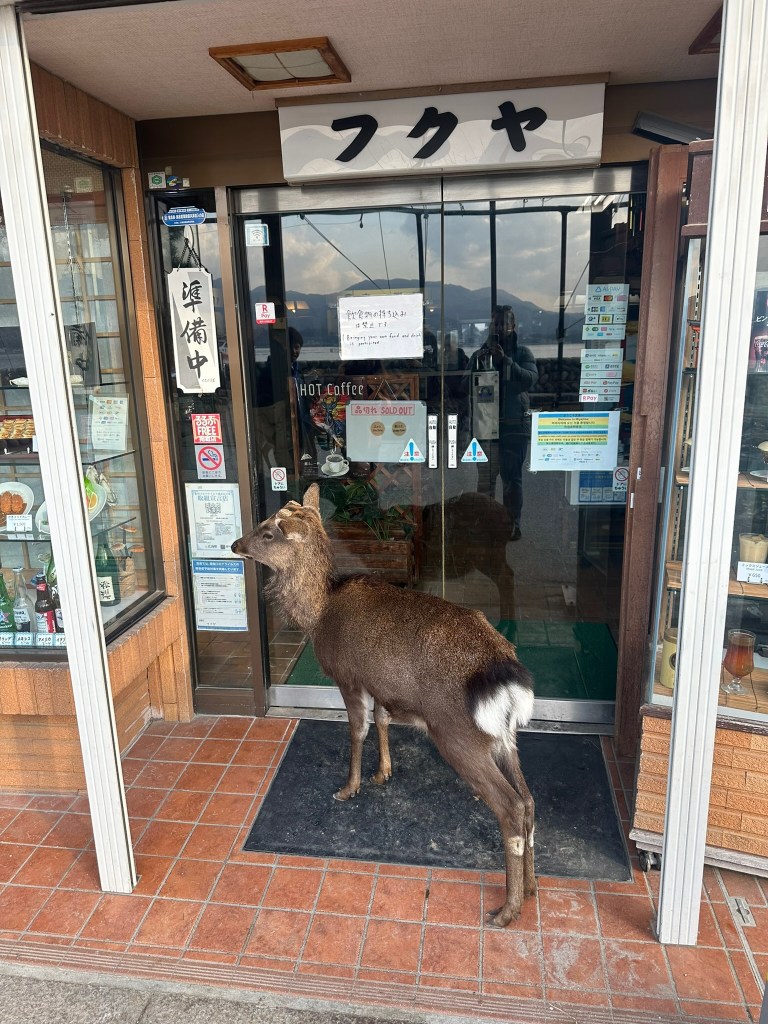
Miyajima island has lots of wild deer that wander around. We were not allowed to pat them but lots of people did anyway. They were very cute but also quite funny following people around. They obviously have no fear of humans and we saw several try to steal food from people. One old lady was quite put out and was remonstrating with the deer.
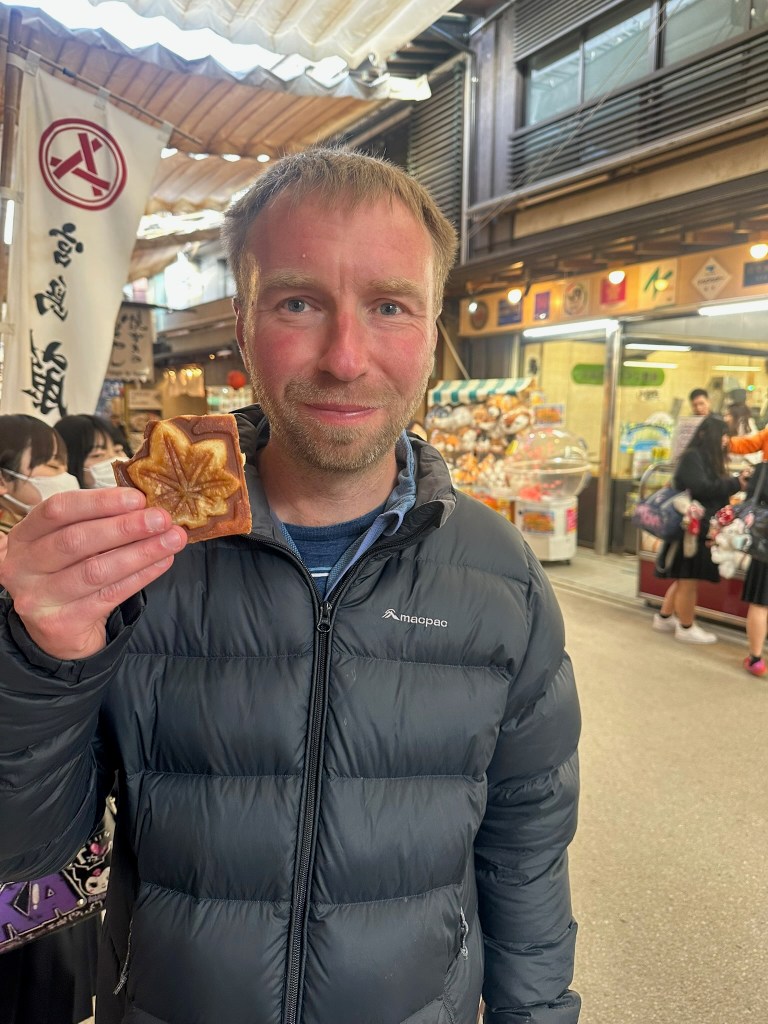
We had a snack of momiji manju which is a small pastry in the shape of a maple leaf. I had the chocolate one and Lisa had apple. They were fine but nothing to get excited about. I did see a small assembly line making them which included some robotics – now that was something to get excited about!
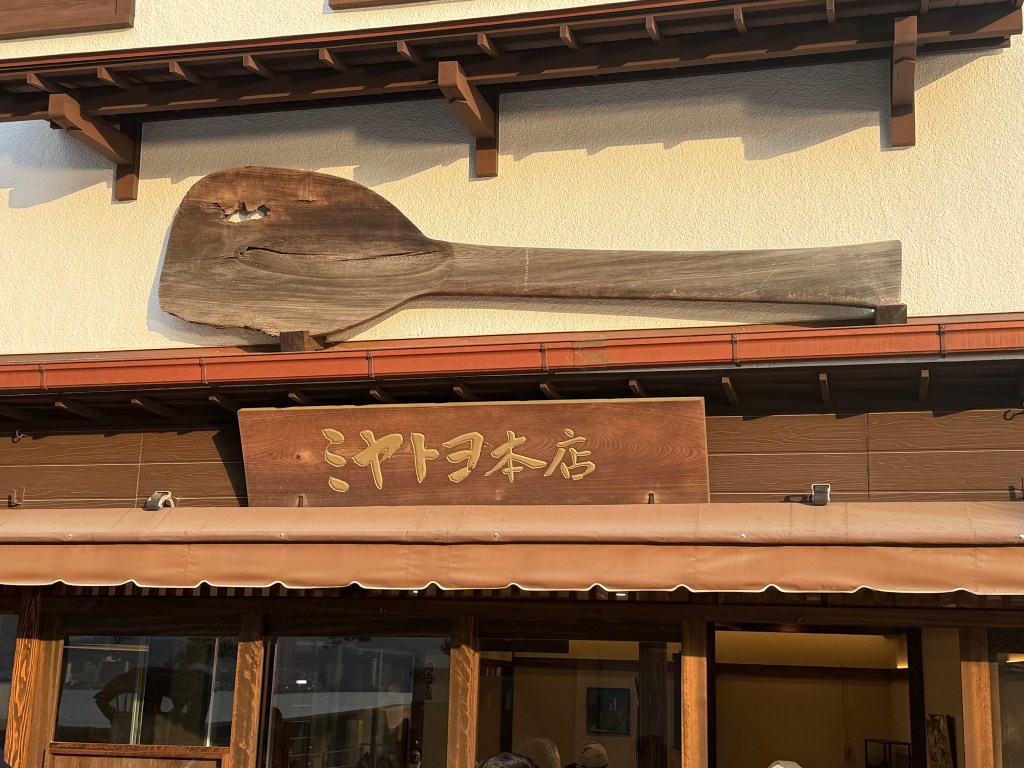
The island is known for its floating shrine and large floating Torri gate. Unfortunately we were there at low tide and so the shrine was very clearly not floating. The gate is very impressive but we didn’t have the best light for our photographs. The island has lots of shrines on it and is very important to the Shinto religion. We were told that we are not allowed to die (they have no cemeteries) or give birth there. There is also a giant mountain to climb but we didn’t have the time for that – and after yesterday Lisa would have been skeptical of me doing a couple of hours’ hiking.

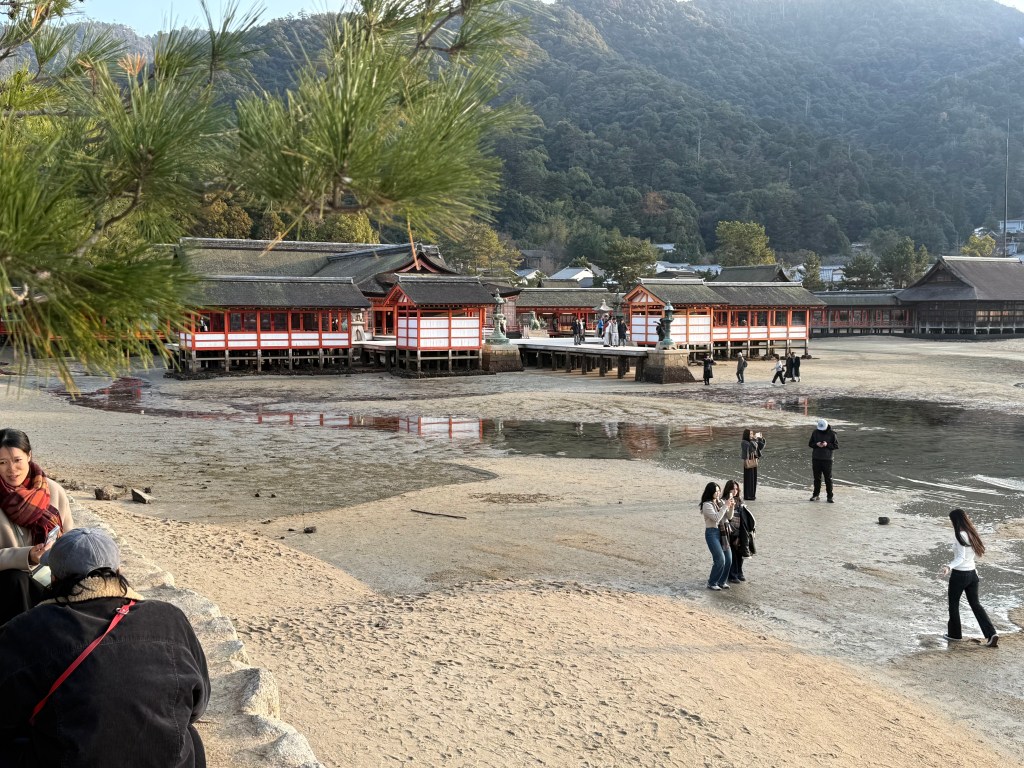

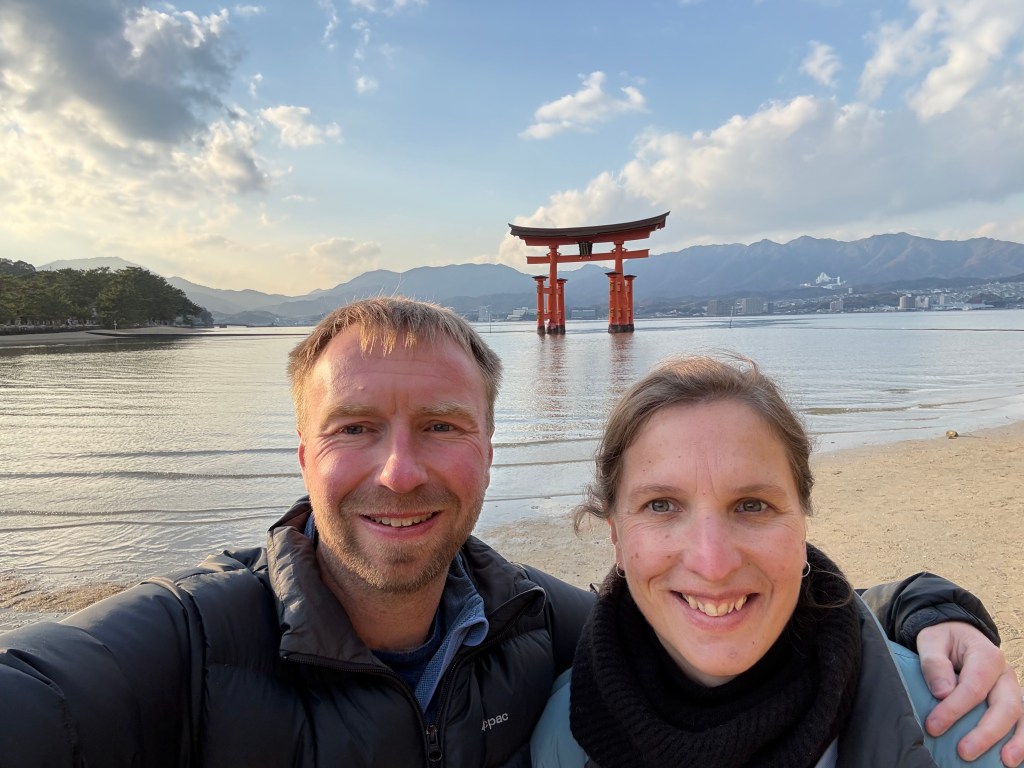
Then it was the journey home – a ferry back to the mainland, a local train to Hiroshima station and then the Shinkansen back to Osaka before a final metro trip to the hotel.
As we would be too late for beer time at the British pub, I had to settle for a beer on the Shinkansen.
Dinner was at a pork katsu restaurant where we both had pork with curry. It was sooo good. The place was tiny and by the end there was a big line trying to get in and take our seats.
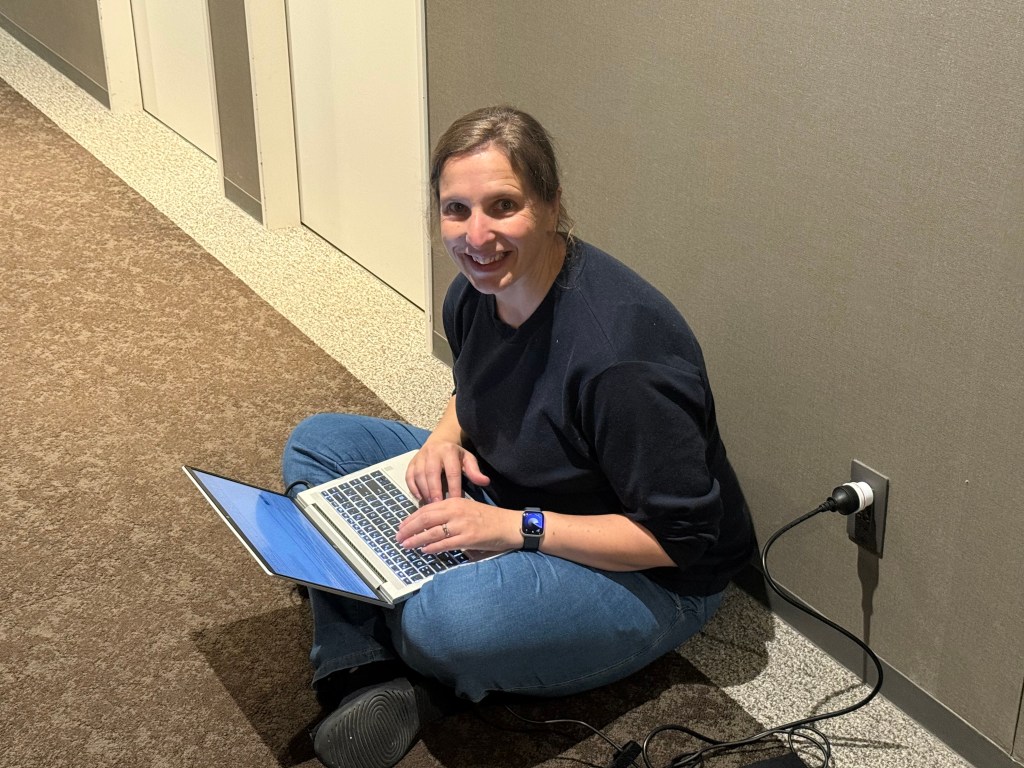
Lisa had to do so work but her work laptop was out of juice. Plugs in Japan are challenging as they generally only have the two prongs and are missing the ground prong. The two pronged chargers we had didn’t deliver enough power to charge the laptop. Lisa ended up sitting out in the hallway where there was a three pronged plug. Not her classiest moment especially when having to explain her weird position to other hotel guests who thought she was homeless!
17 December 2025
Up early again and had a convenience store breakfast – chocolate pastry, banana and apple juice. Very nice, except for the standing outside the store on the road to eat it.
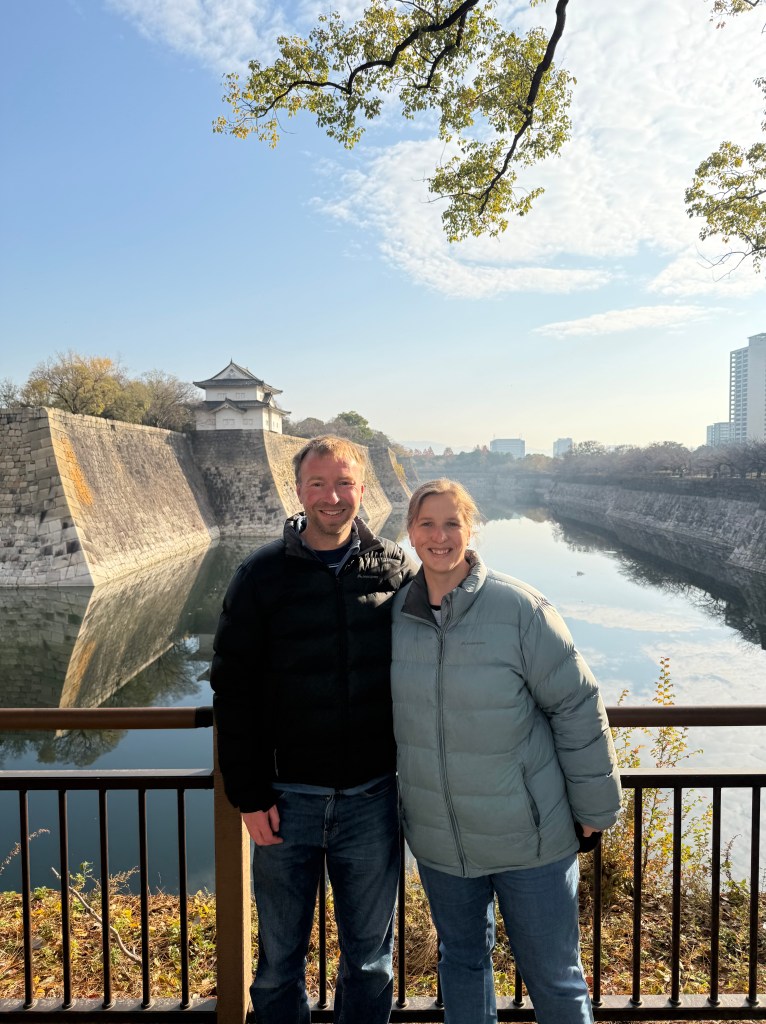
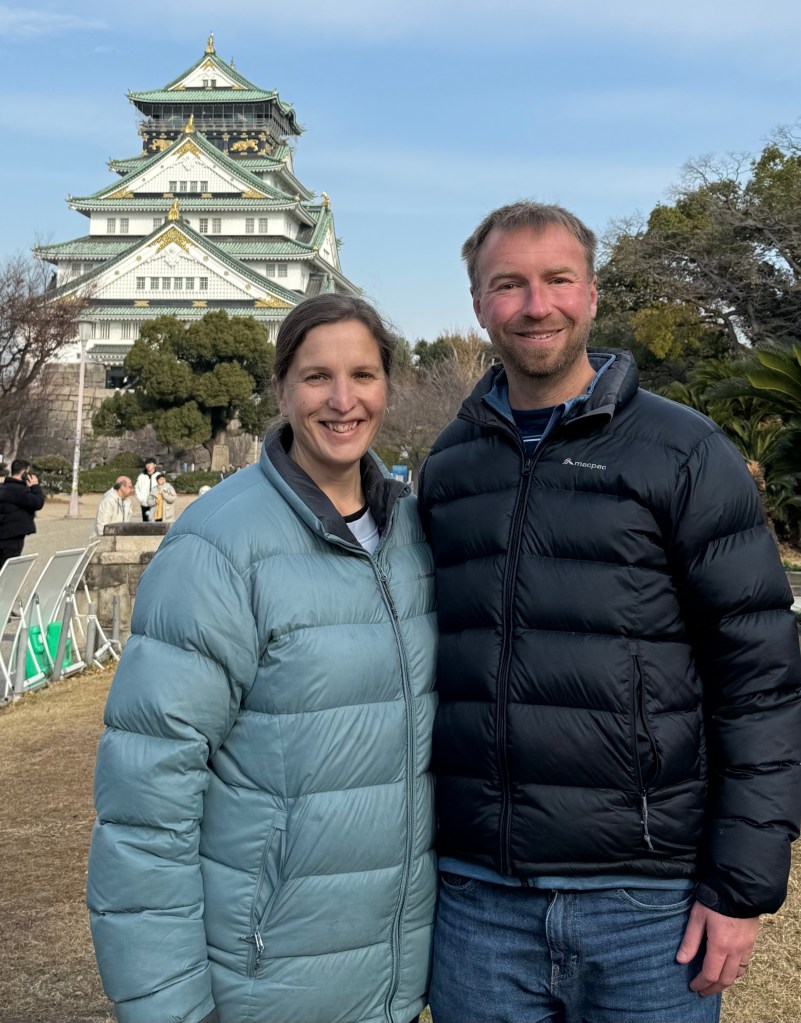
Then we were off for our walking tour of Osaka Castle. Our guide was Ken who was Japanese and very enthusiastic.
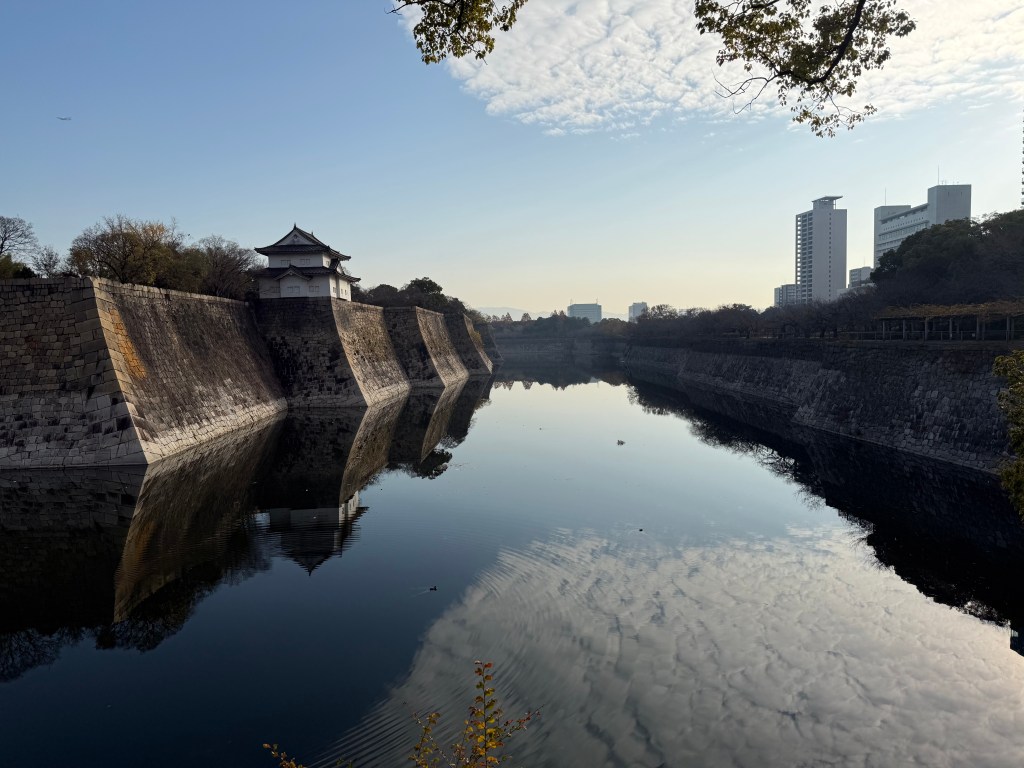
- There used to be twenty thousand castles in Japan during the feudal era. Today there are about two hundred still standing. Most of them were destroyed by fire or earthquakes. Buildings don’t have long lifespans in Japan due to these risks. Even Osaka castle is a recreation. The first castle was burned in victory, the second burned down after it was struck by lightning. The current castle was built in the 1930s and was funded by donations from the people of Osaka.
- The castle is surrounded by two large moats. The first moat is 50 metres wide and very intimidating. The inside moat is dry as they couldn’t dig deep enough there to get down to the water.
- There is a large stone wall similar to the one at Edo castle in Tokyo but even larger. It seems almost impossible for attackers to cross the moat and climb the wall while defenders are able to shoot at them from protected positions. It just shows the incredible strategic value of these castles.
- The castle and walls are made up of some massive stones, some of which weigh over 100 tonnes and were bought from hundreds of kilometres away. They were transported via ship but would have required huge numbers of men to move the stones to/from the ship.
- There was a shrine in the castle that specialises in business success so Lisa prayed that she can continue her amazing business success. It did seem like a weird focus for a shrine in this particular location.
- We ascended to the top of the castle for the observation deck that provided great views of the city. As we descended down the levels the museum provided more of the stories about the castle.
- The first castle was built by the first shogun – nicknamed the monkey shogun as he was short and looked like a monkey. He united all of Japan and was very powerful. He had a friend known as the tiger. When the monkey died his son was six and the monkey appointed a council to rule until his son came of age. The tiger was in the council and became more powerful. When the son came of age he took over but the tiger attacked him and they had a siege at the Osaka castle in winter. The monkey son begged for his life and came to an agreement with the tiger who became the shogun instead of the monkey son. Despite the agreement the next summer the tiger attacked, killing the monkey son and the burning the castle down.
- The battles sounded truly epic with one battle having 100,000 samurai fighting against 200,000 samurai.



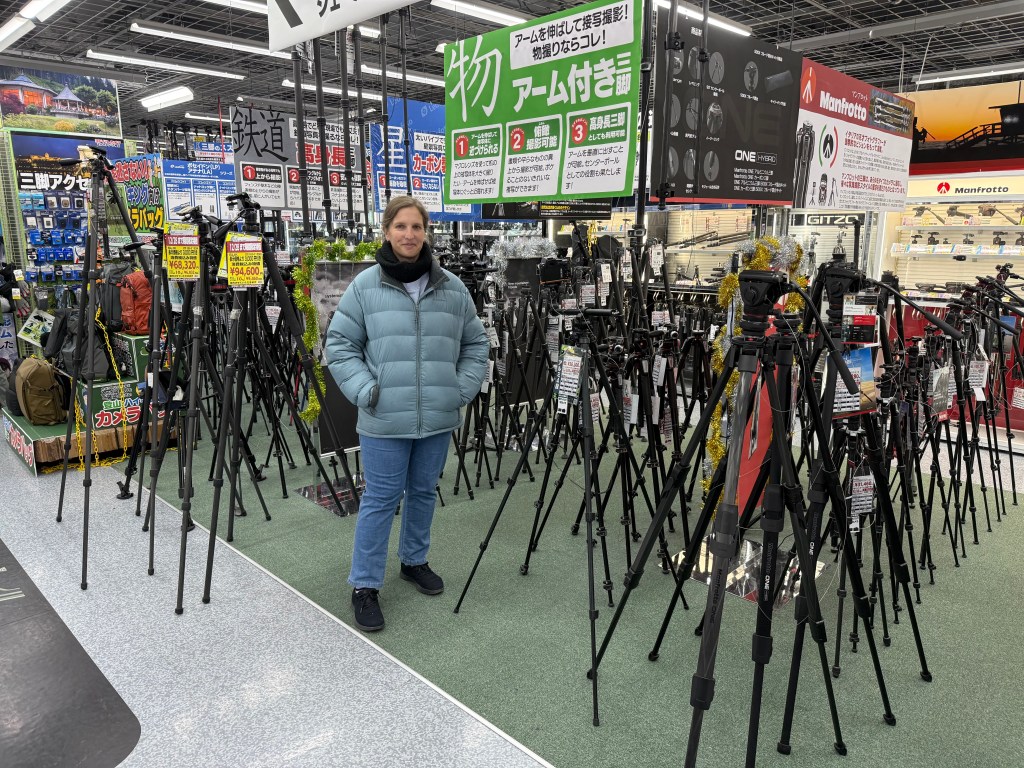
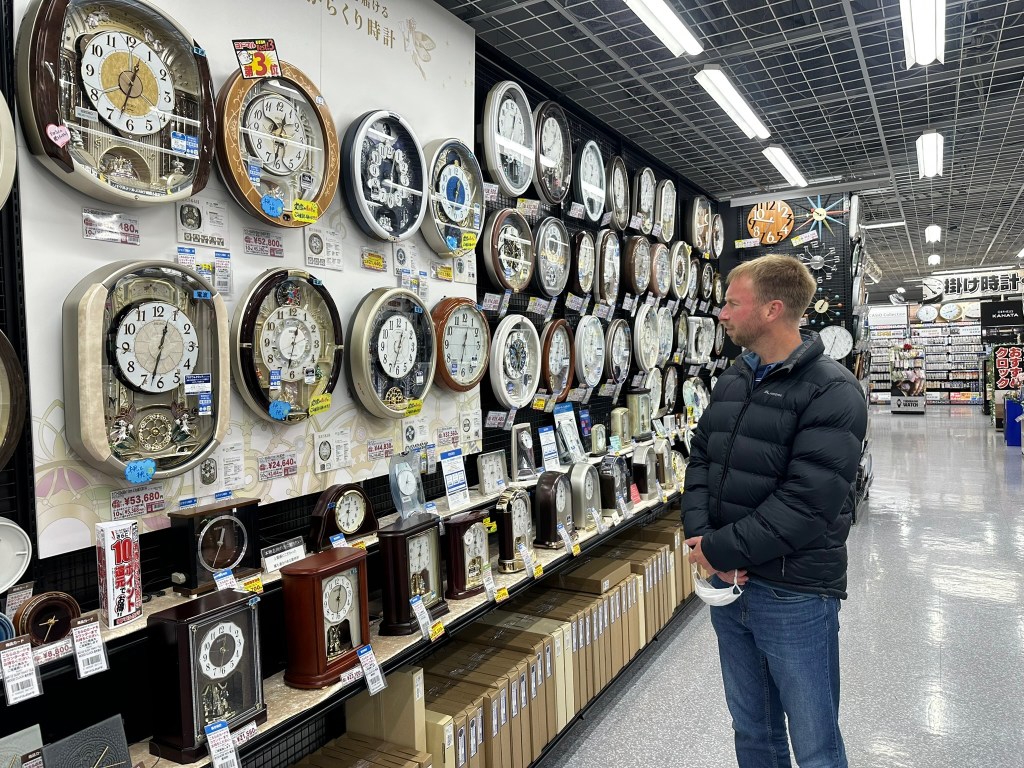
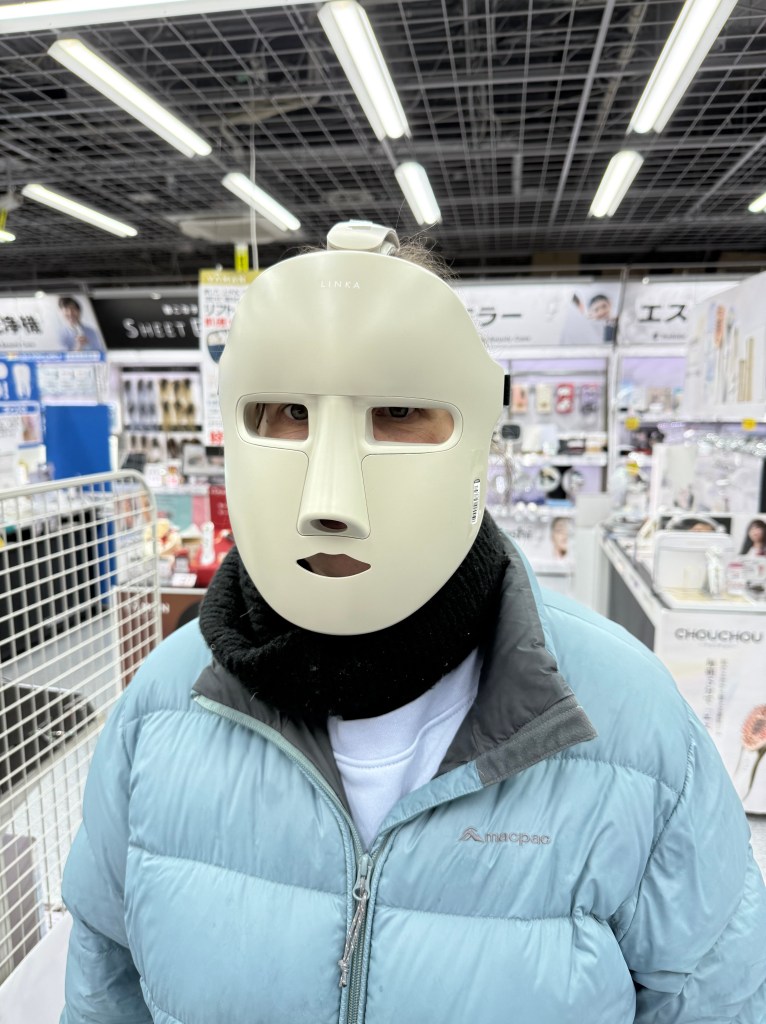
It was then off to Umeda which is the main train station in Osaka, but not where the Shinkansen goes as that is Shin (or new) Osaka. The area was very overwhelming with massive stores and we got stuck in the second store we entered. It was very confusing and we couldn’t even work out its name but it seemed to be a diverse store that sold everything! There was a watch section alone that was larger than most Noel Leeming stores in New Zealand. They also had walls and walls of clocks – who the hell is even buying a wall clock these days! The section for camera tripods was comprehensive – Lisa is only showing half of the section in this photo. It was a very easy place to get lost and overwhelmed and we spent too long wandering around being baffled at hundreds of bag options and row after row of products for making women look more beautiful – none of which we recognised or understood. Lisa did manage to get two small gifts for Emily so that was a win.
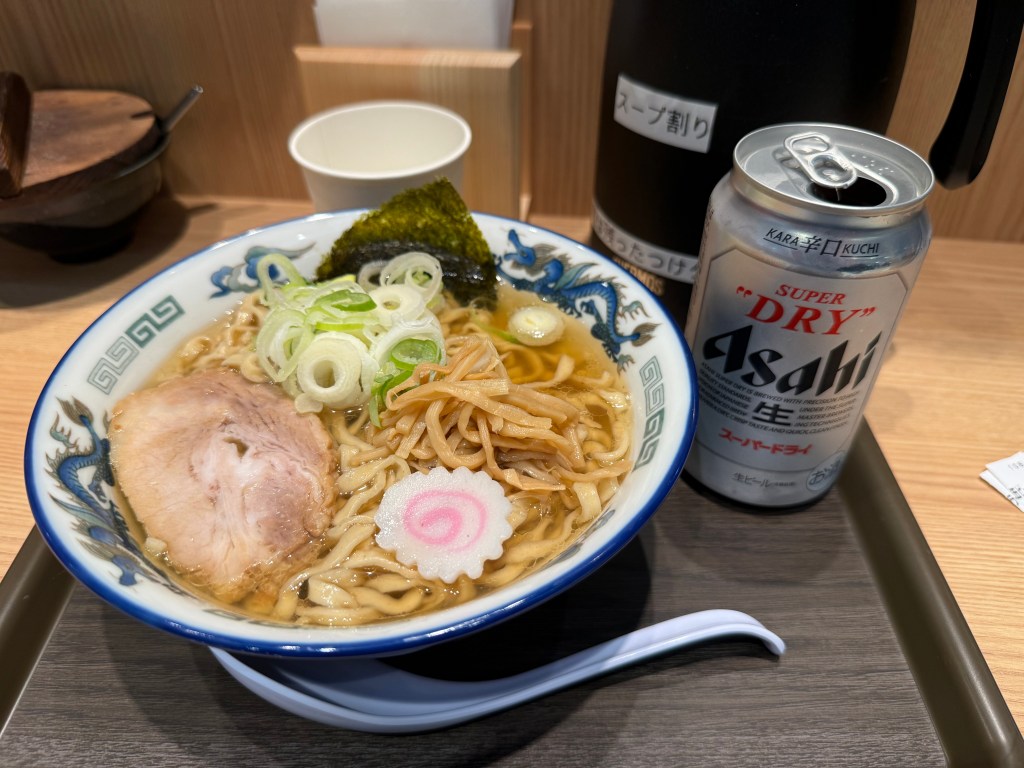
Lunch was at the food court at the top of the building. Even this was massive and provided a million options. Lisa had the pancakes with fruit. I finally had the ramen I had been talking about for the whole trip. I have to say it was underwhelming. With so many other amazing options I don’t think I will be choosing ramen again.
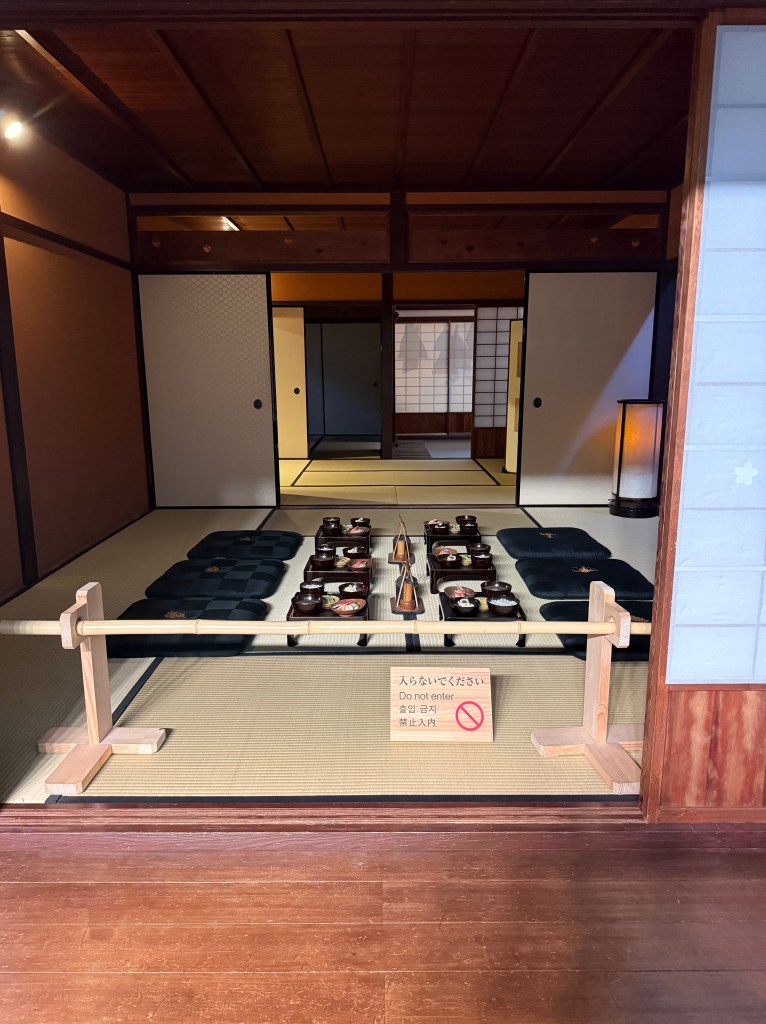
Lisa went shopping and I went the Osaka Museum of Housing and Living. This museum had a recreated Osaka neighbourhood from the 1830s during the Edo period. It took up an entire two floors of a massive modern building and was very impressive.
- Each neighbourhood had gates that would be locked at night, so you had to be back early. In the roof of the neighbourhood hall there was a fire watch tower. Fires were a massive risk due to most buildings being constructed from wood and so fires spread easily. The tower had a bell so that people could be warned and could prepare for fire fighting.
- There were several shops including a book shop, kimono shop and an imported goods shop. Japan was largely closed to outside trade during this period but did have some tightly controlled trade with Korea and (strangely) the Dutch. Interesting imported gods could be sold for a lot of money.
- The pharmacy was a key building however the audio guide basically said the key thing they sold were laxatives – so probably a relieving experience after the pharmacy trip but not an exciting one.
- There was a large house that would owned by merchants and rich people. Most people however lived in tenement housing in long buildings. These were very simple and people had limited space. I fear I would not do well with my snoring being liable to keep the entire street awake!
- The size of rooms was based around tatami mats – e.g. this room is six mats in size. interesting measuring system. Row houses were rented empty and the tenant needing to provide all of the contents including the tatami mats for the floor.
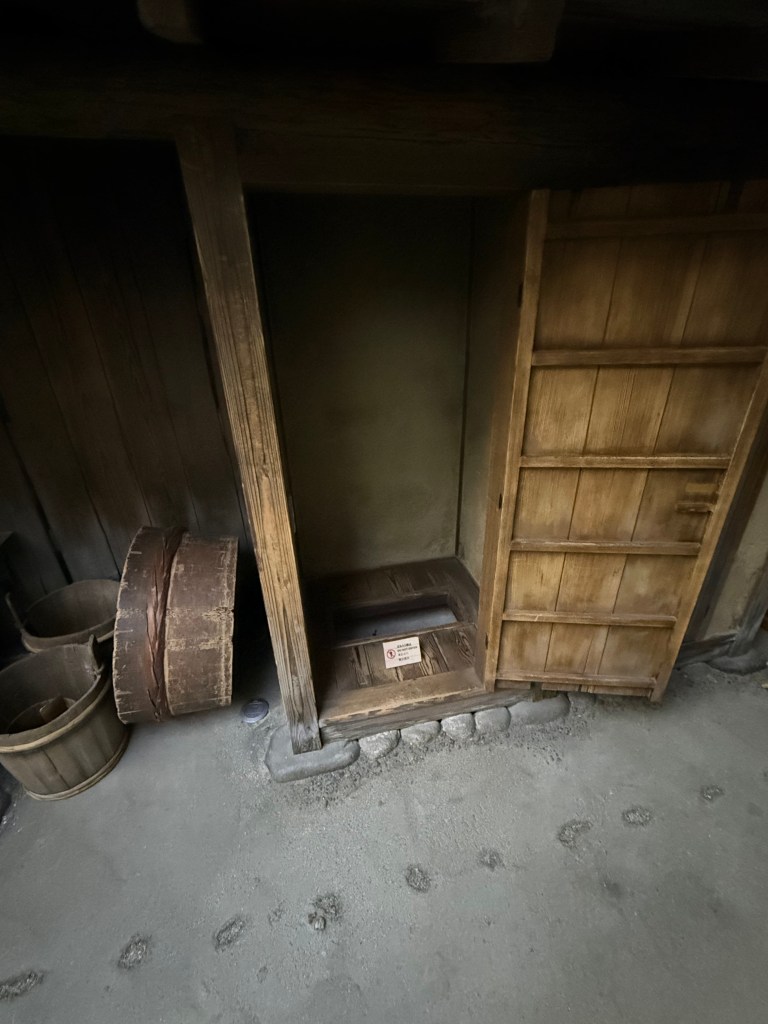
- There was a communal bath house as well as a community toilet for people who didn’t have one at home. The human waste would be sold to farmers as fertilizer for their crops. If a land lord has a tenant who isn’t paying rent at least he is making something out of them – even if it is coming from their waste!
- Beyond the neighbourhood there was another room which focused on more modern Osaka but there wasn’t much there and it wasn’t very engaging.

Then it was back to the hotel for a quick rest before our night tour of Osaka with Jay. This was a great tour with lots of detailed information.
- We started in the biggest slum in Japan. This was an area that historically had been populated by working class, lowly paid day labourers. It is well known across Japan as a slum but that is in relation to the rest of Japan. If we hadn’t have had it pointed out we probably wouldn’t have identified it as that.
- The vending machines in that area had lower prices and there were cheap meals and rooms available. You could get a tiny room for just NZ$7 per night. Communal bathroom and squat toilets though. Not for us.
- On one of the walls in an alley way there were little red Shinto Torii gates painted on the wall. Jay explained that these were there to deter people from urinating there as the religious symbols would hopefully make people reconsider – smart idea.
- The area had a lot of yakuza activity. People would end up in debt to them and be stuck paying it off. The yakuza would also provide accommodation to older people and then steal their pension as they received it.
- There was a police station that was heavily fortified. There had been riots occurring on a reasonably regular basis from the 1960s to the most recent in 2018. When these occur cars are rolled over and people try to burn down the police station. Fortifying the building makes it harder for them to succeed. There was also barbed wire on one of the stoops of a building opposite the police station – this felt so unexpected for Japan.
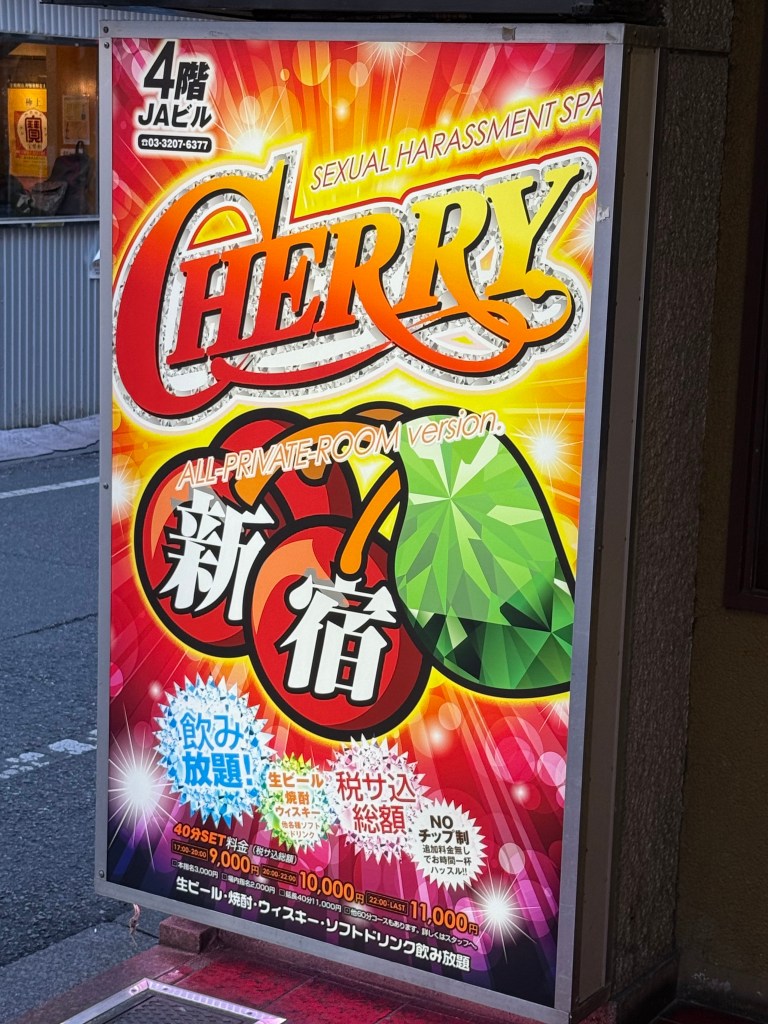
- We walked through the red light district. Prostitution is illegal in Japan so instead these are “restaurants”. They will serve you a meal and you just happen to fall in love (and have some sexy time) with the girl who is working there. At each restaurant the girl is waiting and she has an older woman minder. You can then negotiate with them. The older woman is also the chef – there probably isn’t much food being served. At the end you get a lollipop as a dessert!
- We walked down the street and could observe the women (both old and young). There was probably fifty on the street we walked down, with there being more streets in the area. Interestingly, they weren’t comfortable with women looking in and so many of the women would cover their eyes when Lisa walked past with me. I tried walking behind her so I could get a good view, but Lisa quickly saw through my plan.
- We walked down the longest karaoke street in the world with dozens of karaoke bars. The sound coming out of them was horrific! These are bars where you can buy a drink and sing some songs. Pretty girls are often used to lure men in and then encourage them to drink more while praising their undoubtably poor singing – in return they receive a share of the revenue from the bar.
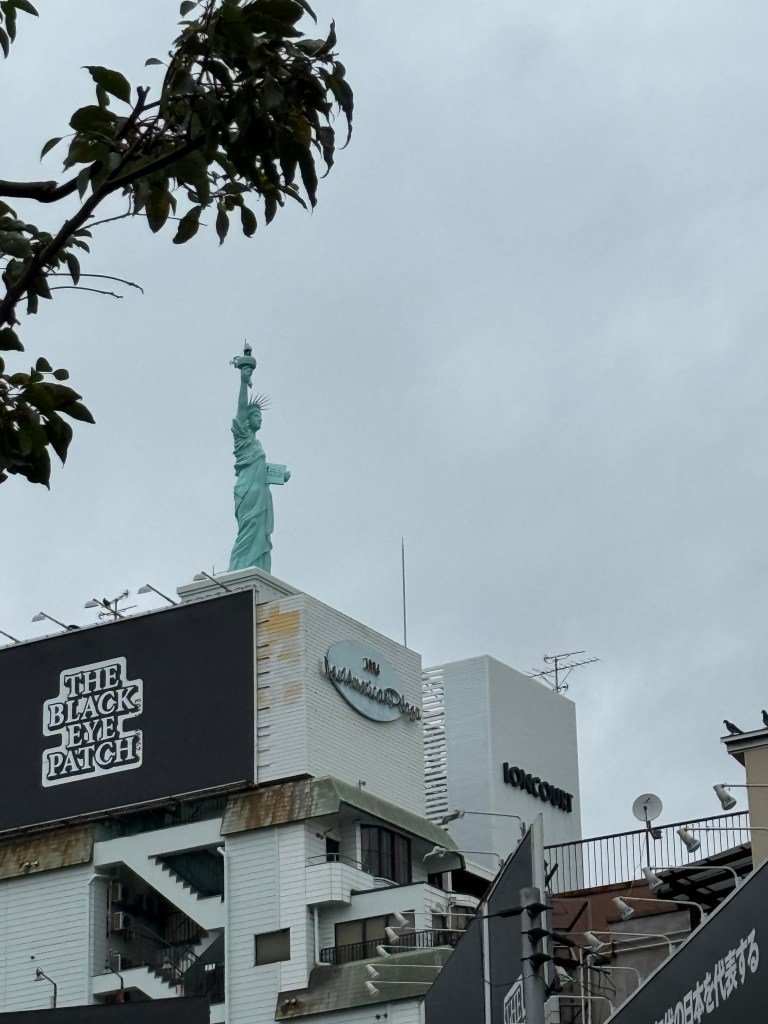
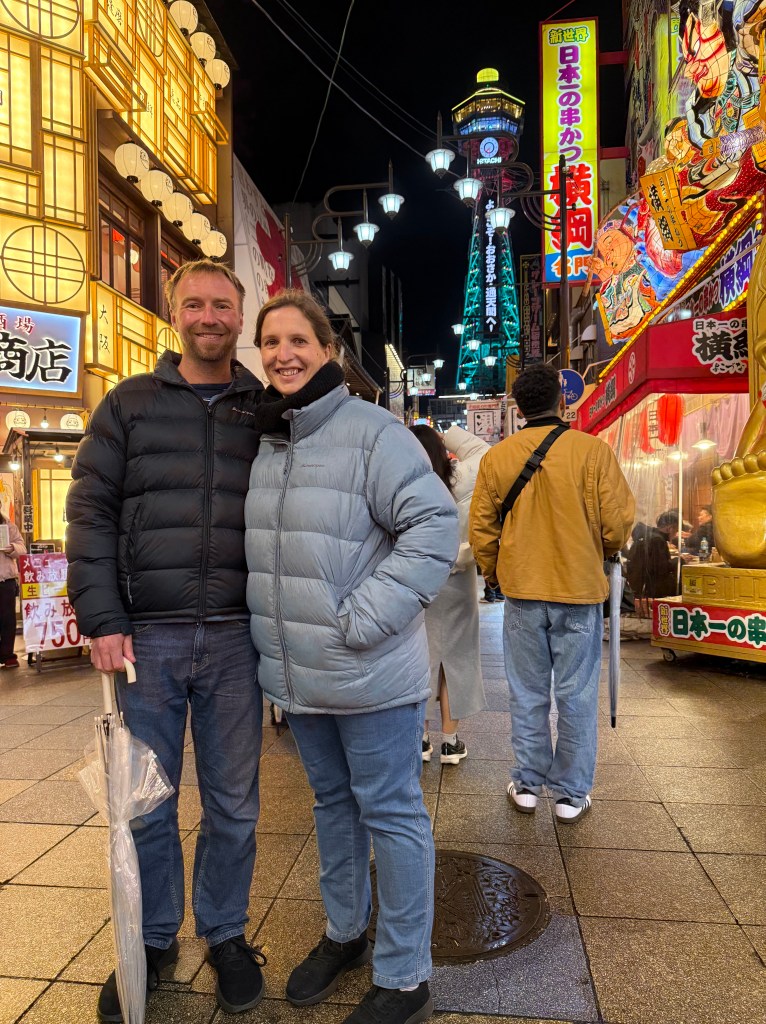
- We finished at the Tsūtenkaku tower. This was originally built in 1912 as a replica of the Eiffel Tower. It was damaged during the war and rebuilt to a different design. The building of it showed Osaka copying a great city but also the ambition of the city to want to have interesting things.
We didn’t get a lot of photos, as it wasn’t really the most appropriate areas to be taking photos.

Then it was off for a dinner at a Mexican place where we had tacos and beef skewers. We were given gloves to eat with. Weird but yum!
 Matt and Lisa's Adventures
Leave a comment