11 January 2024
We had a bit of a lie in after the late night but had to get up for our Third Reich walking tour. Before leaving we layered up as much as possible as the temperature was negative seven and the projected high negative two – it was going to be a cold one!
It was a bit of a walk from our hotel to Marienplatz which is the old town square in Munich. Public transport was impacted by the strike so we kept it simple by walking.
We had a quick bathroom break before the tour but had problems paying as the machine didn’t like our card. Luckily there was an attendant who helped us but she didn’t speak English and communication was a challenge. She was a bit rude. Lisa got very frustrated and thought we should be let in for free, but the attendant definitely wasn’t doing this! I’ve said it before but paying for bathrooms is one of the things I dislike most about Europe! After finally getting in, Lisa considered teaching the attendant a lesson by giving her something to clean up, but thought better of it.
Our guide was Alex who was a Munich local. He was very knowledgeable and gave good information but lacked some of the presentation flair and enthusiasm that we had from previous guides. The biggest challenge was how cold it was and I think everyone on the tour (including Alex) was freezing. It was ok while walking but stopped on the snow was hard work. As it was so cold we didn’t get many photos. Keeping our gloves on was more of a priority.
- Hitler was born in Austria but came to prominence in Munich. This was where he joined the DAP which eventually became the Nazi party
- He spoke a lot at beer halls including the famous Hofbrauhaus. It was here that he spoke about his beliefs and also changed the party name to Nazi party
- He led a beer hall putsch (or coup) in Munich starting from the Hofbrauhaus beer hall. He captured the Bavarian governor and marched on the defence ministry. The police opened fire and fifteen nazis, four police and one innocent bystander (a waiter who had gone to investigate the noise) were killed. Hitler was arrested
- Hitler was sentenced to only five years in prison which was very lenient for high treason. It was in prison that he wrote his book Mein Kampf.
- After he came to power they had parades each year to commemorate the people killed in the coup. These sixteen people were called the “blood martyrs”. They were buried in newly built Nazi temples.
- There were major Nazi rallies in Munich and the central parade area was enhanced to make the easier
- After the war all the Nazi signage and buildings were cleansed as the Americans were in charge of Bavaria

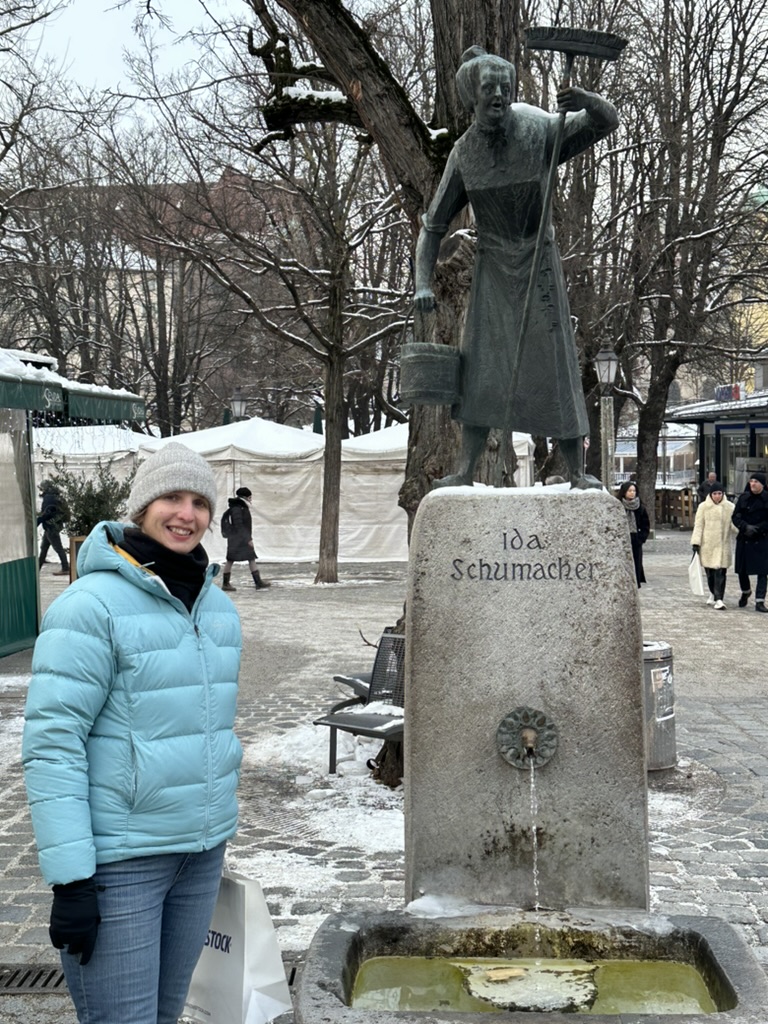
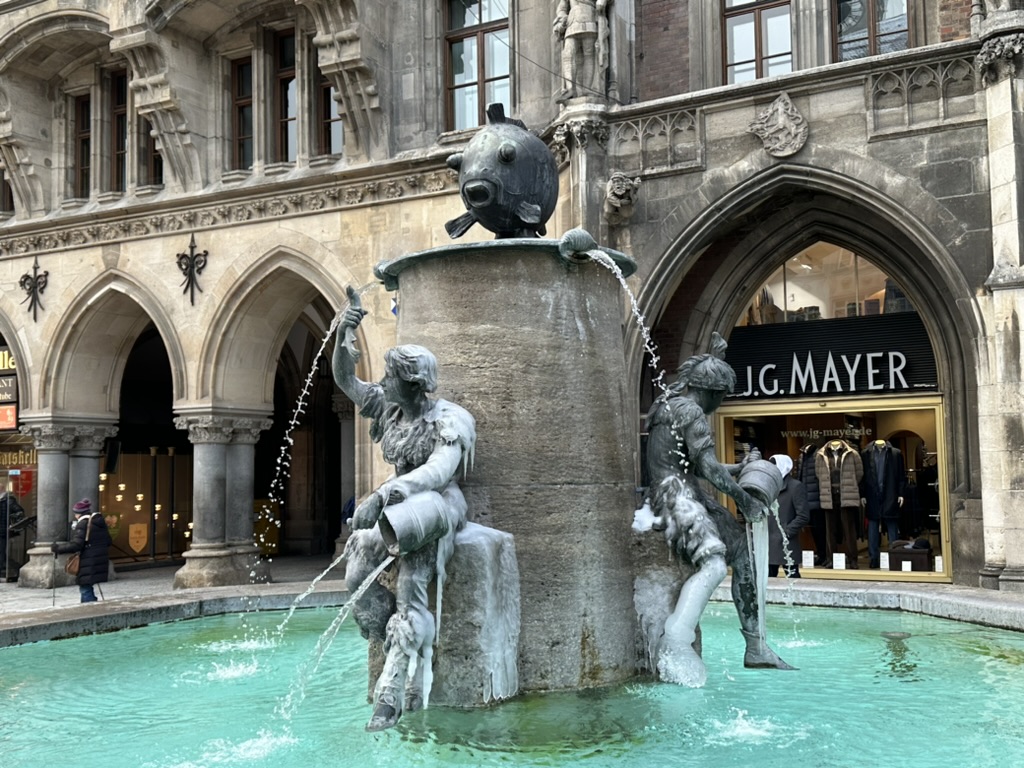
After the tour we were freezing and went to the Park Cafe as it was the closest one we could find quickly. We had warm hot chocolates and baked potatoes – it was so good! Lisa was so cold she wanted to put her hands into the food – I told her “we do not fist potatoes”!
The afternoon was a bit weird. We walked towards the Munich history museum stopping at random sites along the way. When we got to the museum it was shut for renovations – it would have been helpful if the website had told us this. Instead we spent the afternoon wandering randomly around the old town. Lisa purchased some Birkenstock sandals which she told he are much cheaper than in NZ but still seemed very expensive.
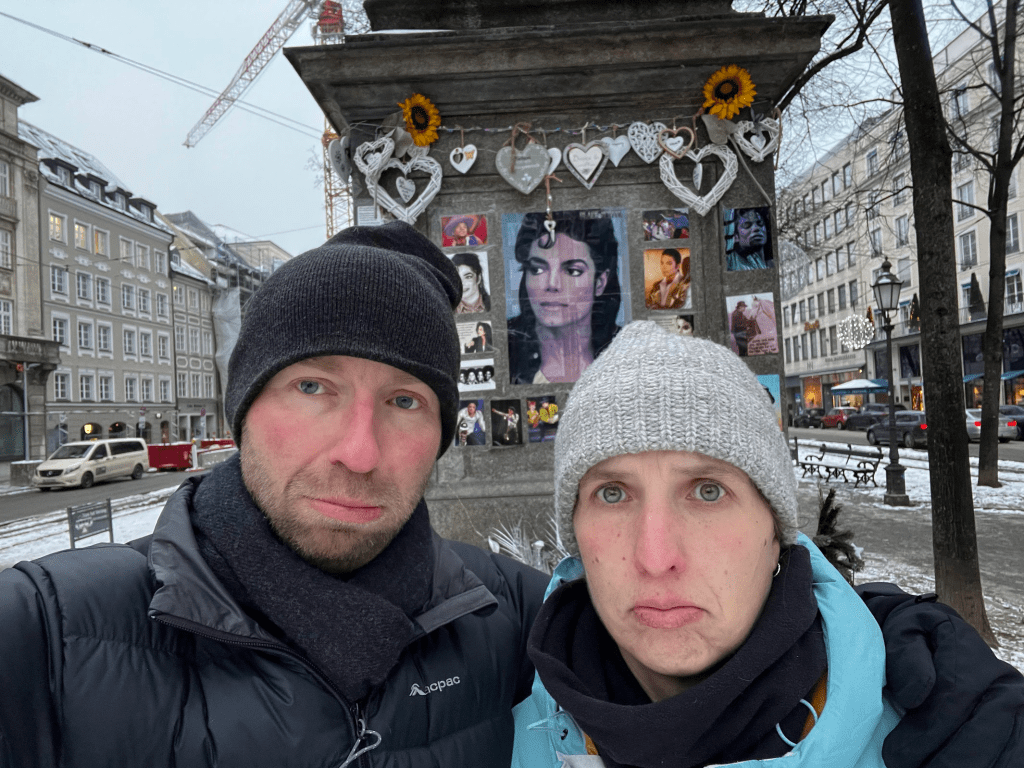
We went to the Michael Jackson memorial. This is near the hotel where he held his son blanket over the balconey. The locals have taken over another statue in the area and just added Michael Jackson pictures to it.

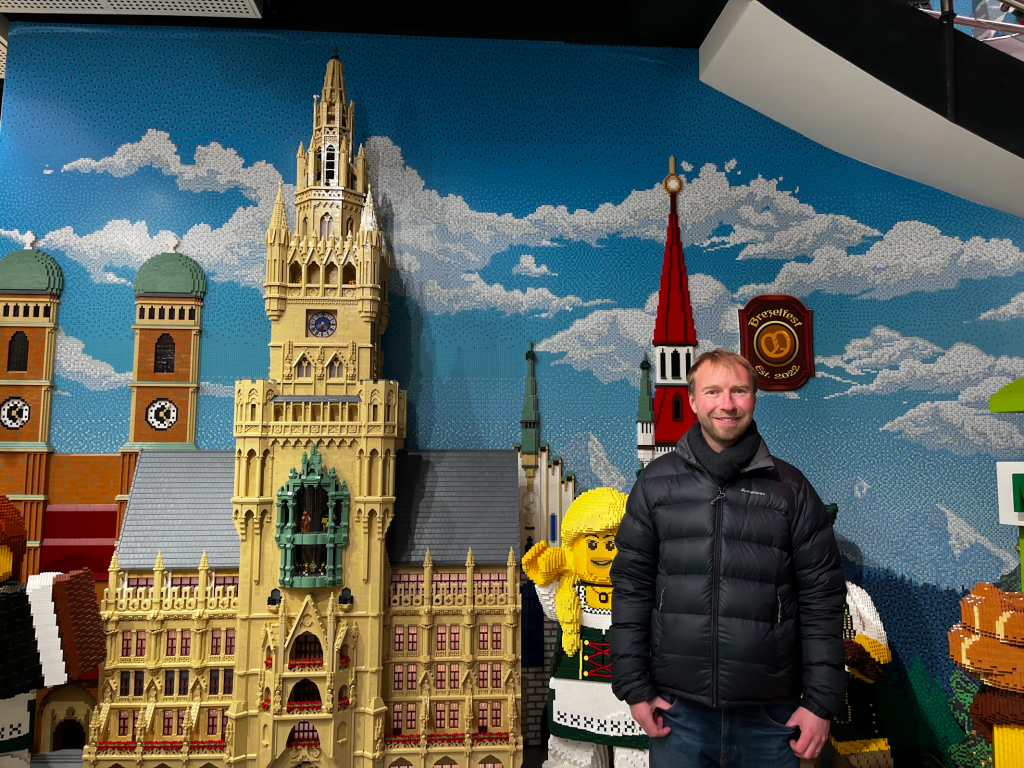
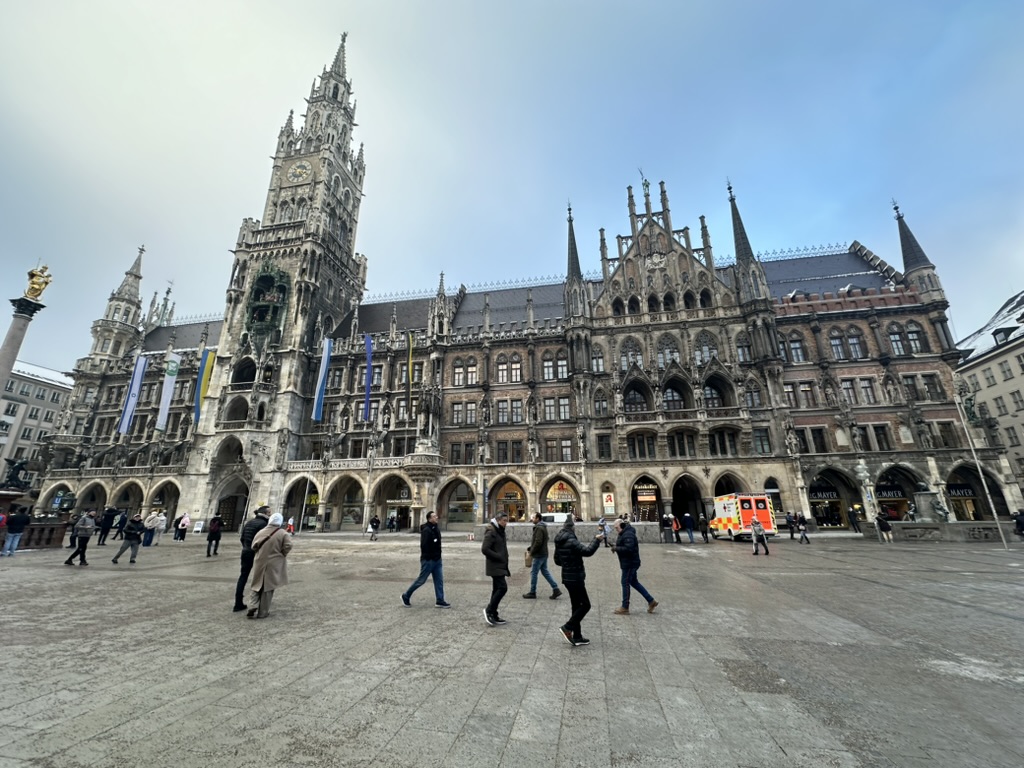
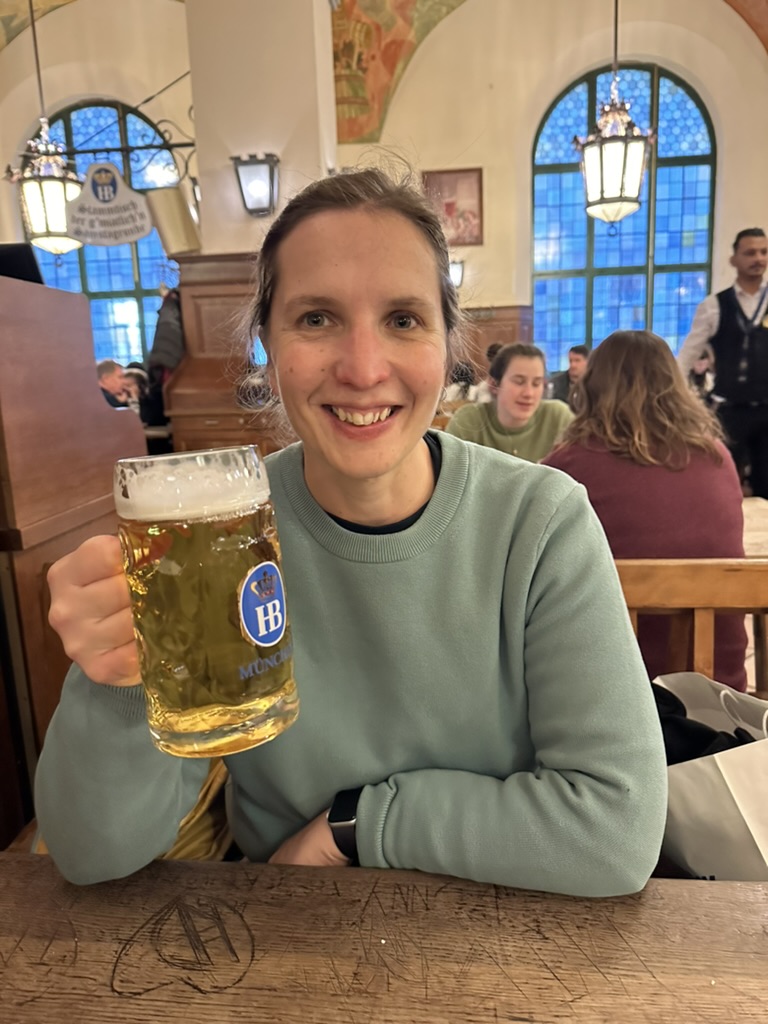
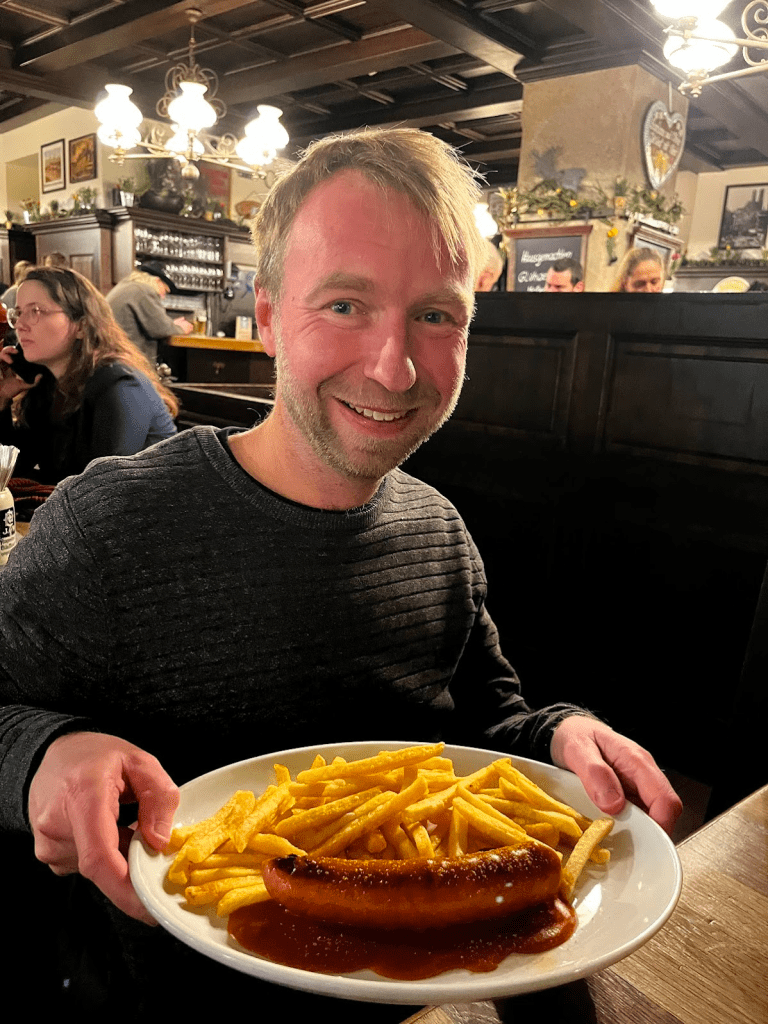
When it was finally an appropriate time (4:30pm) we went to Hofenbrauhaus and had a beer. This was a large and busy beer hall. For dinner we went to a restaurant nearby and had currywurst.

12 January 2024
We had a late start and then caught the tram to Marienplatz. Lisa had done some research and discovered a nice hot chocolate place called Beluga. We arrived there when it opened at 10am but it wasn’t open as the lady was still setting up chairs in the street. We killed nearly half a hour wandering around the nearby market and homeware store. While waiting we also saw a woman get hit on the head by a chunk of snow that fell off a four story building after it was pushed by a bird. It looked very painful and it wasn’t a risk I had thought about until then!
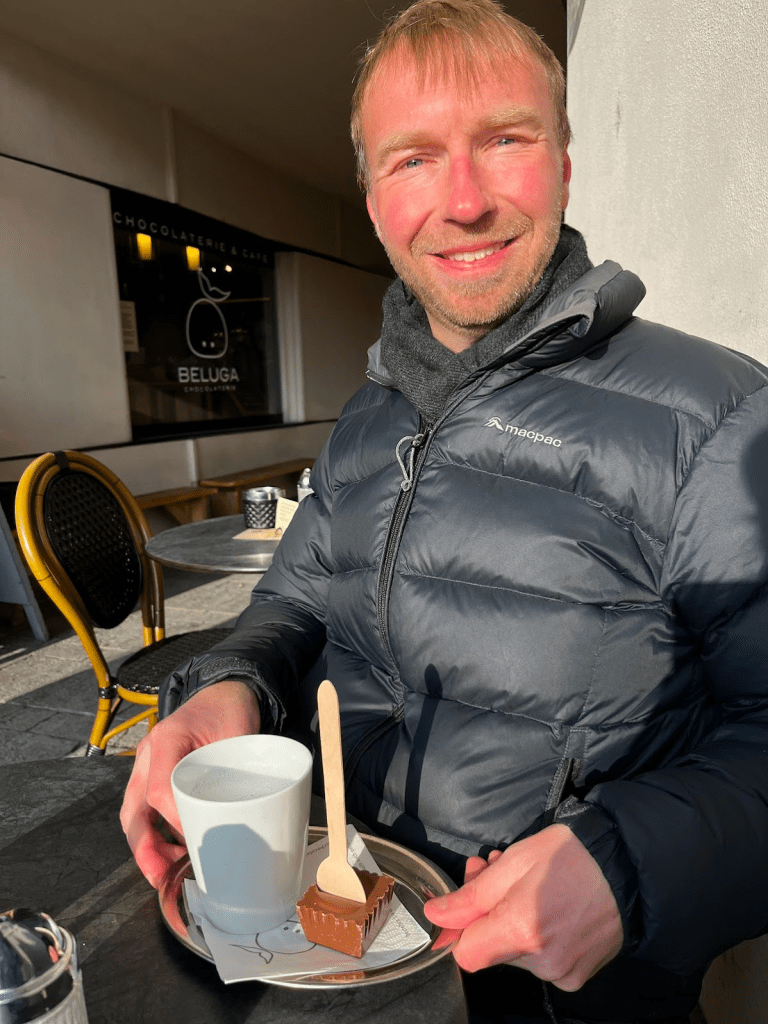
Finally the hot chocolate shop opened. Their approach was to have chunks of chocolate in different flavours. They gave you a cup of hot milk and you melted the chocolate in the milk. Lisa had white chocolate and I had milk chocolate – they had over thirty flavours but we had the most basic! It took a while to melt but once it had it was a delicious drink and the best hot chocolate so far in Germany.
The other day we had found a science museum in Munich and so we headed there. It was really good and included
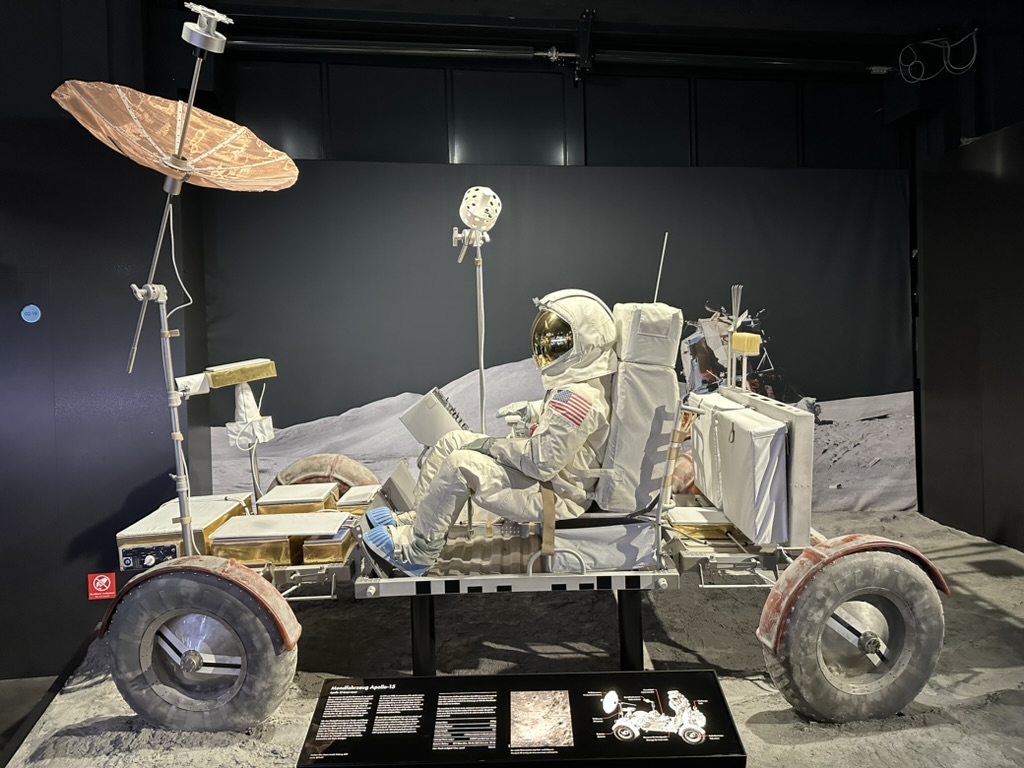
- A great section on space exploration, including a V2 rocket engine, lots of space ship models and a model of the lunar rover.
- A wide selection of modern aircraft. They had an interesting video following where a bag goes at the airport – it is a lot more complicated than what most of us appreciate! They had different aircraft parts and cutaways of some Airbus aircraft which gave a good insight into the complexity of a modern aircraft
- Historical aircraft including a lot of information about German aircraft and engine development
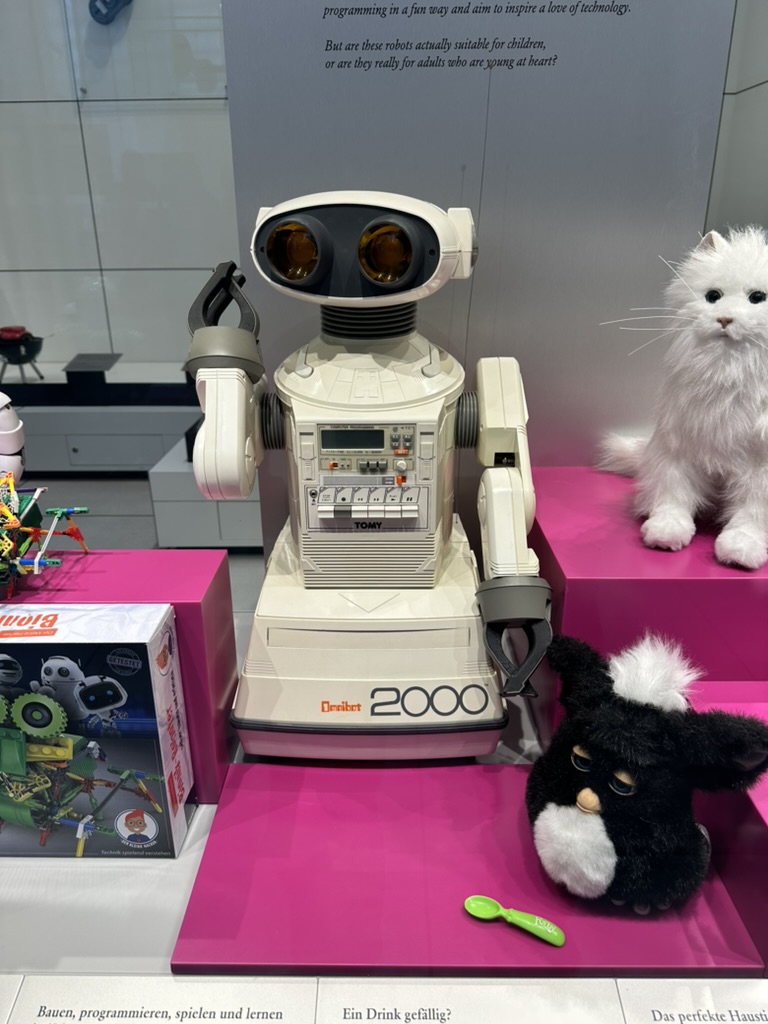
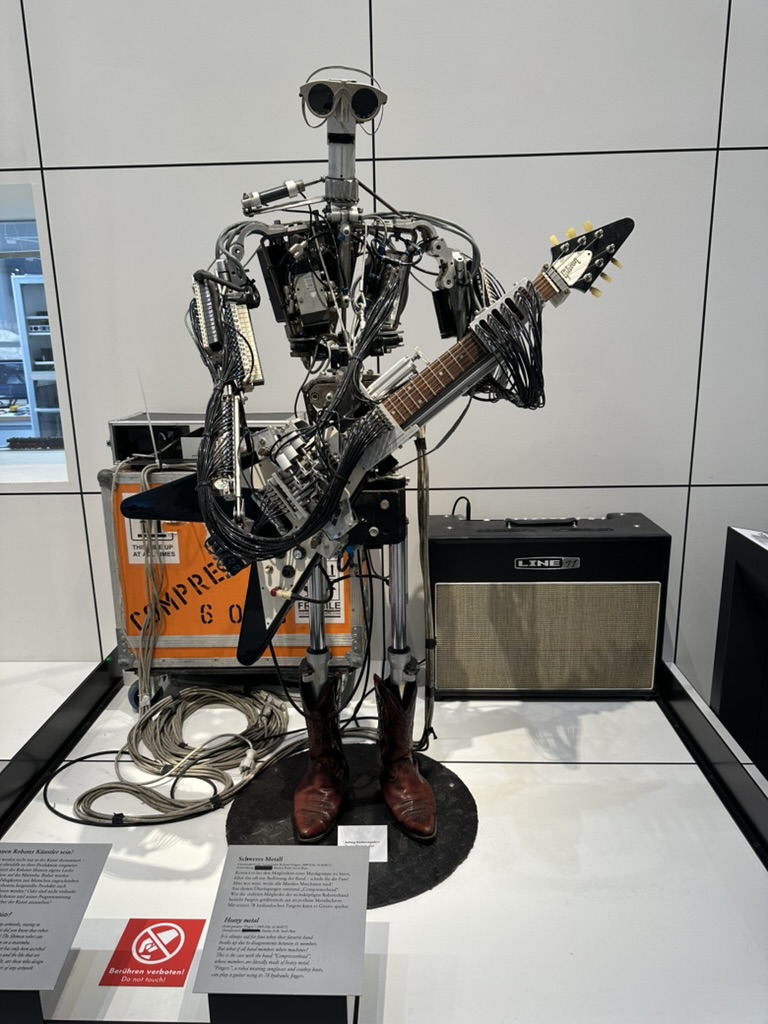
- A section in robotics. Interesting to see some of the older style robots and what people imagined would be developed in the future. It highlighted how far we have come but also what the limitations of robots are – so many things that are simple for us (recognising items and gripping objects) that are incredibly difficult to program in robots.
- Model railway trains but of more interest was the history of the German railroads which have had a big impact on the growth and development of the country.
- A physics section. There were lots of references to Rutherford here but sadly none of them identified him as a New Zealander.
- There were some other interesting sections that Lisa explored around food and chemistry along with code breaking. But I ran out of time to get through everything

We had lunch half way through at the rooftop restaurant of the museum. There was a very nice outdoor area but all covered in snow so we were indoors. I had another currywurst which was very good.
In the afternoon we had booked a Munich walking tour. It departed at 3pm and we were hopeful that the city might be a little warmer at that point. Starting the tour it did feel less brutal but as the sun went down the temperature did too and it was horribly cold by the end.
Our guide was Luís, originally from Mexico with a German father. He spent a lot of time in Munich growing up and has now been living in the city for many years.
- We started at the statue of Juliet. This was a gift from Verona which is a sister city of Munich. The legend is that touching Juliet’s breast will help you find love. Originally Verona gave a male statue too but that was sent back after concerns about what people would rub for luck! Juliet’s breast is a very different colour from the rest of the statue so a lot of people have sought luck!
- We went past several old churches. However, only small parts of the churches are original as most of the city was destroyed by the aerial bombings in the second world war. You can normally spot the original parts as they are made of brick
- There is a footprint in the floor of the Munich cathedral which is said to be the footprint of the devil. The story goes that the bishop didn’t have enough money to finish the building and so made a deal with the devil for him to pay. In return the bishop was to make the cathedral dark with no windows. The bishop reneged on the deal and installed lots of windows. When the devil returned and realised he had been tricked he stamped and made a footprint. The other story is that the bishop got the money by selling indulgences from the pope. The people of Munich are very Catholic and originally he struggled to sell them. He then started selling them for people’s dead relatives which was more profitable. In this story the footprint is from the architect of the cathedral. But the devil story is more memorable!
- There was a memorial that contained two lions. One was looking at the Royal palace and had its mouth open – that was to encourage the people to tell the royals what they wanted and be vocal. The other lion looked at the church and had its mouth closed. This was a warning that people shouldn’t question the church
- The new gothic town hall wasn’t bombed during the war and neither were the spires on the cathedral. This was deliberate as these high points were used as land marks by the bombers trying to find their targets
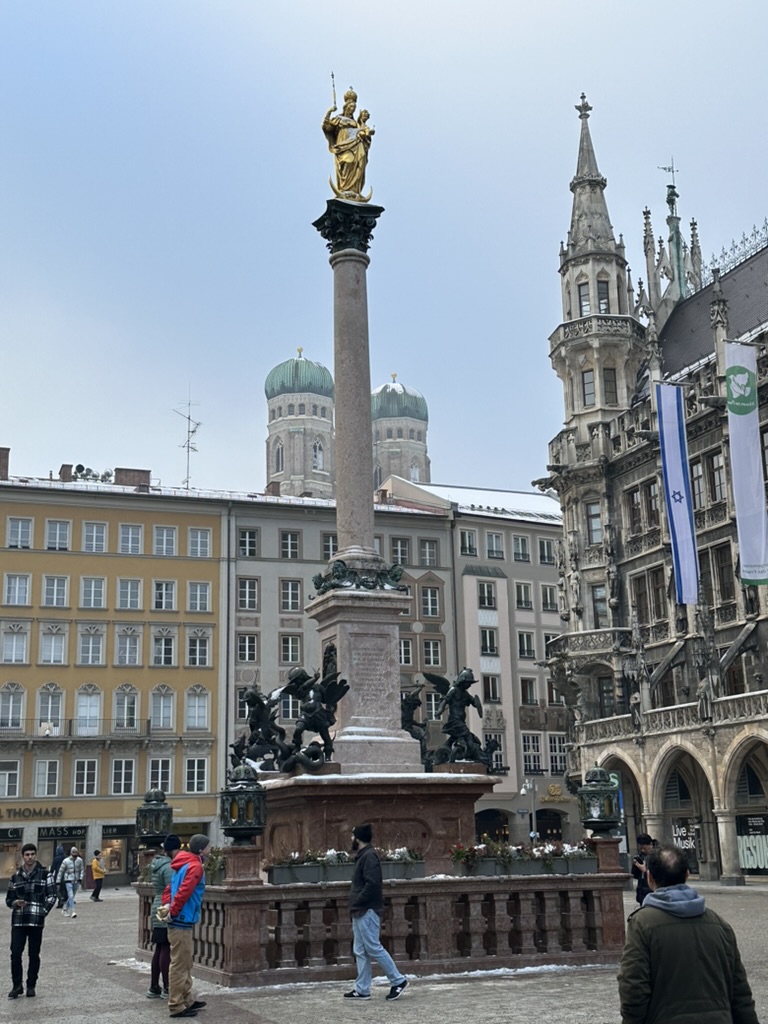
- There is a state of the Virgin Mary in Marienplatz – that is why it is named that. During the thirty year war the Swedish army campaigned through Germany. Munich didn’t have enough troops to fight and so they struck a deal with the Swedes that they would pay them in return for not attacking the city. The statue was put up as a remembrance and there is a statue of the military commander who struck the deal. It was an interesting solution but seems a little cowardly
- On a similar note, Bavaria became a kingdom because of Napoleon. The Bavarian prince struck a deal where Napoleon wouldn’t attack them in return for a large amount of money and a contribution of troops for Napoleon’s Russian campaign. Bavaria contributed 30,000 troops and only about 3,000 came back

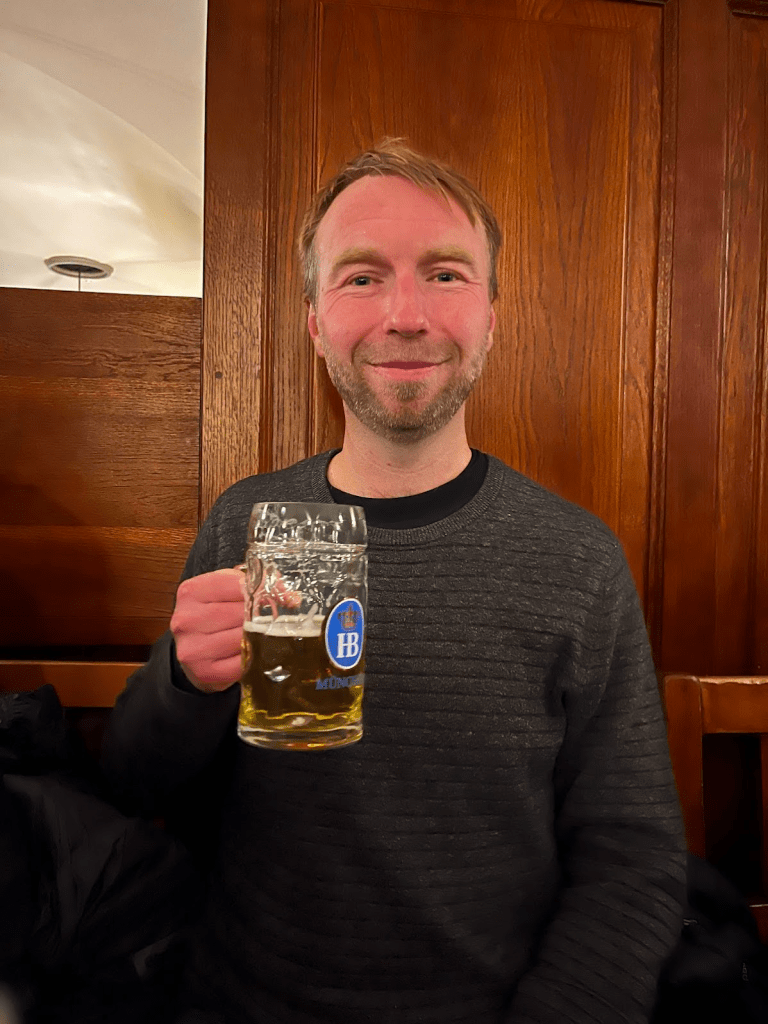
As the tour finished at the Hofbrauhaus beer hall it felt only right to stop for a beer. While paying I got in trouble for not leaving a tip – I wasn’t expecting that in Europe! Bayern Munich were playing later that evening and the hall was full of supporters and much rowdier than the previous day. We had originally looked at going to the football but were unable to get tickets. That was lucky as I don’t think we could have survived in the cold of the stadium at night!
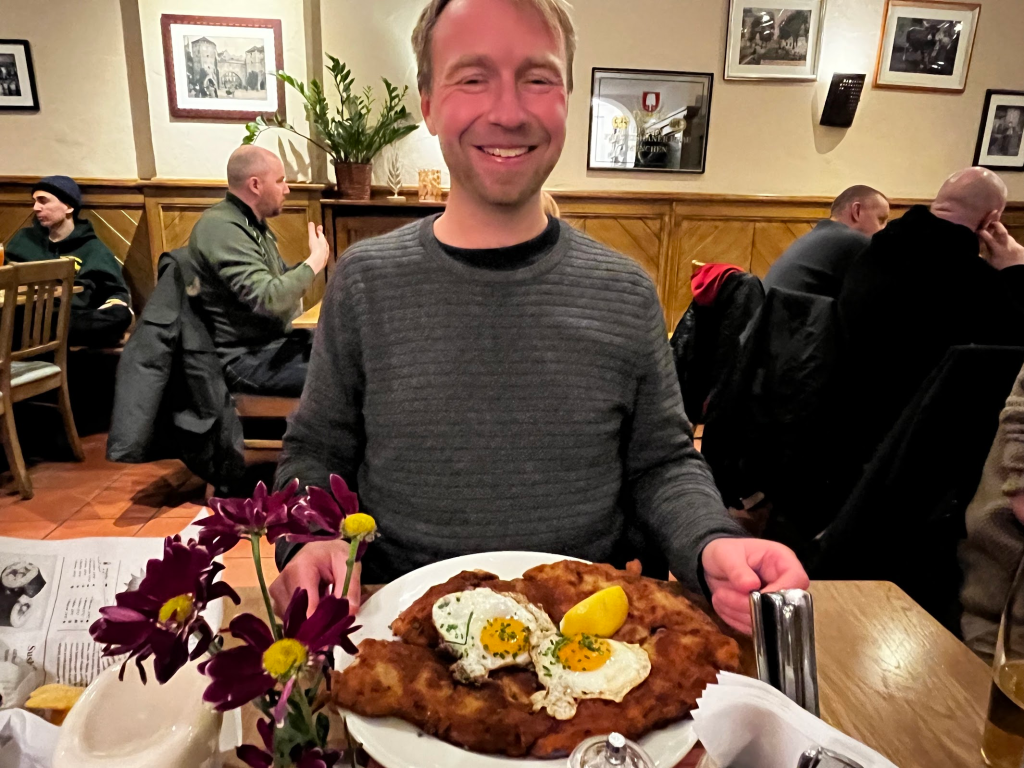
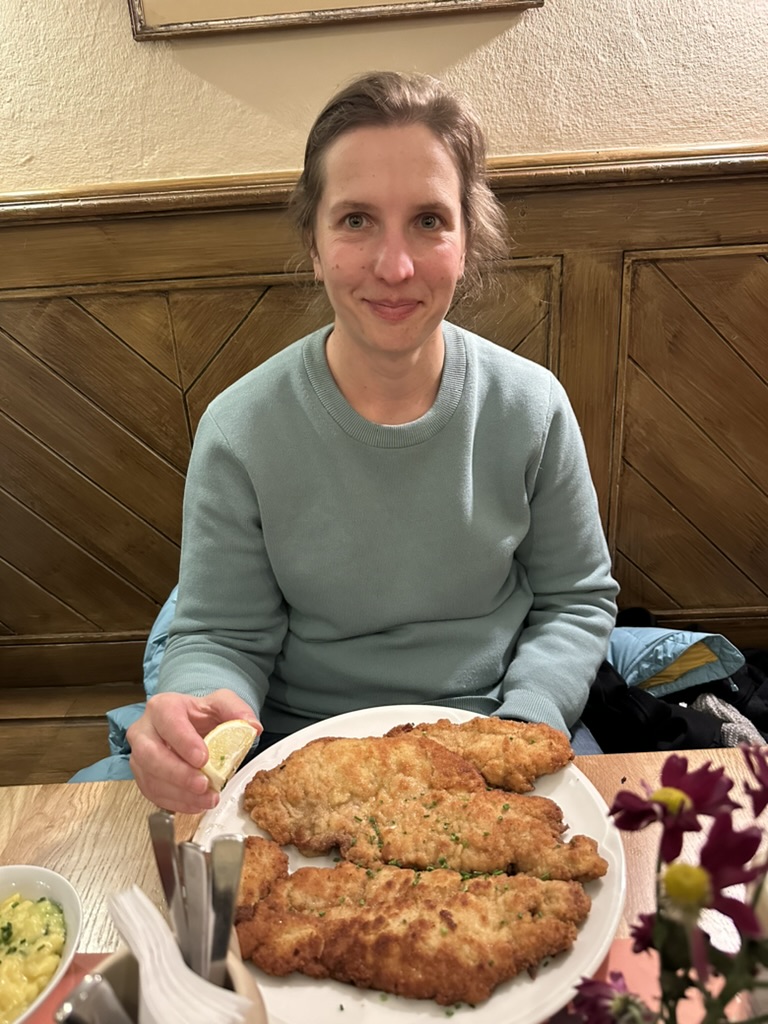
For dinner we went to Andy’s Krablergarten which is a well known schnitzel restaurant. They had a whole page of schnitzel options and another page of cordon beau options. It was a fifteen minutes walk to the restaurant and then another fifteen minutes walk home afterwards. Lisa basically ran the entire way in order to keep warm and get there faster – it was quite funny to watch! The restaurant was really good but the servings were massive. I had the hamburger schnitzel which was crumbed and served with two eggs on it. It took up an entire plate and I finished about half of it. Lisa had the pork schnitzel which was a similar size. A couple of the locals around us finished all of their schnitzels along with their sides but the other tourists were saw were struggling like us. Some people even had their left overs wrapped in foil for them to takeaway.
13 January 2024
Day trip to Nuremberg. We had booked in a walking tour of the old town and the Nazi rally grounds through Get Your Guide but it was cancelled – apparently because of the strike but that wasn’t a convincing excuse as the strike ended the previous day. Instead we booked a last minute free walking tour.
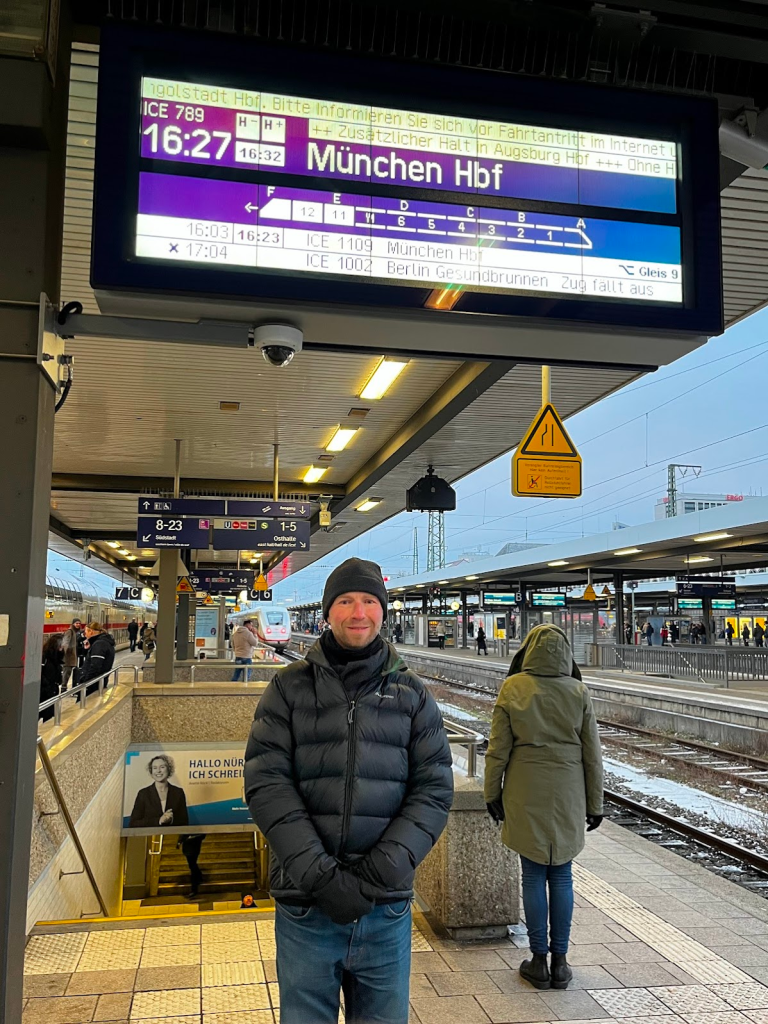
Our bad luck with trains continued and our train was delayed half an hour before leaving Munich and then had to stop along the way a few times for unspecified reasons (the reasons probably were announced but without knowing German we had no idea why). This meant that our walking tour which was for 10:45 and should have been easily achievable with our planned 10am arrival was looking in jeopardy. As we got closer it got tighter. Thankfully, the second half of the trip was faster but when we spent five minutes stopped just before the train station our frustration levels reached their maximum!
The train ended up arriving two minutes before the tour start time but with a twelve minute walk to the meeting point. We ran, literally ran, through the snow and ice to get there. My shoelace kept coming undone which Lisa did not find amusing. Eventually we made it and found our guide – only to discover we were the only people there and he wasn’t going to do a tour for two people. Needless to say we were very frustrated!
The guide did spend a few minutes with us giving a map and providing some details on what to see in the town. Our first stop was the glockenspiel in the main square which was great timing for us. This was created in the fifteen hundreds in honour of an emperor. There are seven princes that come out and bow to the emperor and they do this three times. It’s sort of cool but pretty underwhelming.
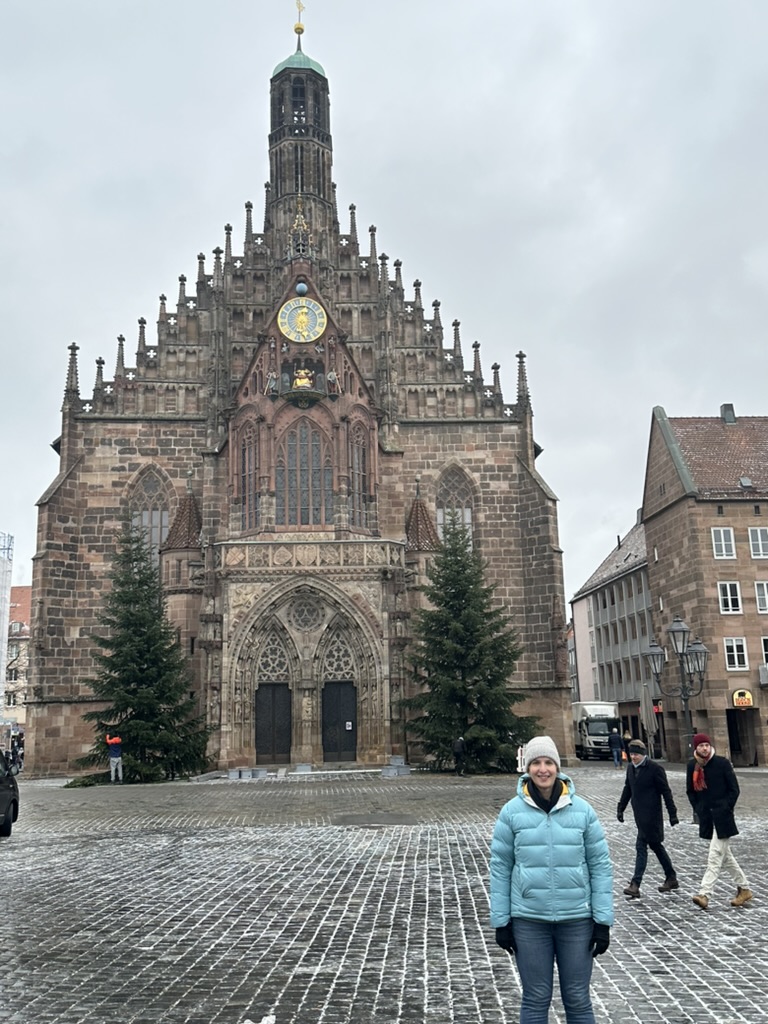
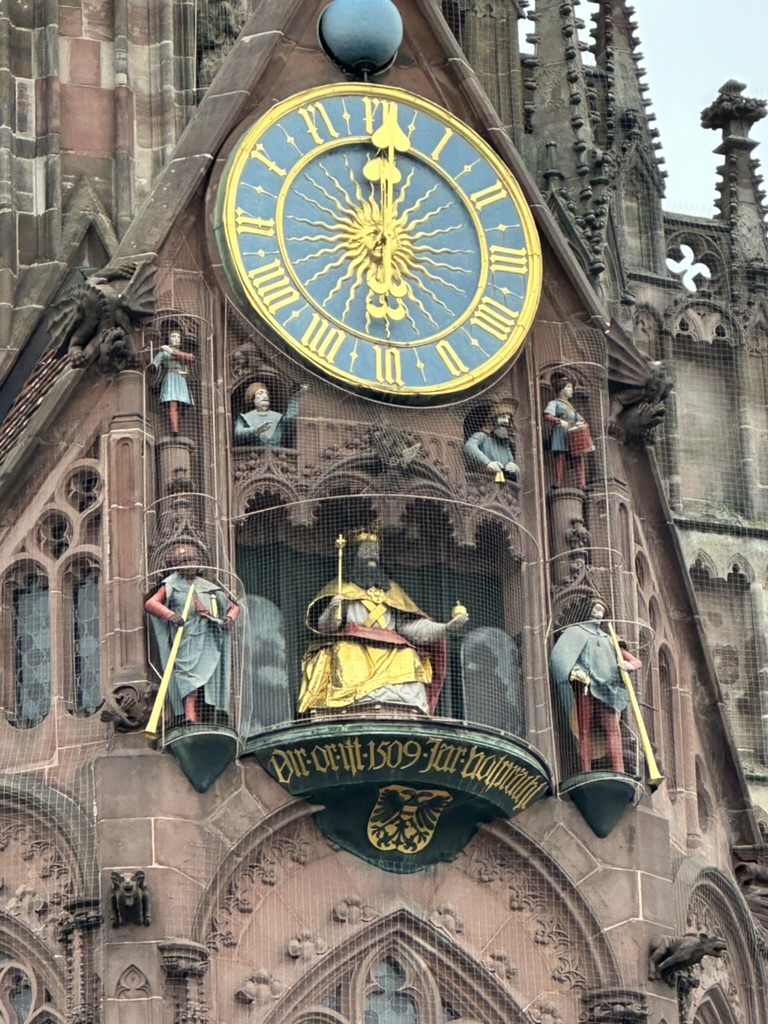
Then it was off to get a hot chocolate and come up with a plan. We downloaded an audio guide tour of the town where a lady Claudia guided us around. The app was pretty good with the audio playing automatically when we reached a location. We did manage to miss a series of stops as her directions weren’t great. It was much better than us wandering aimlessly by ourselves or following the map without context but nowhere near as good as a human guide.
- There are lots of beer cellars under the streets and houses. These were used as bombs shelters in the war
- 90% of Nüremberg was destroyed during the war and most of what you see is reconstructed buildings. The town was rebuilt based on the original street design and buildings as they existed before the war
- The town is one of the few in Europe still with nearly complete city walls. They are very impressive and it is hard to imagine storming the city against them. There are four gates for people to enter and exit.
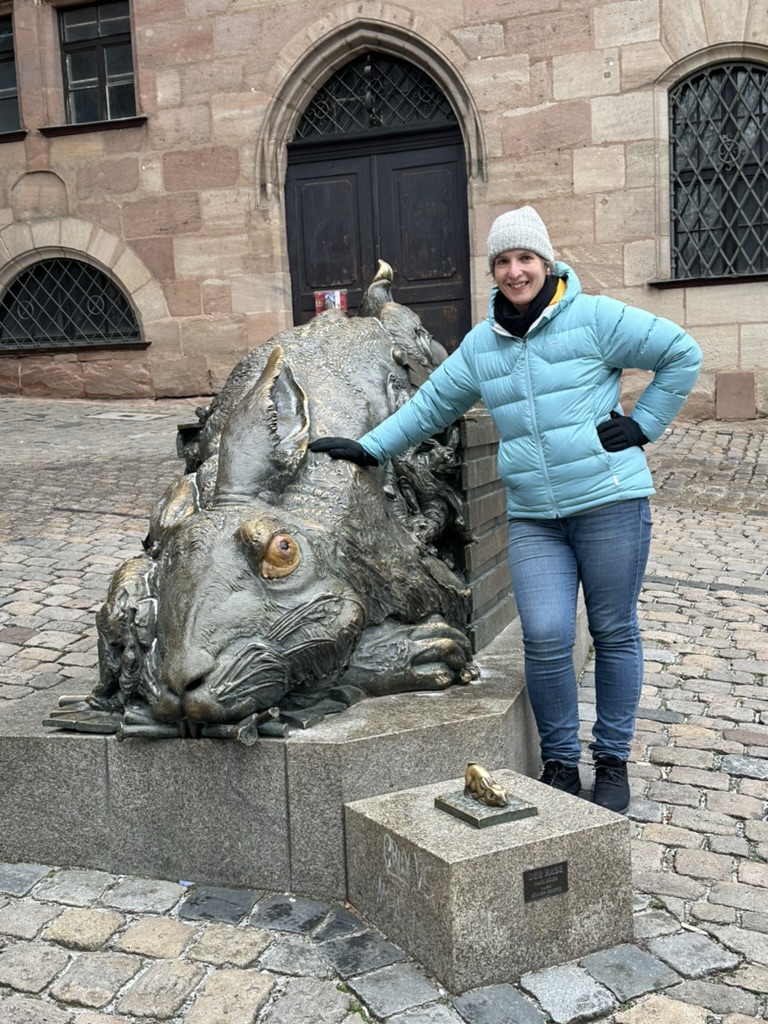
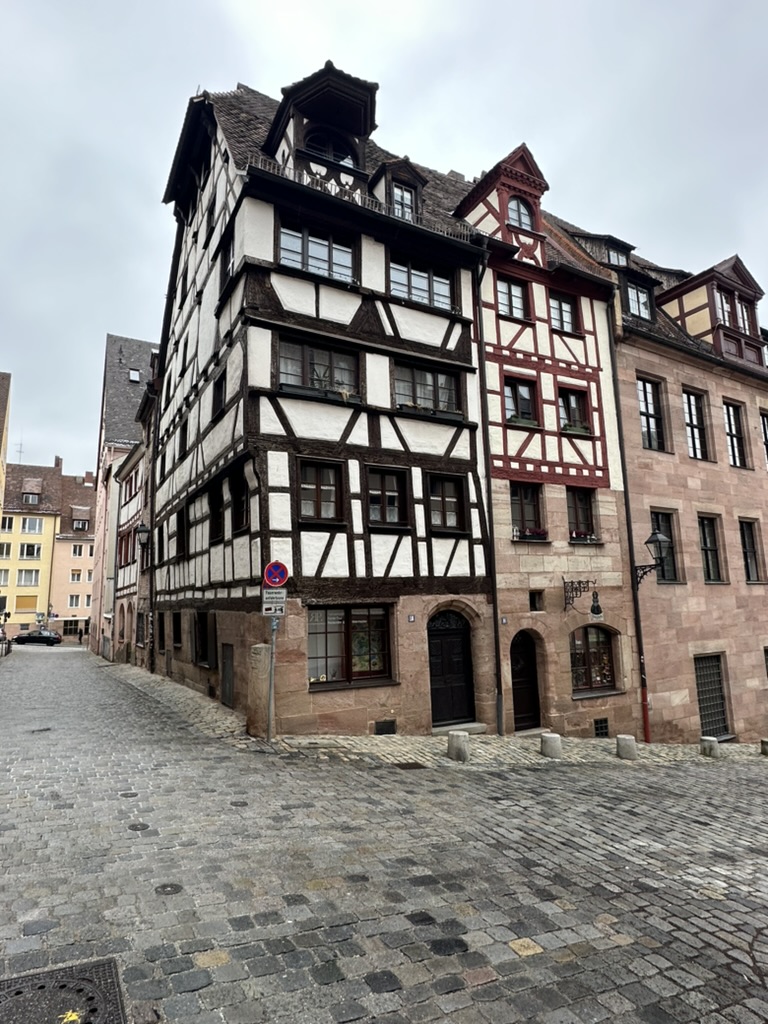
- The famous painter Albrecht Dürer is from Nuremberg and his house had been turned into a museum. He was famous for creating a monster out of a rabbit and there was a sculpture of this
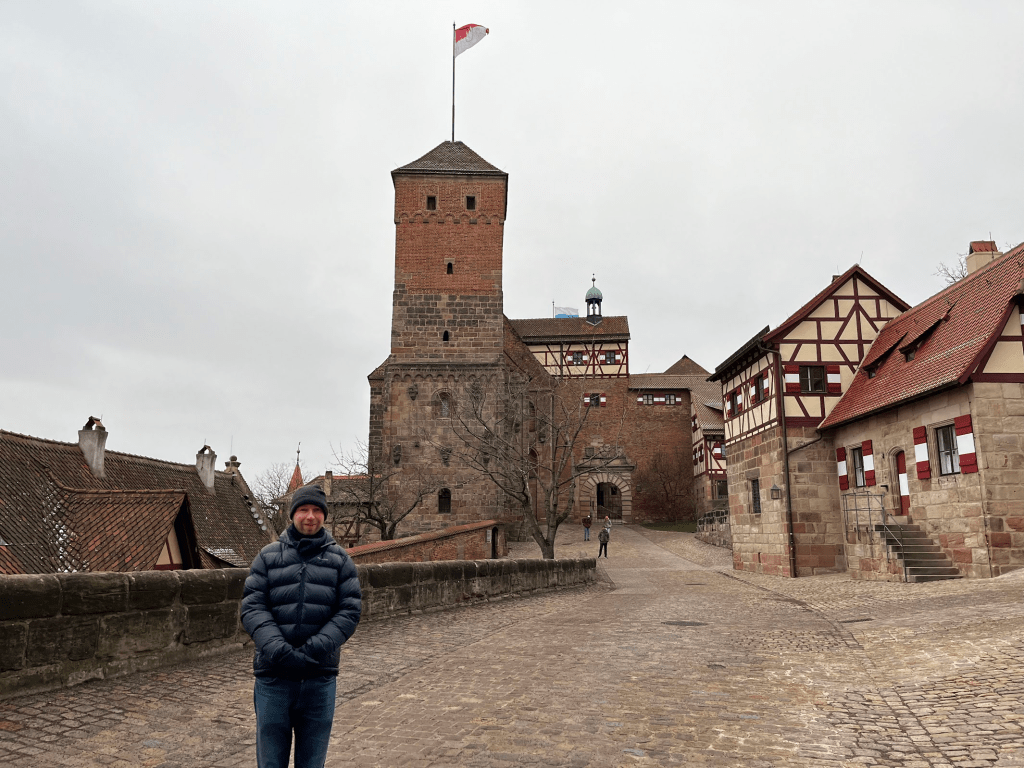
- The castle is built on top of a rock in the highest part of town. The rock is incorporated into the castle and it would have been an incredible feat of engineering to build this.
- There are lots of bridges across the river. One of them was the first iron bridge built in Europe. It wasn’t very pretty but worked fine. Another bridge had the house of the hangman on it. He was apparently a very important man in the town but also shunned by the townspeople.
- We didn’t go past the Nazi parade grounds or where the trials were held which was a little disappointing
Halfway through the tour we stopped for lunch. The local food is little sausages. We each had six sausages and potatoes salad. I also had half a litre of beer. The lunch was really good and the cafe was charming and cosy. The sausages are really popular through out the town and were often sold as “three in a bun”.
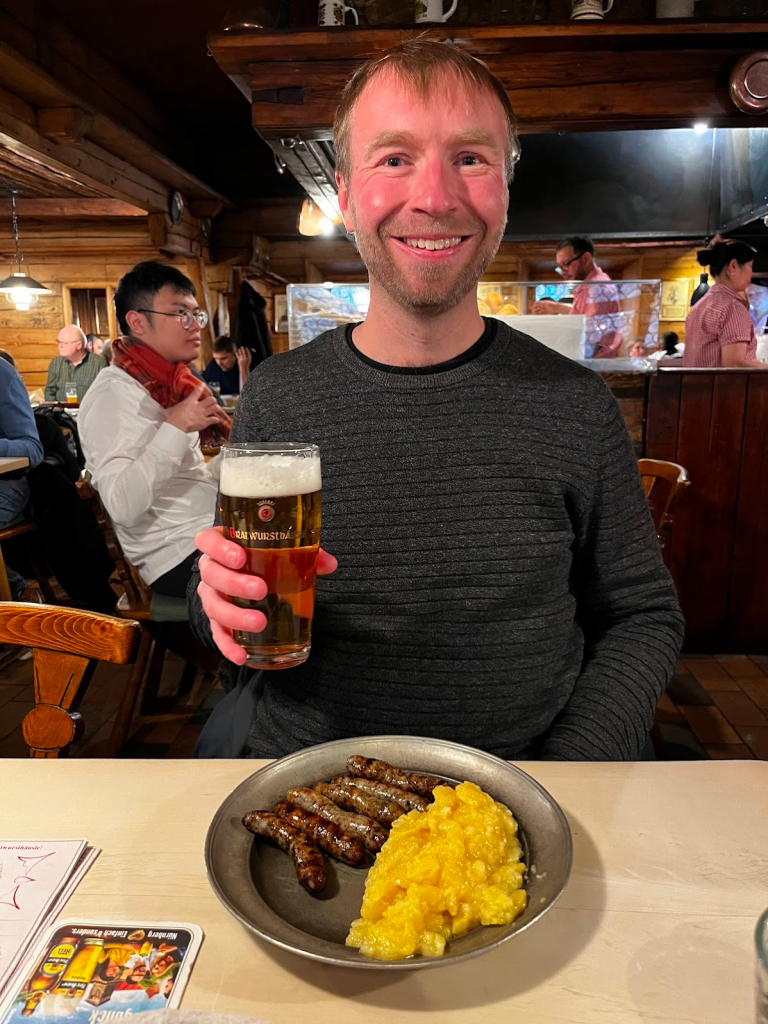

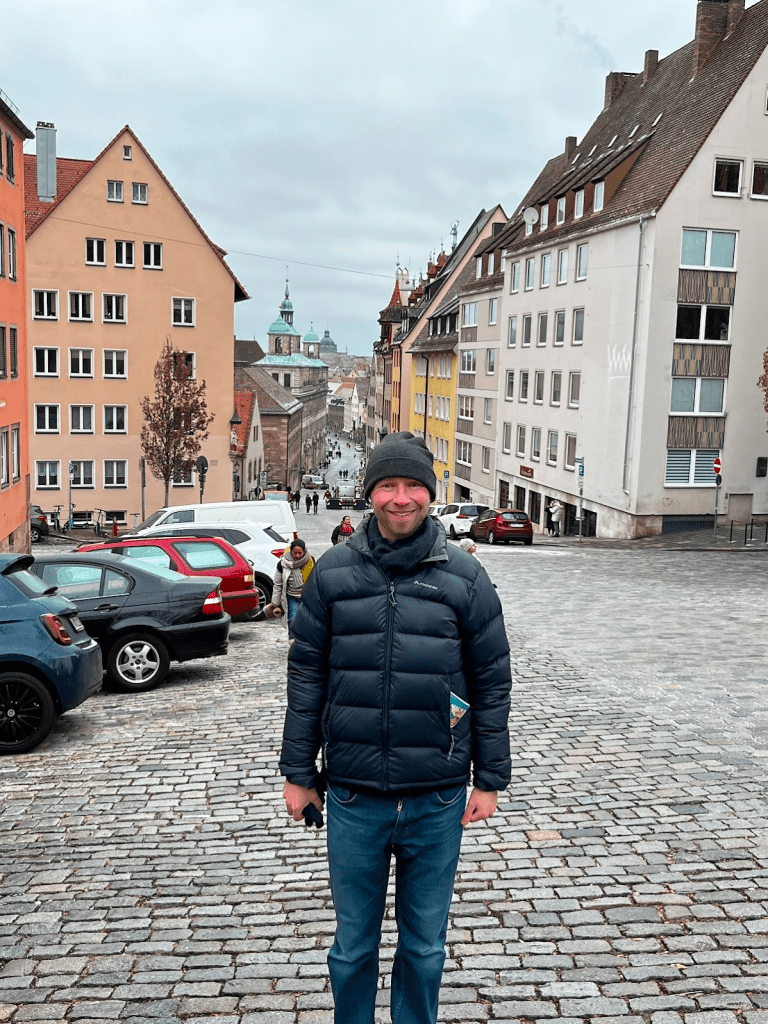
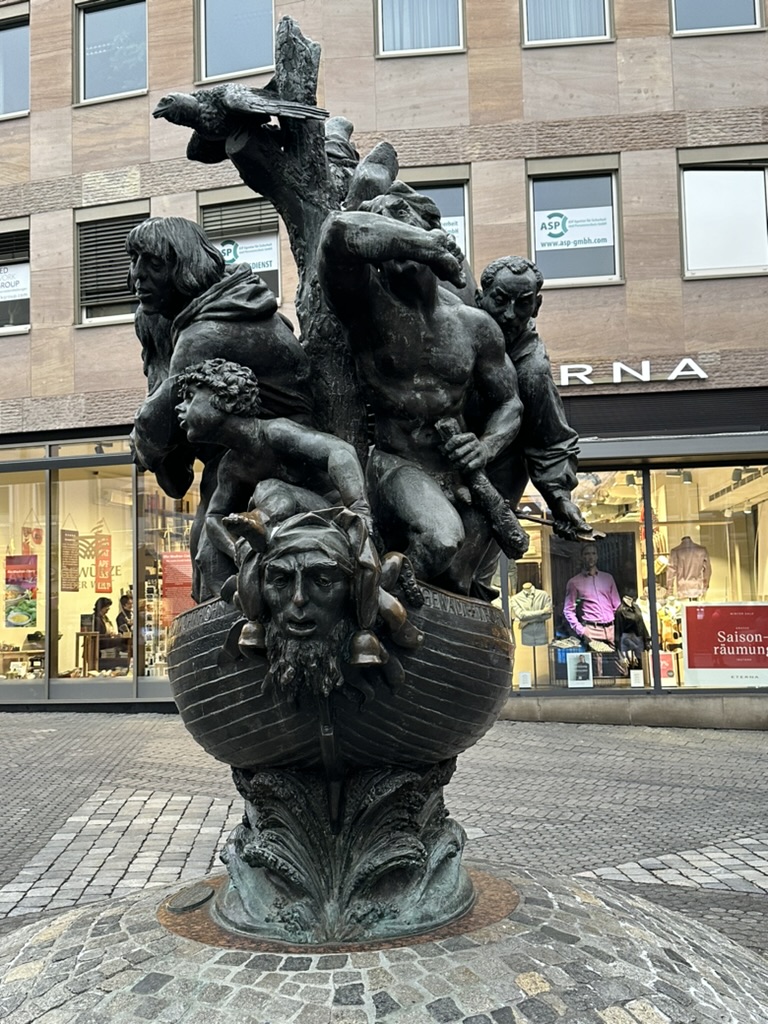
After the tour we walked up to the castle which had some great views across the city.
The castle had a tour and museum and we walked through that.
- Nuremberg was a big deal in the days of the Holy Roman Empire. The golden bull which set out the rules of the empire was signed there. Each new emperor had to go to Nuremberg as their first stop
- The Empire had elected kings rather than hereditary rulers. It was a small group of princes who did the voting but at least it was something
- The Empire didn’t have a settled capital and instead the emperor would move between key cities in the Empire
- The emperor was responsible for the ultimate justice and part of them moving around was to resolve disagreements between princes and other nobles. Often there were feuds between families until they passed a law forbidding these – or at least making them more organised
Lisa was keen for some gingerbread as that is big in the area. We tried to find a cafe but didn’t have much luck. We ended up getting some hot drinks and a gingerbread cookie at the train station before catching our train back to Munich.

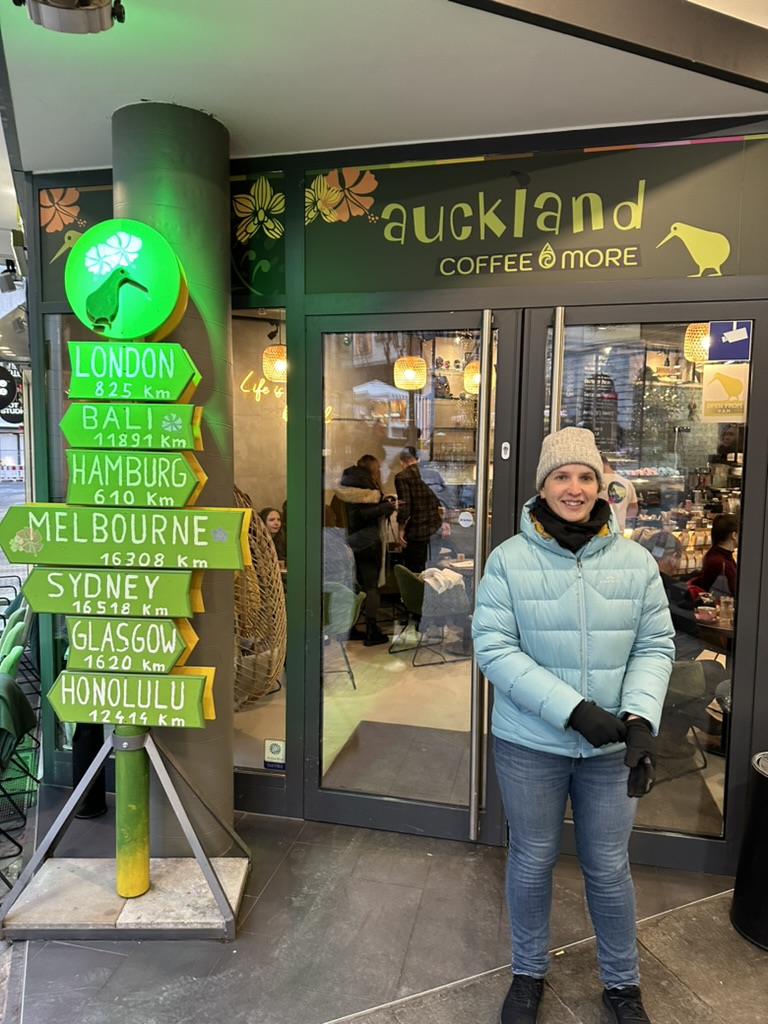
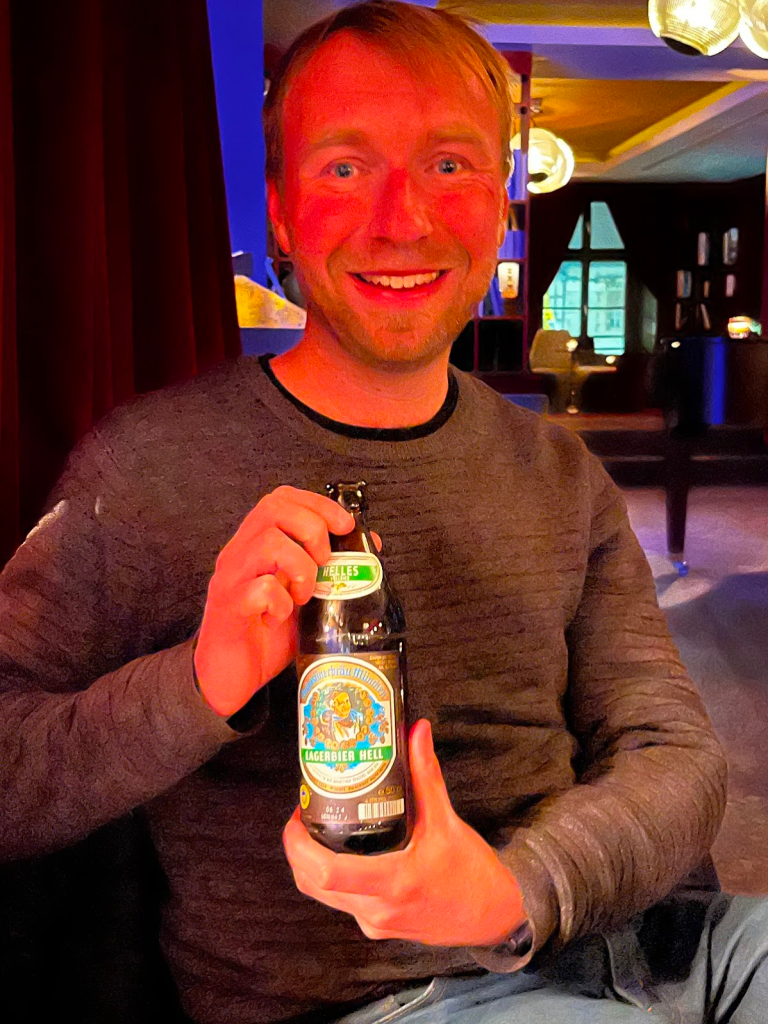
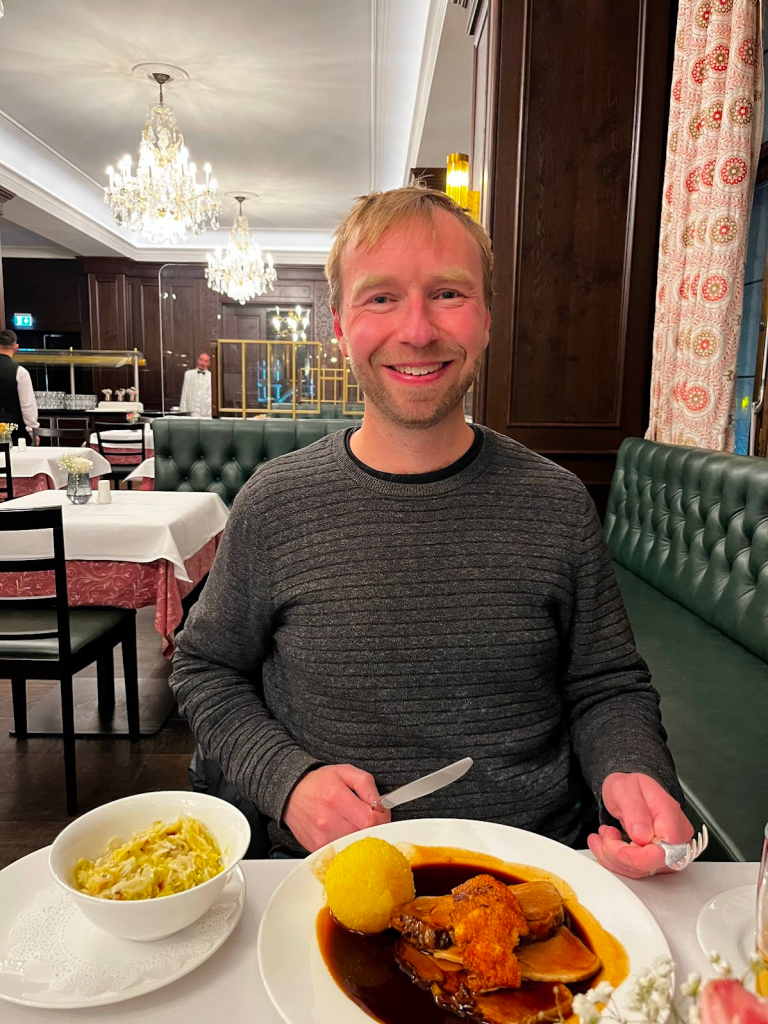
We wanted to be well organised for drinks/dinner after getting back to Munich as it was going to be cold and we didn’t want to be wandering around for hours (Lisa’s words). After some intense searching I found a cool bar called Boilerman’s which was in the 25 Hours hotel. It was very trendy but a bit weird – more a cocktail bar than a pub and the seats were incredibly low. We had a nice beer then walked in the direction of a German dinner place I had found. Along the way we were distracted by the Central Cafe whose menu looked good. We entered but the place was so quiet. It was the restaurant for the attached hotel and most diners were by themselves. The food was good though – I had roast pork, potato dumplings (which was weird) and Bavarian coleslaw (which I wouldn’t order again). Lisa had tomato soup and cheese on bread.
14 January 2024
Hastily planned day trip to Regensburg which meant an early start to catch our train. This train was on time and while slow we were very confident of arriving in time for our planned guided walk.
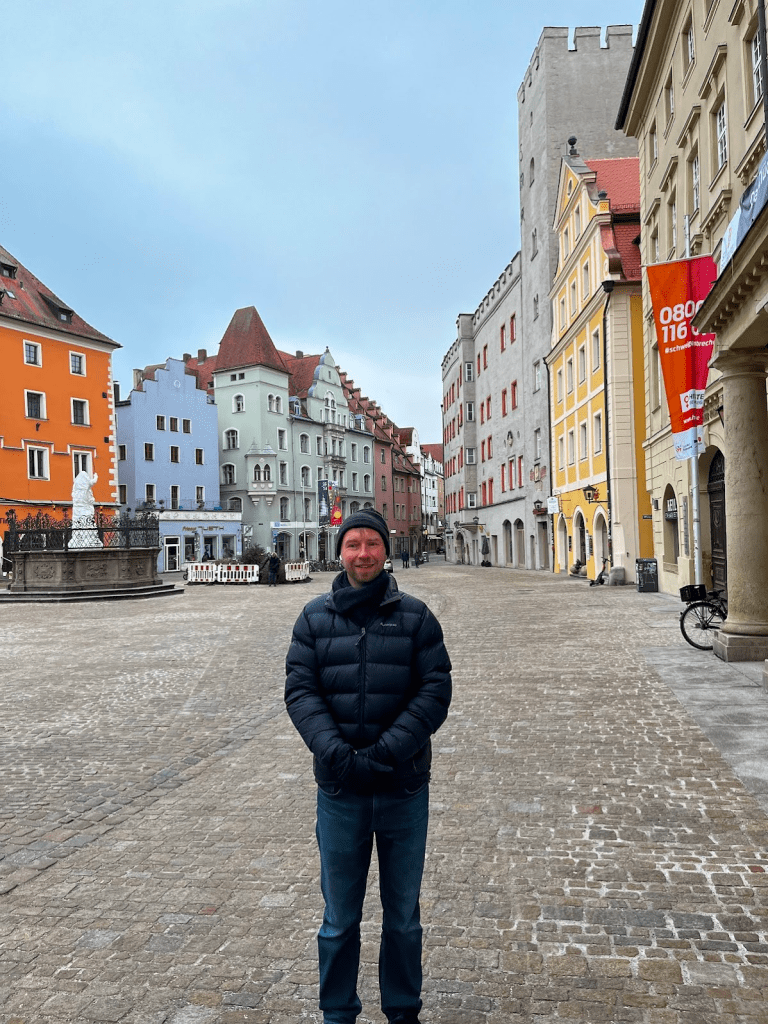
After arriving we walked through to the old town. Everything was very quiet as it was 9:30 on a Sunday morning but it gave the town a surreal feel – Lisa said it was like being on the empty set of a movie. We found a nice cafe for hot chocolates and a chocolate croissant that we shared. We had booked a walking tour of Regensburg through Get Your Guide, having paid in advance. We were waiting for our guide outside the tourist information shop when Lisa double checked our ticket and realised the tour was in German! When our guide arrived she confirmed this – we were not off to a good start! Perhaps we shouldn’t have booked the tour while drinking beer.
We spoke to a lady in the tourist shop and she recommended an app with an audio guide so we tried that. It was similar to the Nuremberg one from the previous day, in fact a little better.
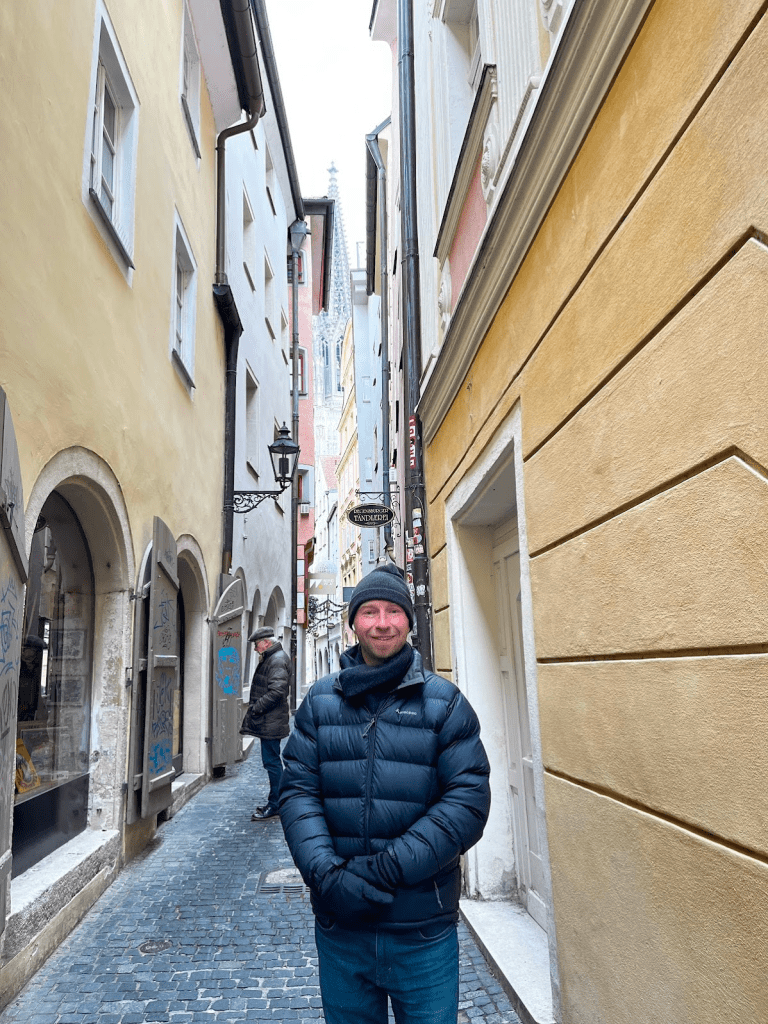
- Regensburg had been very prosperous during the Middle Ages and was an important city for trade as part of the Holy Roman Empire. In later years it had an economic down turn and there was a lot of economic stagnation. This meant that buildings were well preserved. The town largely avoided bombings during the war which further assisted in the preservation of the buildings.
- During the Empire the town was a free town which meant it had more autonomy over its own affairs including the ability to defend itself and to attack other cities.
- There are a lot of tall towers that were built by wealthy merchants called patricians. Generally the upper parts of these towers were not used or inhabited. They were built taller just to show off the wealth of the owner
- The most important structure in the town is the old stone bridge across the Danube River. This was built in the thirteen century and was called the eighth wonder of the world. It is quite impressive in terms of how far it spans and how solid the construction is. It looks quite modern! It was very important for the town as there were very few bridges over the Danube and ferries were dangerous and unreliable. The bridge bought traders to the town who could then be taxed
- Salt was a key commodity traded in the town and there were large salt storage facilities. On the other side of the river there was another town (which had since been incorporated into Regensburg) but was previously separate. The towns competed to have the tallest salt towers even if they didn’t use all of the space.
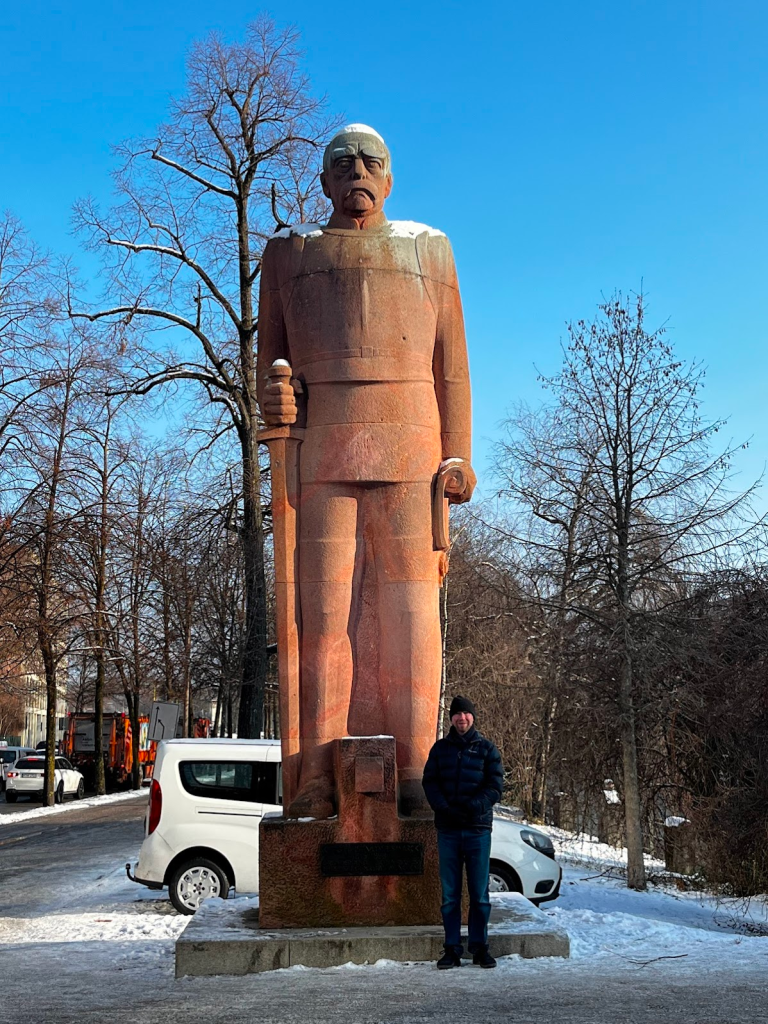
- There is a very large cathedral built in the French gothic style. It took over 600 years to build as they ran out of money. Eventually Bismarck funded the completion of the final spires and a statue was erected in his honour. When we were there one of the spires had scaffolding around it but from pictures we could see that the design of the two spires is slightly different which is an interesting design choice. We had a quick look inside but couldn’t take photos as a mass was in progress
- The cathedral still requires upkeep and behind the cathedral there is a stone masons. They still use the same tools and techniques as the original builders which requires them to create their own tools. Seems like very hard work when we have more modern approaches
- During the sixteen hundreds the Jews were expelled from the city and the synagogue and entire Jewish neighbourhood was destroyed. On some buildings there are Jewish headstones written in Hebrew. These were erected by the people who expelled the Jews as a testament to their victory
- The old Jewish neighbourhood is now a town square but it does have a church in it. The church has weird proportions as again they ran out of money and couldn’t make it to the original size they had planned

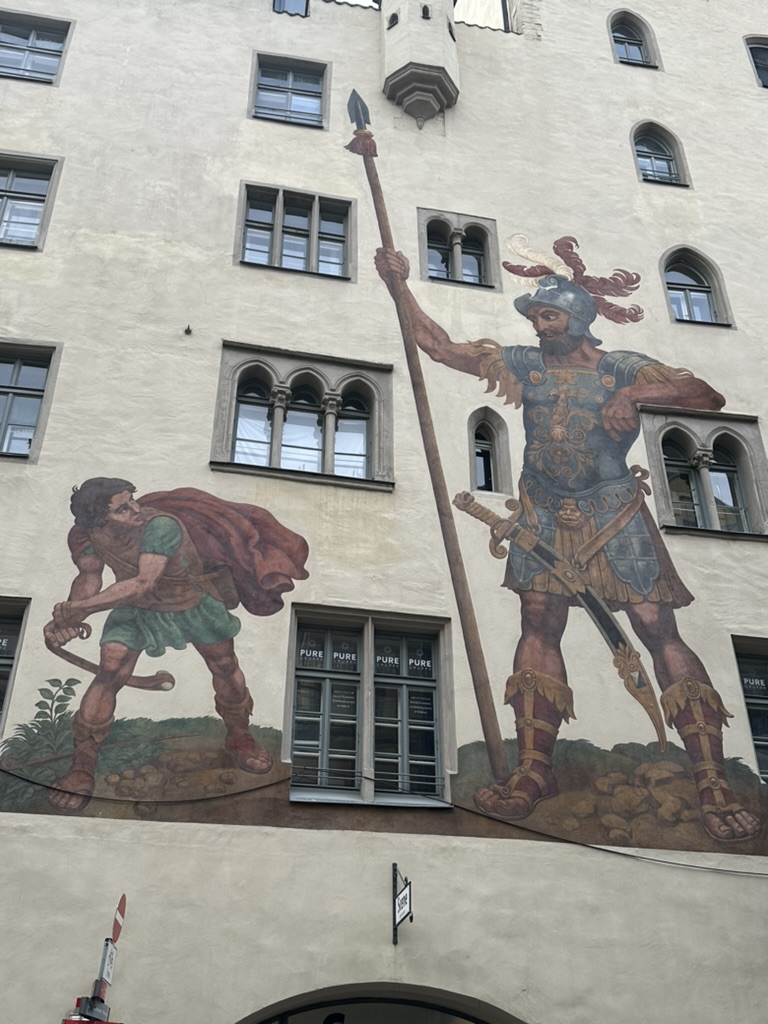
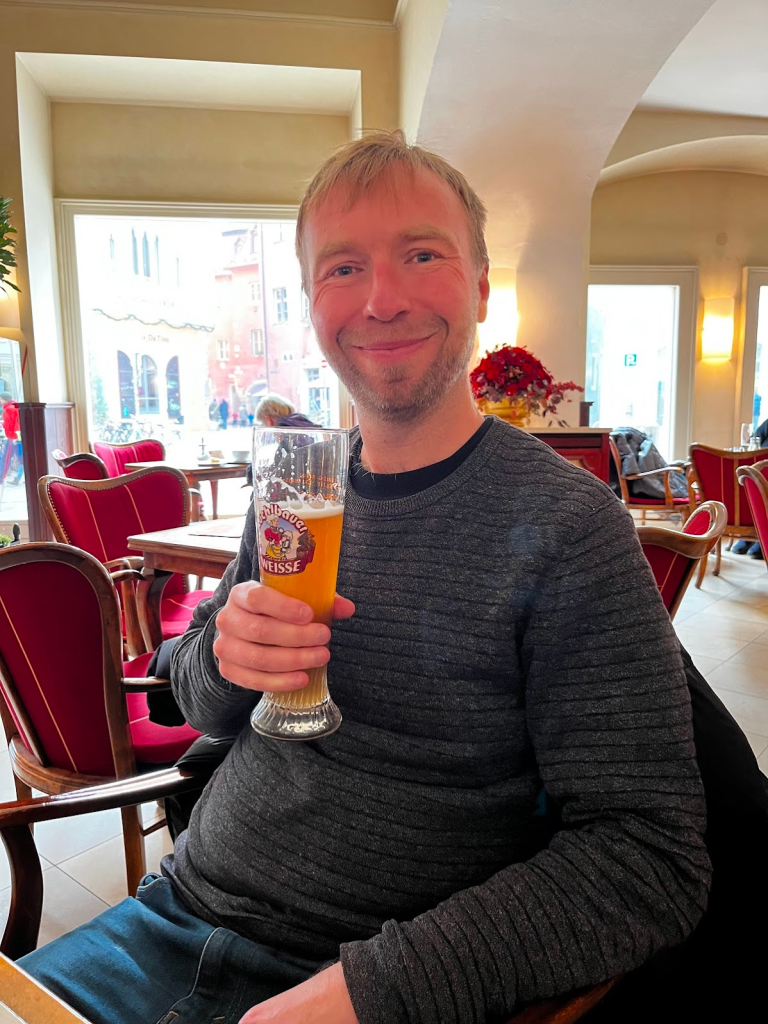

We had lunch at a cafe. I had a quiche and a beer. Lisa had pancakes but was disappointed when they were more like crepes.
After lunch we went to the Bavarian history museum. This was in a flash, modern building down by the Danube. It was very good and lots of learning was done.
- The museum had a cool panorama video showing interesting aspects of Regensburg’s history but unfortunately it was in German.
- Covered the four Bavarian kings – Maximilian I, Ludwig I, Maximilian II and Ludwig II. Ludwig I got in a lot of trouble for scandals and having a mistress which was a no no in the very Catholic area. Eventually he had to expel his mistress, which is sad
- Ludwig II was a bit crazy. He spent a lot of money on building castles with fantastic designs. These included massive light shows. He was also a very vain man and concerned with his appearance. He died along with his doctor and they were found in a lake. It’s unclear what happened – was it suicide, an accident or was it murder?
- Bavaria was very proud of itself as a “free state” and they weren’t particularly enthusiastic about joining Germany. They felt they had a quite specific culture and feeling of who they are – a little superior to other German states. This came up on one of our tours where a non Bavarian German confirm this feeling of Bavarian arrogance
- Bavarian beer brewing was a key industry and helped grow tourism in the area. Octoberfest is obviously huge and brings millions of visitors to Munich
- After the Second World War Bavaria was in the American occupation zone and this meant a quick return to democracy for the region. There was also a program of denazification but this was hard work as the skilled people were needed to help the rebuild.
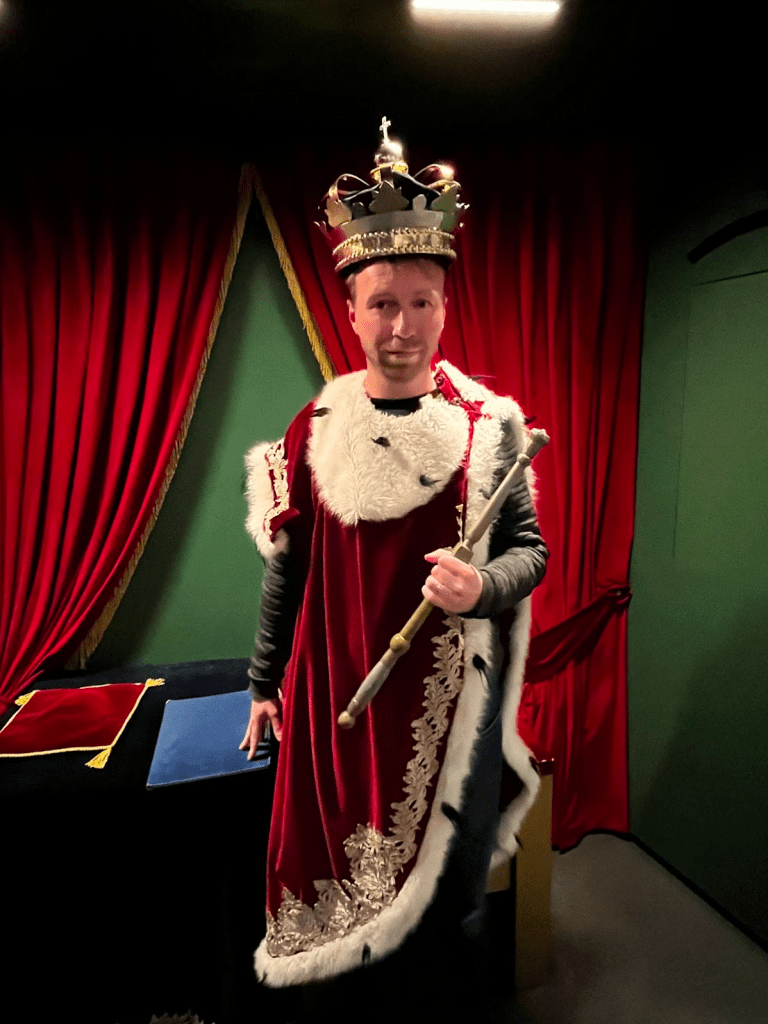
- The museum had some attractions for children including dress up stations. Lisa and I both dressed up as the king and Lisa also was a Napoleonic soldier
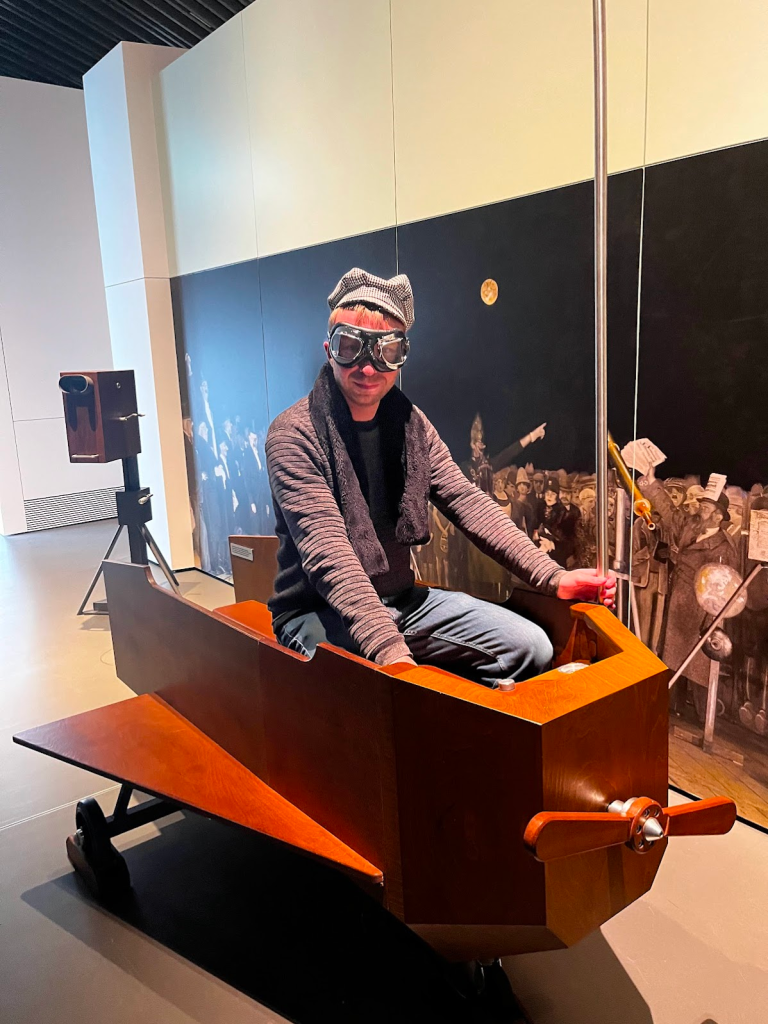
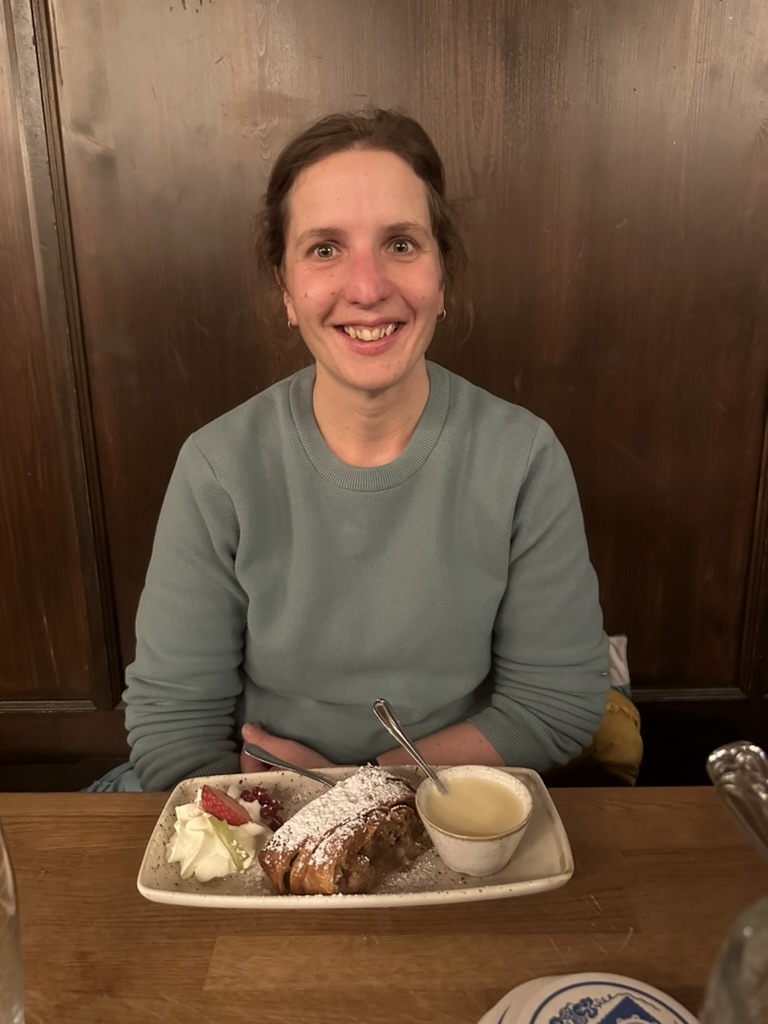
Then it was back to catch the train, which once again was delayed, this time by half an hour. Back in Munich we went to a beer hall near the train station. Lisa talked me into getting the big 1 litre stein. We had schnitzel for dinner and then apple strudel which we needed to have before we left Germany. It was delicious but also our most expensive meal of the trip.
15 January 2024
Our final day in Munich. We had to pack up after five nights in Munich. It had been nice not having to constantly pack up and move for a few days.
Off to Dachau for a tour of the concentration camp memorial site. Easy trip on the suburban train – German trains are redeeming themselves! Then a short bus ride. Had to check with the bus driver if we were on the right bus and it felt a bit weird to ask “Is this going to the concentration camp” so instead I asked “is this going to the memorial site?”. I shouldn’t have worried as the bus automatically announced “concentration camp” upon our arrival.
We did the guided tour for 4 euros each which is probably the cheapest activity we have done on holiday – thanks to the German government for subsidising this. It was a cold day with lots of snow on the ground which make the camp feel particularly bleak.
- We associate “Dachau” with the concentration camp but it’s the name of the nearby town as well. After the war locals weren’t keen on any memorials and I can understand why. Telling people you come from Dachau would elicit interesting reactions!
- The camp was built very early on. Hitler came to power in January 1933. In February they started making lists of people who had wronged them and in March Dachau was created to hold these people. As the war didn’t start until 1939 the camp was used for six years before that to house mainly Germans. These were people who opposed the Nazis such as priests, journalists, politicians or people they disliked such as homosexuals, Roma etc.
- it was a propaganda camp and the nazis publicised its existence in propaganda photos. They wanted German people to know about it and to be afraid of it.
- The camp operated until 29 April 1945 shortly before the war ended on the eighth of May. The camp was liberated by the Americans.
- The site was originally a factory and new barracks were built by the prisoners. In total 34 barracks were built in two rows of 17 each. The camp could hold about 6,000 prisoners but there was massive overcrowding and often many times more than that were housed at the camp.
- After the war the camp was used as a refugee centre. Eventually that ended and all the barracks were destroyed. It took a long time for the site to be turned into a memorial and it was largely at the insistence of the survivors. Two of the barracks were recreated and illustrated the different stages of the camp over time.
- The camp had several memorials including a large one near the roll call area. There were then different religious memorials – one Catholic, one Jewish, one Lutheran and one Russian orthodox.
- There was a cremetorium that was used for burning bodies. It included gas chambers but these were never used for mass killings as the Nazis realized they needed the prisoners as forced labor. Still very weird to walk through them.
- There were lots of groups of German school children who were doing tours. Our guide said that visiting a memorial is a compulsory part of German education.
- There was a large museum that were only had a very brief look at. If were had more time that would have been fascinating to read through.
- The SS ran the camp and they wanted to dehumanize the prisoners and break them down. This included a lot of verbal harassment, stripping prisoners naked upon arrival and taking away all their belongings. There were also punishments. The SS didn’t have clear rules and punishments were often random. This was a form of psychological torture by taking away people’s ability to conform with the rules. Punishments included flogging, hanging from a pole and not being allowed to write to family/friends.
- The camp was surrounded by barbed wire and an electrified fence. There was also a ditch and no go zone in front of the fence. Anyone who went into that area could be shot by guards from the watch towers. Many prisoners committed suicide by running at the fence or being electrified. Only one person was known to have escaped from the camp and that was in the early months, probably with help from a guard.
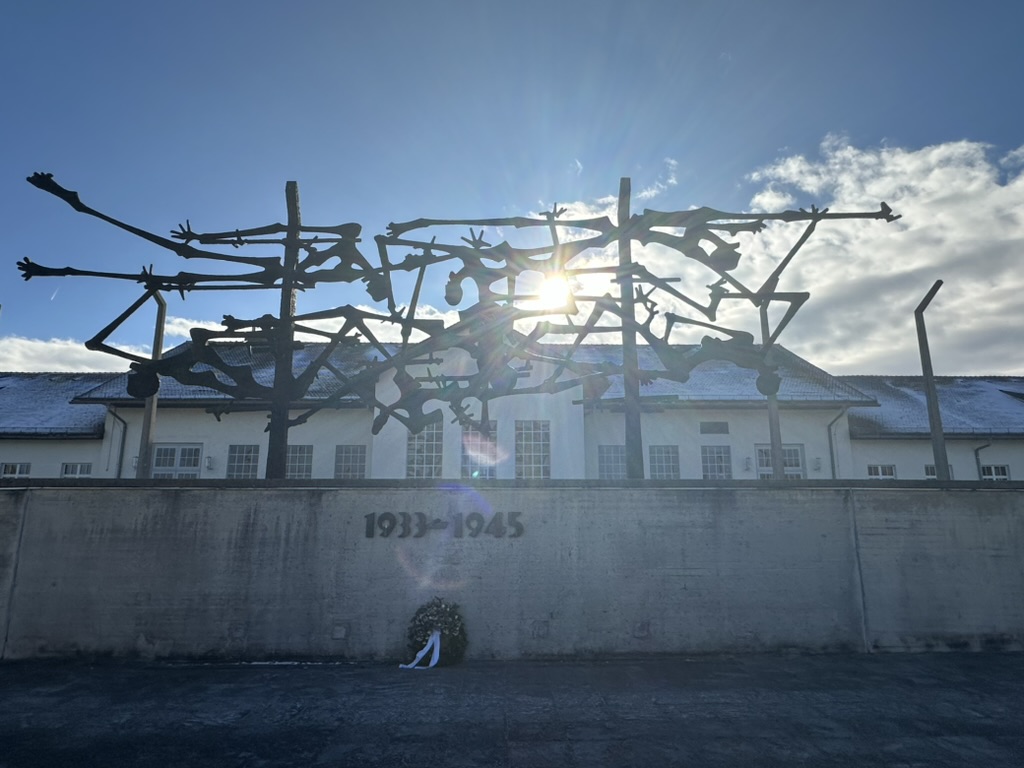
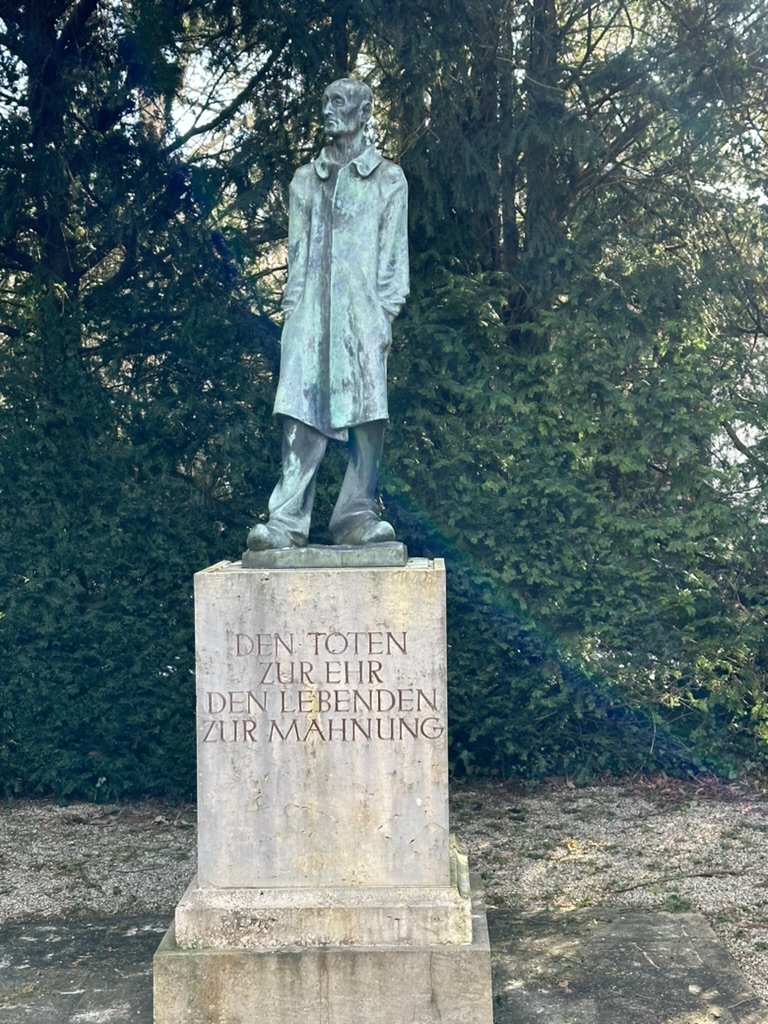
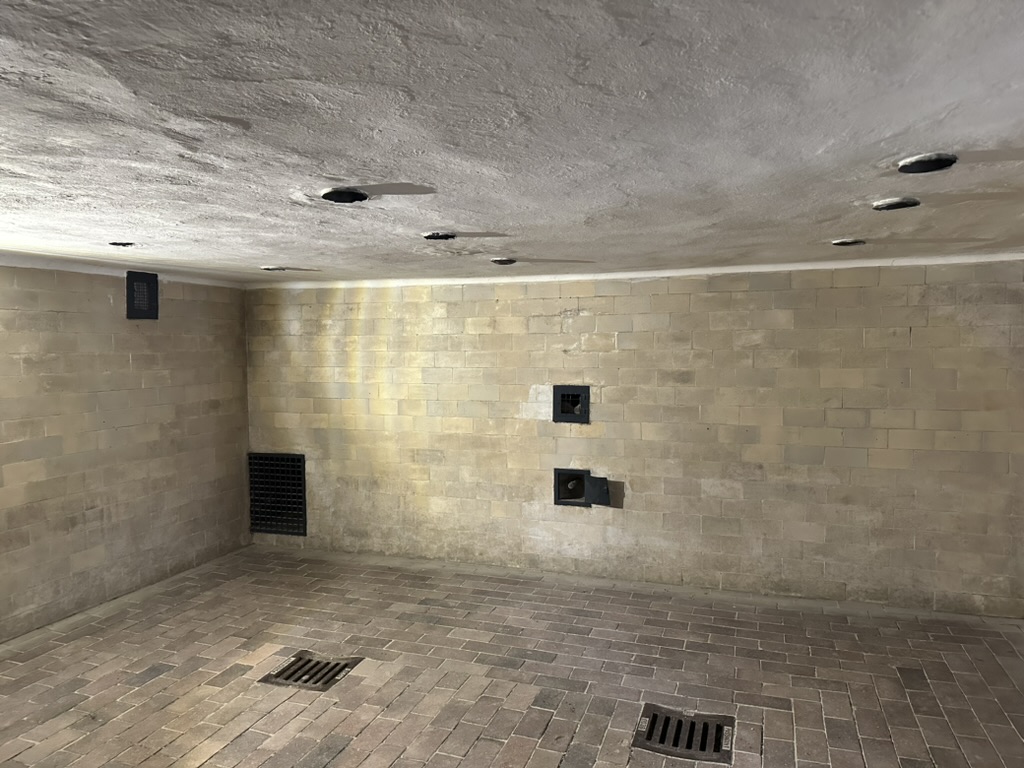
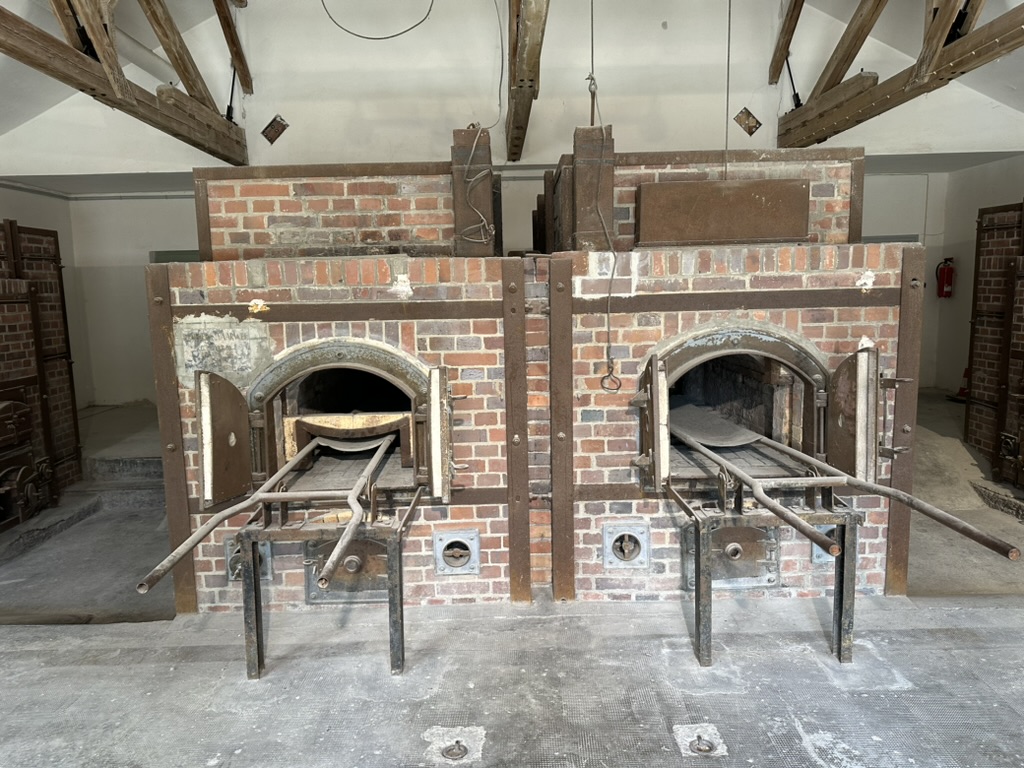
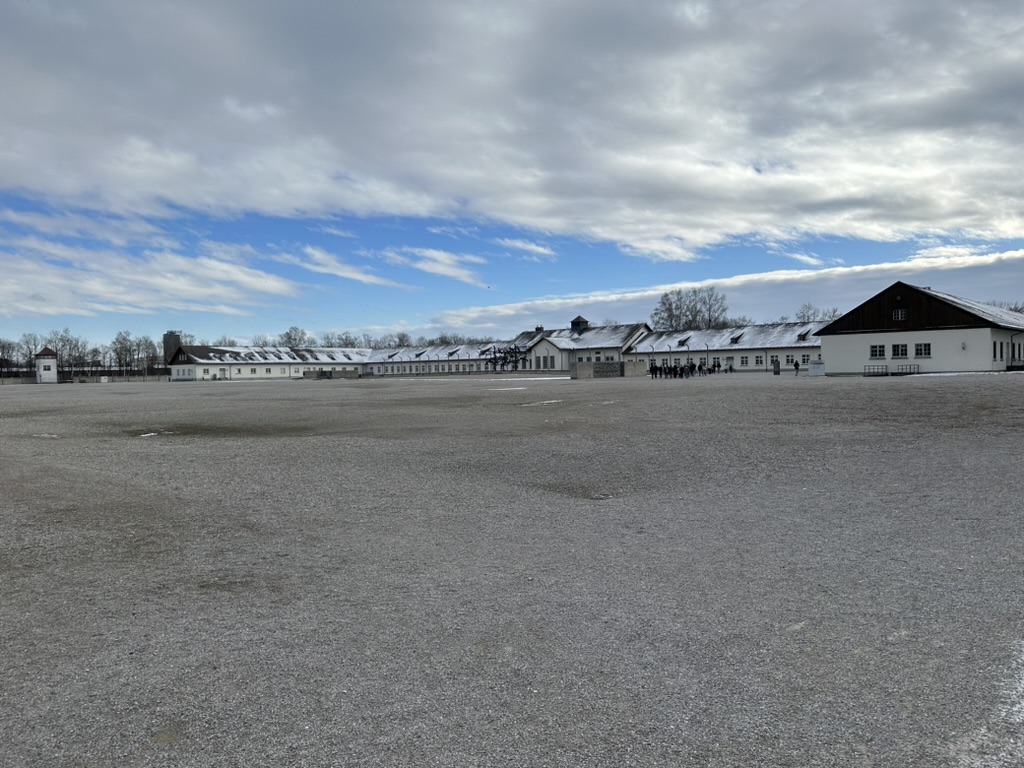
After the tour we caught the bus back to Dachau township to look for a cafe for lunch. We took a quick walk down the most promising looking street and found nothing. Cafes as we get in New Zealand with cabinet food and small hot dishes doesn’t really seem to be much of a thing here – to our frustration. It was nearly two pm and so we went for McDonalds as it was quick and easy. It was a small and weird McDonalds – they still cooked the burgers in advance rather on demand, New Zealand hasn’t done that in decades. The lady also yelled orders to the cooks at the back which seemed weird considering she was also entering them into the computer system. It was also a very expensive meal – all in all, a very weird McDonald’s.
We caught the train back into the city and saw one of the weirdest things in Munich – the famous surfing spot! This is in a canal and astonishingly there were people (five in fact) surfing there. This was despite the snow on the ground all around them and the ice that was attached to the side of the canal. They obviously had on very thick wet suits but the outside temperature was zero degrees. The surfers would jump in from the side of the canal landing on their board. They would surf back and across the wave for thirty seconds or so then try to pull a move or just fall over. They floated out the back before coming to either side of the canal and hauling themselves out onto the snow to walk back for another go. It was a well oiled system and no one seemed to take up more than their fair share of the time.
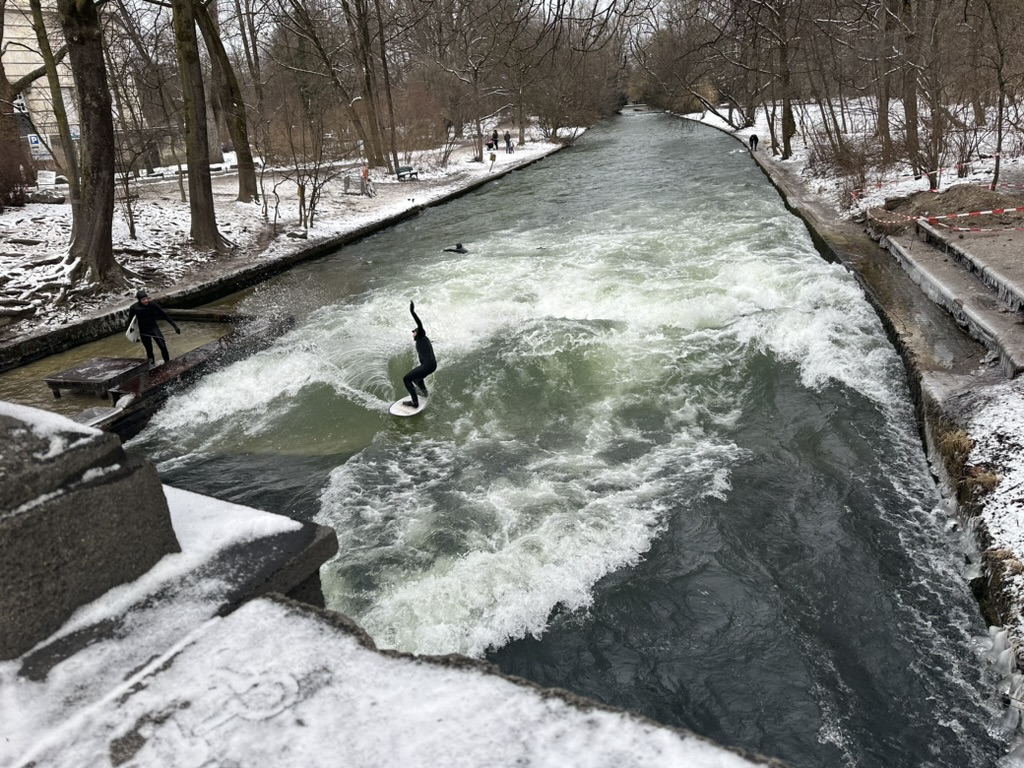
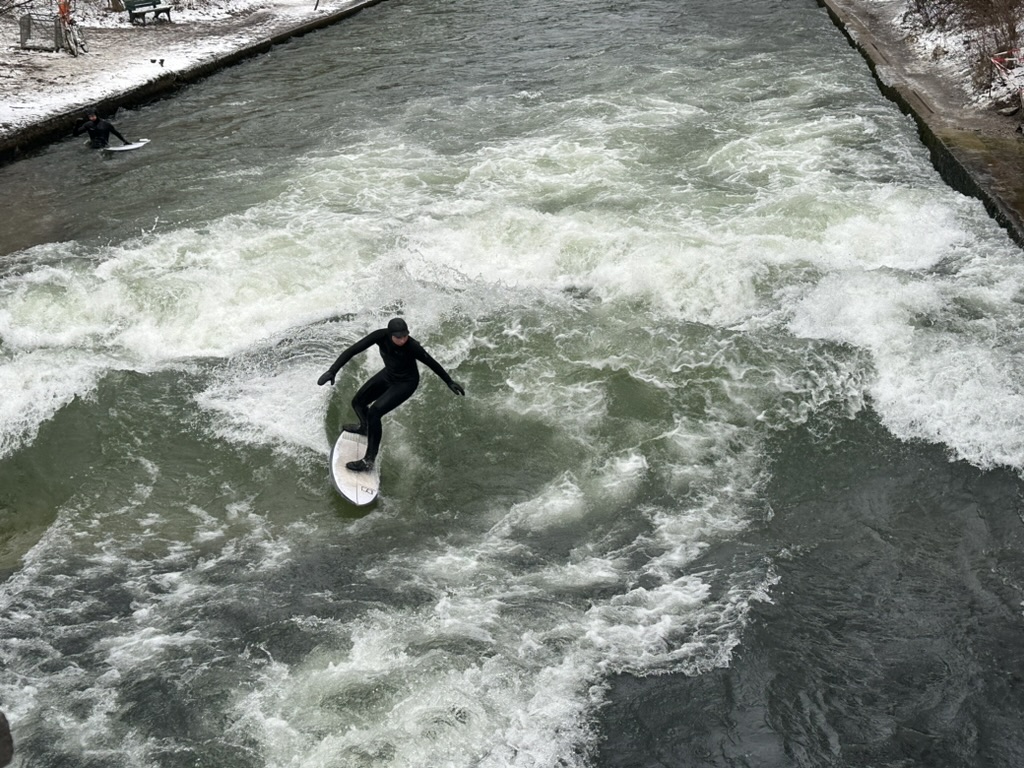

We then walked back to Marienplatz so that Lisa could buy some sweet treats for the train. As we had been walking it had started to snow a little. This was quite pretty but also cold. We caught the tram back to our hotel and picked up our bags. It was a day for different modes of public transport as we had used: S Bahn (suburban train), U Bahn (underground), bus, tram and would use the intercity train in the evening.
At the hotel I checked our departure platform and our faith in German trains fell again as our train had been cancelled. When we got to the train station we talked to information and were put on the next train which thankfully was only 20 minutes later. However, this gave us a nine minute transfer in Stuttgart. As the trip went on this got less and less – quickly getting in the negatives. We arrived in Stuttgart 8 minutes after our next train should have departed and we were resigning ourselves to having another train debacle to rectify. Thankfully the train was still there and we rushed like mad to make it. We were so relieved but the first train was so stressful that it wasn’t really enjoyable at all!
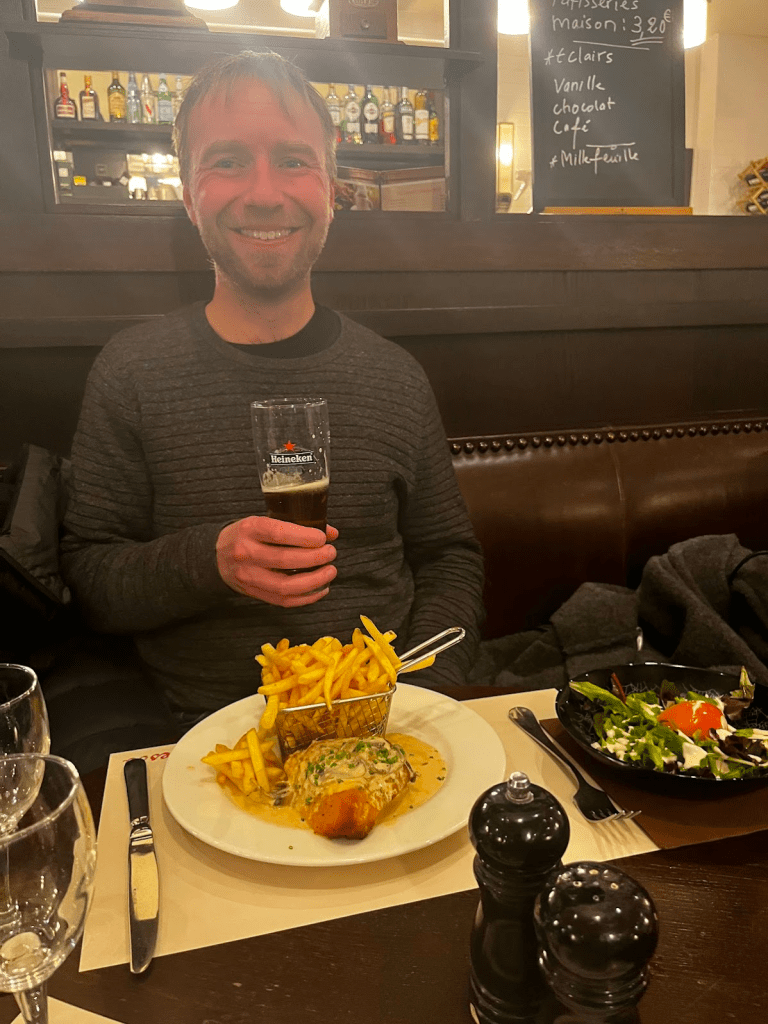
After arriving in Strasbourg we had dinner at a local restaurant. I had the Cordon Bleu and Lisa had an omelette (I know, weird) both of which were delicious. I also had a beer but it was a bit weird as it tasted a bit of bourbon. Our waiter was classically French – efficient but constantly looked pissed off at having to serve us.
Overall thoughts on Munich
- Arriving via bus at 1am to the cold, snow and iced over footpaths didn’t create a good first impression of the city. It remained so cold and grey throughout the trip that it didn’t really show Munich in its best light. The walking tours were really interesting but also hard to stay focused when you are freezing! I suspect if we had been there in milder weather we would have had an even more enjoyable time
- It was an easy city to get around with good public transport and easy to get to nearby towns such as Nuremberg and Regensburg – apart from the train problems
- Easy to communicate with people and most people we interacted with spoke good English.
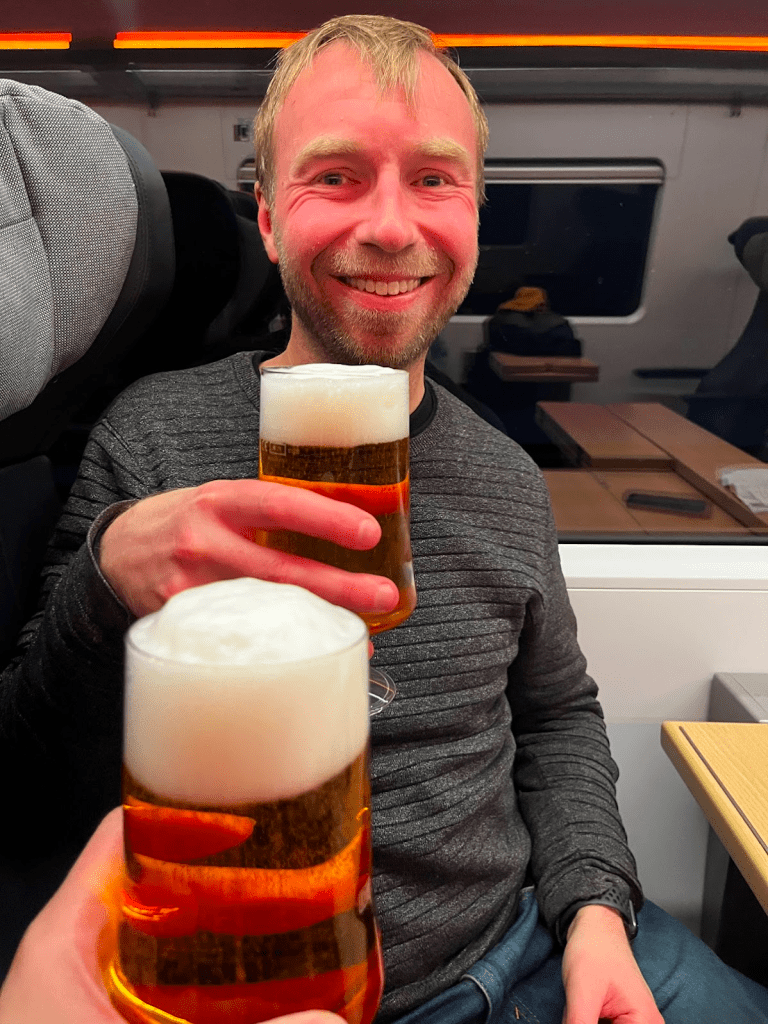
- The beer culture was a lot of fun and really enjoyed the beer halls. There is a lot of head on the beers though – they sell you a portion but it’s probably only 75% of that that is liquid and drinkable
- The food has been good and closer to what we are used to than the Spanish food. We’ve had the traditional currywurst, sausages, schnitzel, cabbage and lots of potatoes. Good hardy foods to eat in the cold of winter.
- We spent a couple of days out of the city but there was probably enough stuff more to do in the city to fill another couple of days – the palace, Olympic Park, museums and art galleries, the residence museum and English park
- Not as modern or dynamic as Berlin but a fun place to visit
 Matt and Lisa's Adventures
Leave a comment