5 January 2024
After getting some advice (thanks Steph!) I tried some sleeping tablets and had a much better sleep. It was a quick pack up before collecting Lisa. It was a three hour high speed train trip to Madrid which was very smooth. I love train travel – so much nicer than air travel!
After arriving at our hotel (which is much nicer than our previous hotels on this trip, good work us) we set out for a walking tour that covered the historical aspects of Madrid. Our guide was Melissa, a passionate Mexican lady who was very engaged and in the running for the best tour guide we have had.
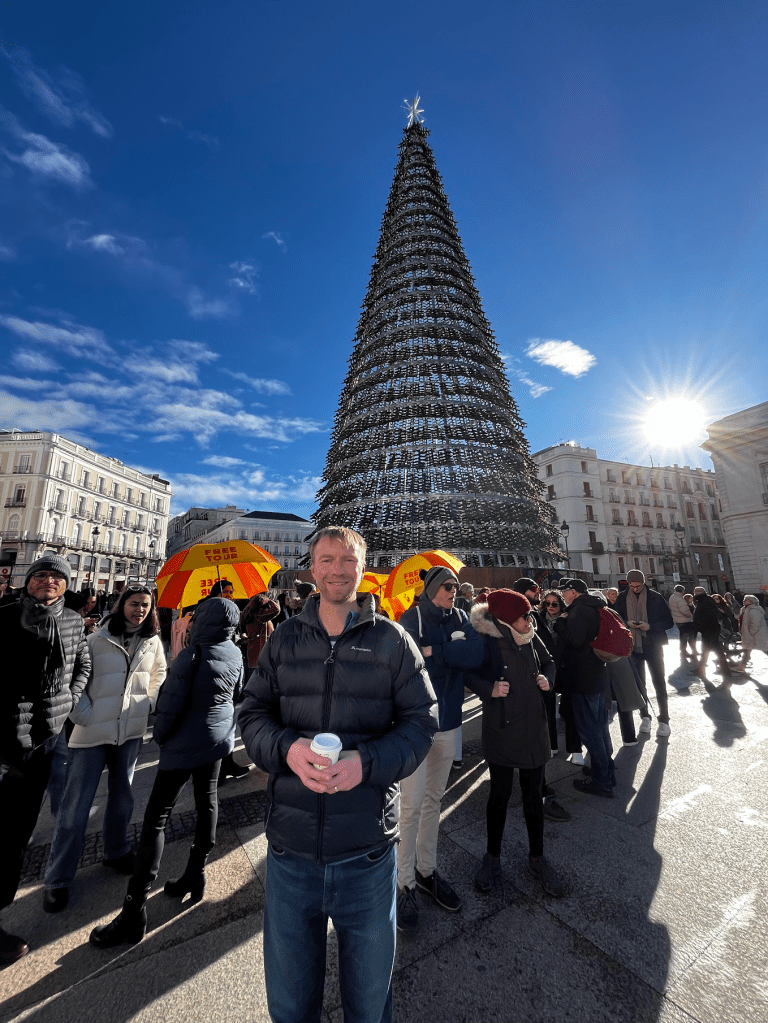
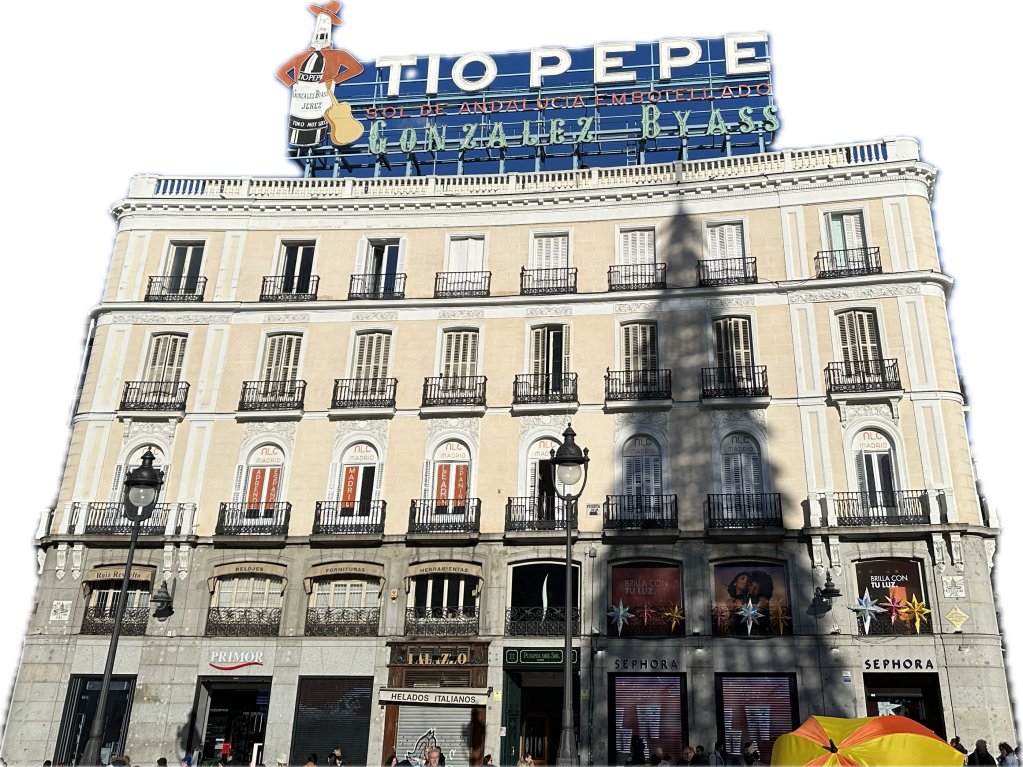
- Started in Porto de Sol, which means door to the sun. When there were city walls there was a door here that pointed to the east. Now days all the roads on Madrid fan out from this area and so on a map it looks a little like a sun.
- In Porto de Sol there is the official kilometre zero for Spain. All distances are measured from this point. If you take a photo here then it means you will return to Madrid one day
- The official food of Madrid is the calamari sandwich which is weird as Madrid is a long way from the ocean. This food was chosen as calamari lasts longer than other seafood and you can cook it slightly longer to kill off the bugs. Still don’t think we will be eating any of it though!
- Toledo was the early capital of Spain before it moved to Madrid. For a long time there was no cathedral in Madrid. The early king didn’t like the bishop and a bishop had to be in a cathedral. So, by not building one it kept the bishop in Toledo rather than Madrid – smart thinking!
- Madrid’s name comes from the word “water”. There is a large reservoir of water under the city and the water is very clean and low in minerals. Madrid likes to brag that they have the best tap water around. You can even ask for free tap water in restaurants which is very uncommon in Europe
- Like other places in Spain it has a combination of Islamic and Christian influences. Muslims were first and created city walls which were then expanded by the Christians. No Roman settlement in Madrid however
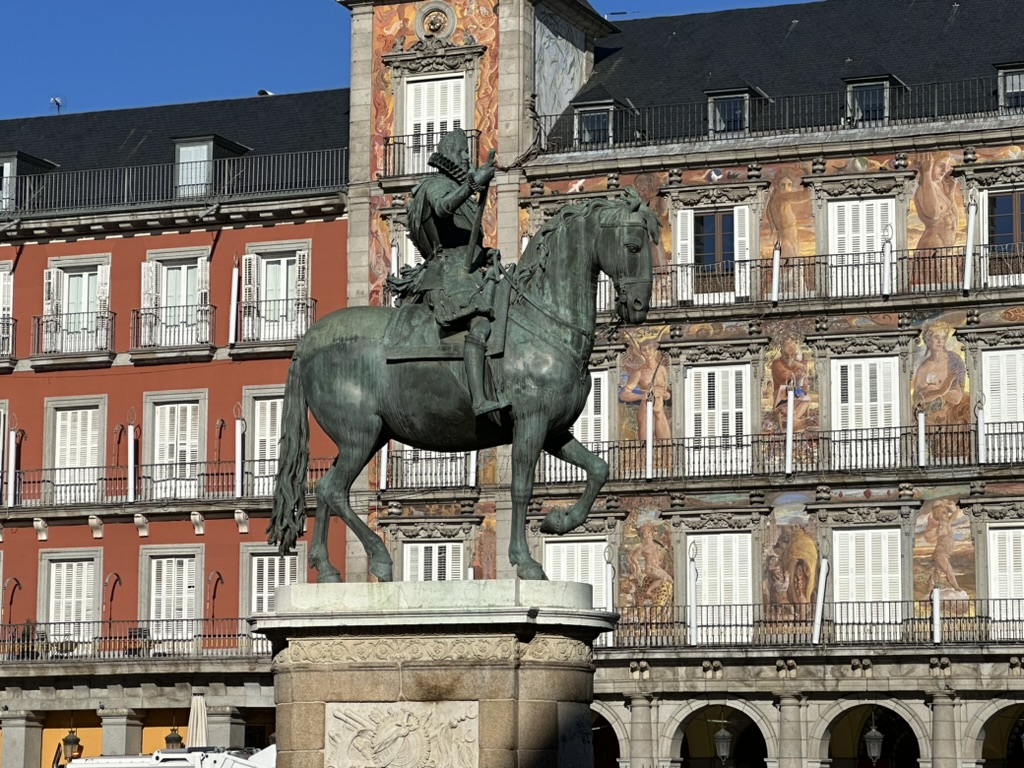
- Went to Placa Mayor which is a large square with buildings all around it. The buildings have balconies and this was used for bull fighting and public executions. On non event days it was also a market. It burnt down three times before they changed the construction material from wood to stone.
- There is a statue of a king in the square. It was said to be cursed and smelled like the gates of hell. What actually happened was that the mouth of the horse wasn’t sealed and so birds would fly in and be unable to get out. They would die and then decompose in the hot statue – I can only imagine how bad that smelt! They discovered this when the statue was damaged during a revolution. When fixing the statue they made sure the mouth was sealed properly!
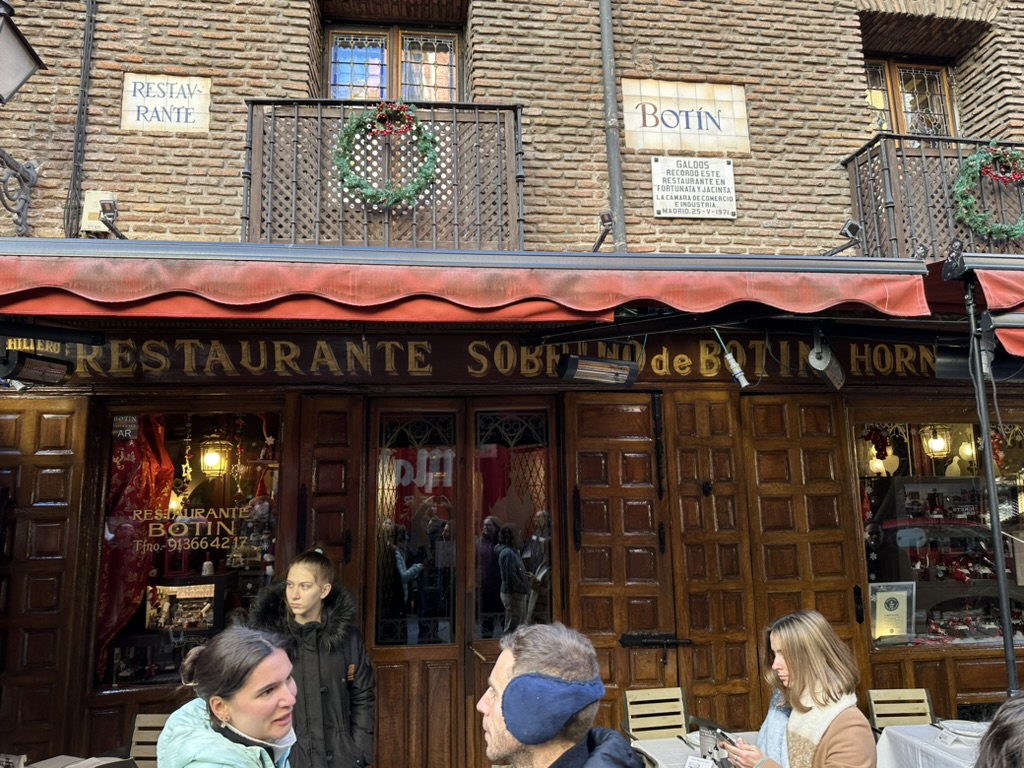
- Went past Botin which is the oldest continually operating restaurant in the world. Their signature dish is a full suckling pig. Maria suggested going at about 11:30pm to have a chance of getting a table, so that rules it out for us
- Next to this was the oldest barber shop in the world. The staff looked very professional cutting hair but must be weird to work while a group of tourists watches you
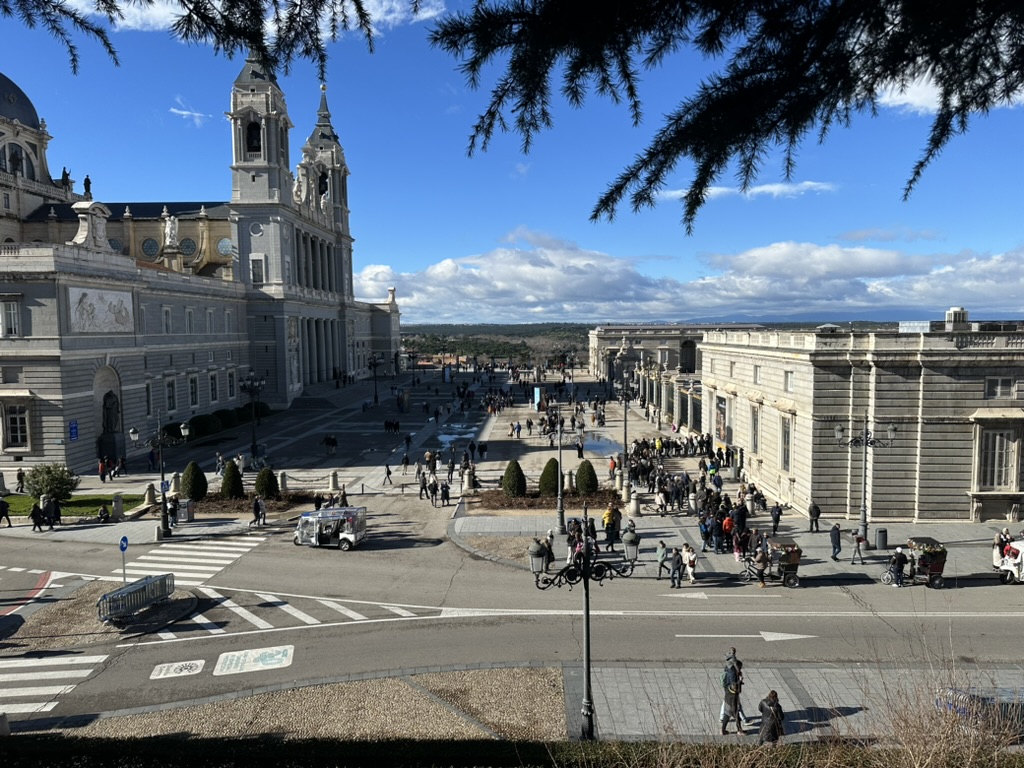
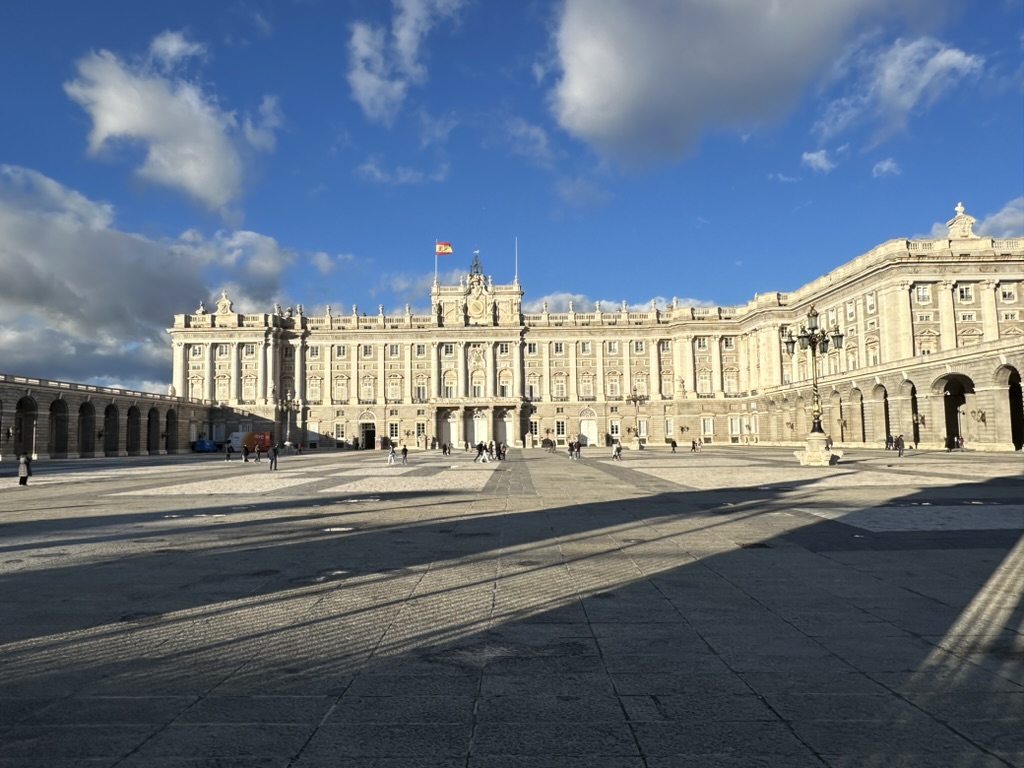
- We finished by the royal palace of Madrid. This has over 3,000 rooms as the king who built it wanted to have one room for each day of the rest of his life – ironically he died before the palace was completed. When the palace was but it also had zero toilets, which was a bit of a design oversight
After finishing hotel check in we did our obligatory stop in Uniqlo but there wasn’t much exciting there and prices were a lot higher than what we had seen in Shanghai. We split up as Lisa was keen to do more shopping and I decided to go for a walk.
I wandered along the Grand Via which is the posh street of Madrid. There were lots of theatres as this area is known as the Broadway of Madrid. There were plays on such as Pretty Woman, Lion King and Aladdin. Would have been cool to go but don’t think we would understand any of the Spanish!
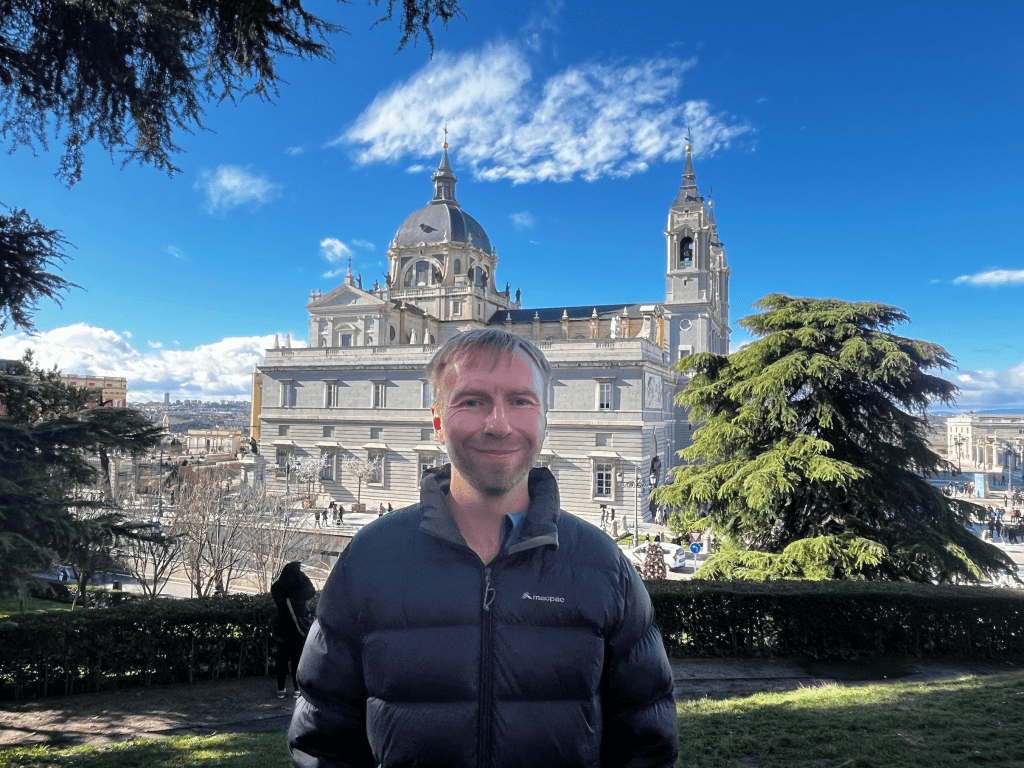
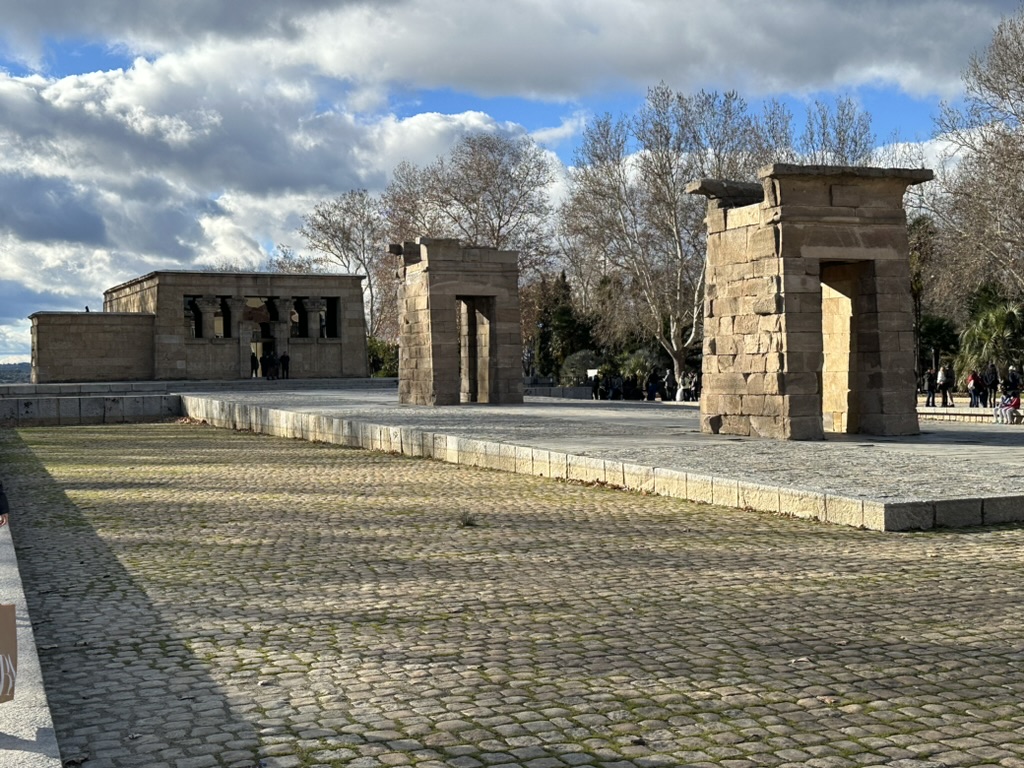
I eventually came to temple De Debod which is an Egyptian temple that was moved to Madrid. There wasn’t much to see from the outside, just some large stone monuments. It was possible to go inside but the line was massive and barely moving. I snapped some photos from the lookout area and then walked between the palace and the cathedral. The cathedral isn’t particularly impressive but the palace is massive.
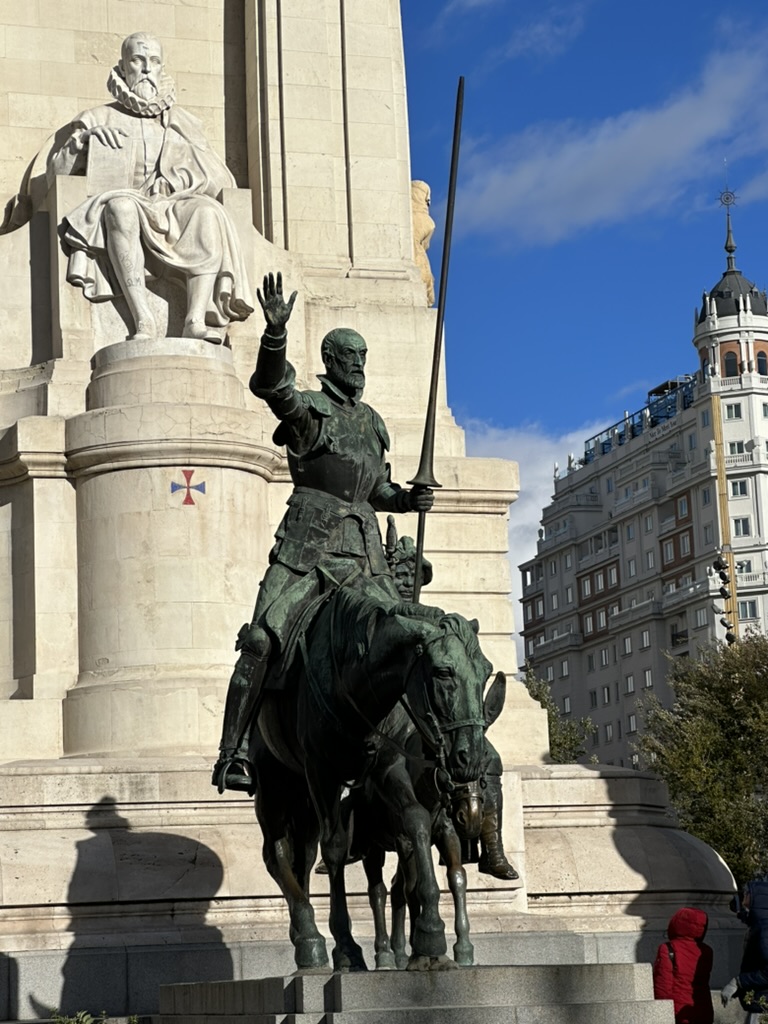
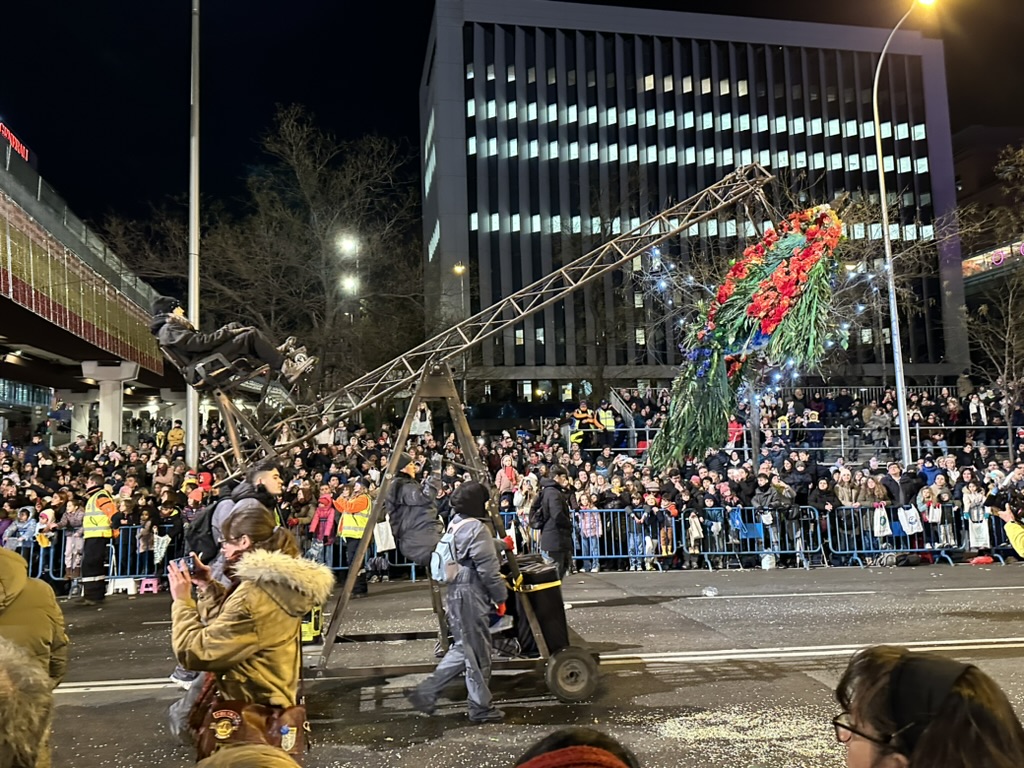
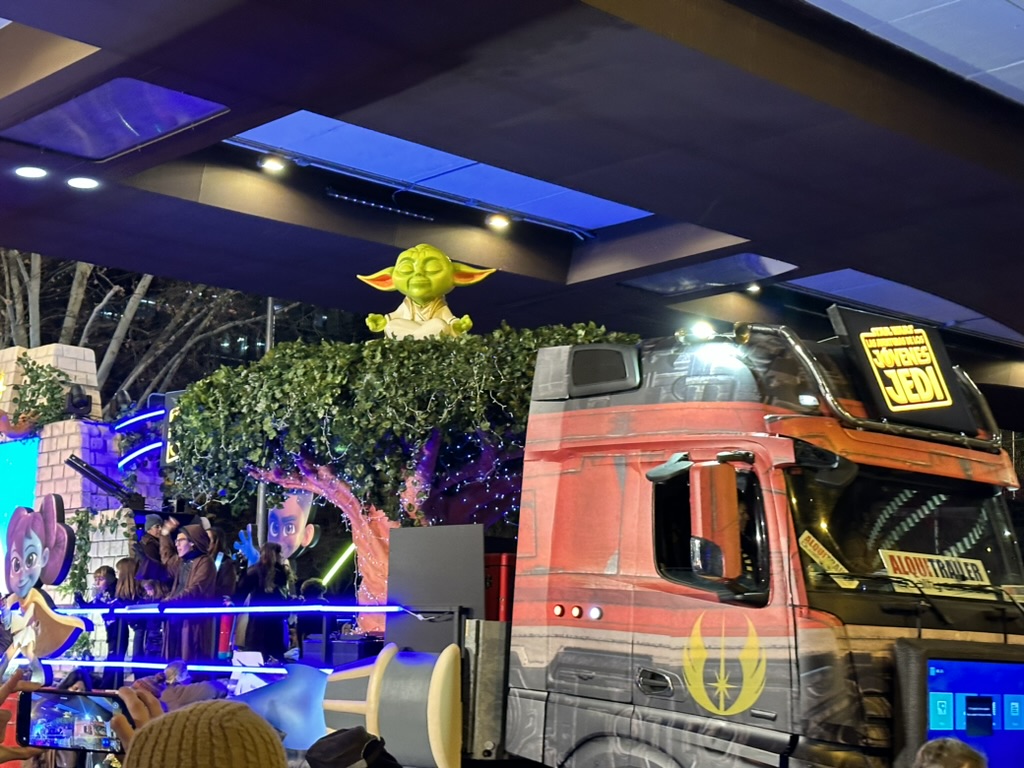
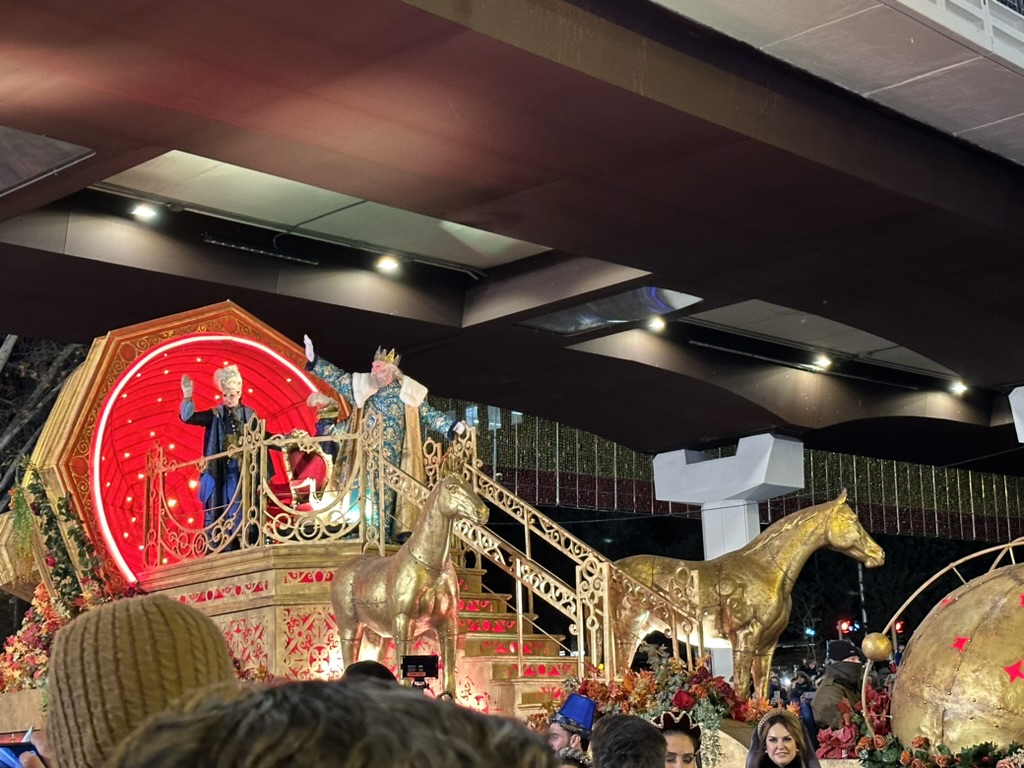
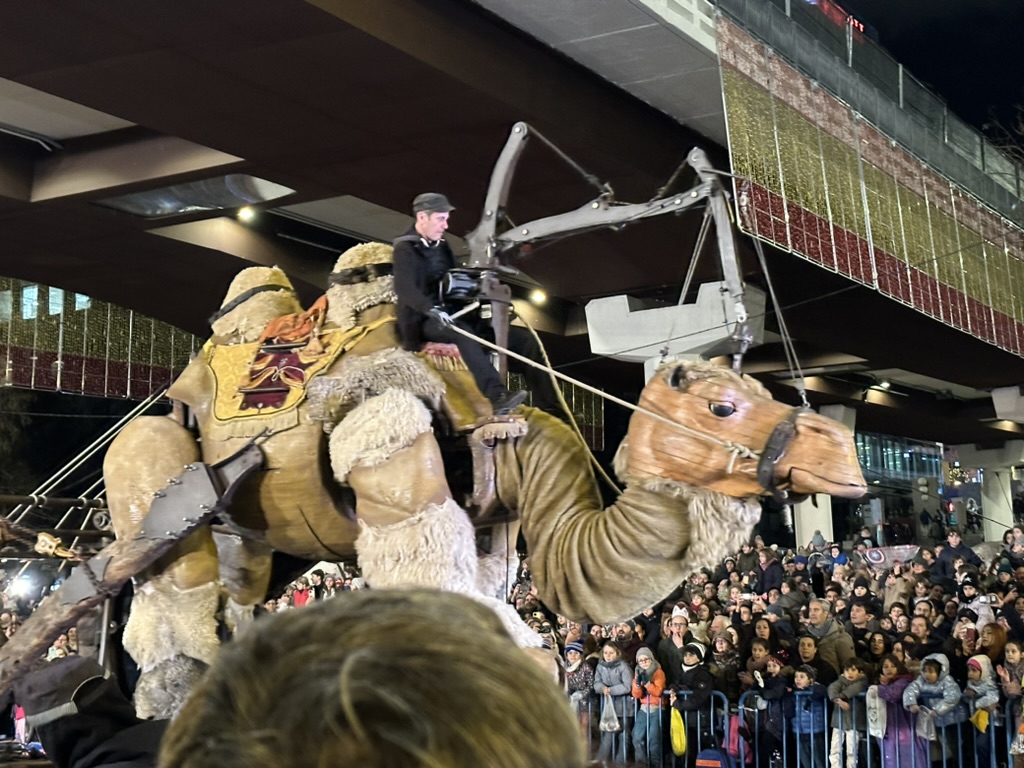
In Spain children don’t get gifts from Santa on Christmas instead they get gifts from the three wise men on the evening of the fifth of January – which happened to be tonight. The sixth of January is then a public holiday to play with these gifts. In Spanish cities there is a three kings parade on the fifth of January which my cousin Ben had recommended us attending in Sevilla. We decided since we were in Madrid that we should check this out. We arrived quite early but there were still massive crowds lining the streets. Many children were on top of step ladders to see over the hordes of people.
We waited over an hour for the parade to start and reach us. In the mean time the police entertained the crowd driving up and down giving high fives to people in the front row. Finally the parade arrived with interesting floats along with buses and people walking. There was lots of up beat music including some bag pipes which made Lisa happy. A big feature of the parade was the paraders providing candy to the crowds. Some times this was people handing the candy but generally it was throwing candy into the air. I tried hard to catch as much as I could but it was harder than it looked. Mostly we ended up just being hit by the candy including in the head several times. Overall it was a very interesting experience and lucky we were here at the right time of year to experience it.
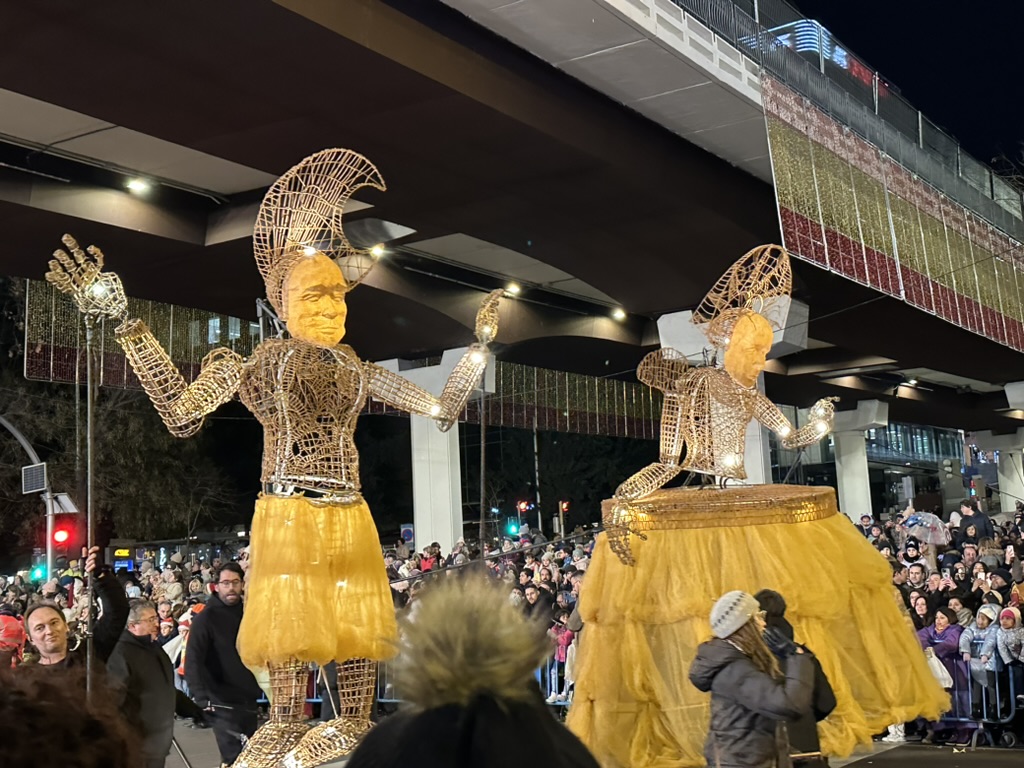

After the parade we caught the subway back to our local area and tried to find somewhere for dinner. We were really struggling and as Lisa was sick she didn’t have a lot of patience. As a result we ended up eating in the hotel restaurant – we were the only people there but it was ok food and more importantly quick!
6 January 2024
Had another good nights sleep, finally starting to feel like the sleep problems are behind me.
First stop of the day was the San Ginés chocolate shop. They have been in business since 1894 and are widely regarded as producing some of the best chocolate in the world. Interestingly they claim to be open 24 hours per day so if I do have more sleep problems then maybe some chocolate in the middle of the night might help! There was a bit of a queue for a table but the queue moved quickly. We had to order and pay before being seated which put us on the spot for making decisions but at least everything done up front and we didn’t have the usual dramas with paying at the end. We both had hot chocolate with cream, most others were getting the churros but that seemed a bit heavy after just having breakfast. The chocolate was delicious and I really enjoyed it. Lisa wasn’t as enthusiastic – she prefers the pretty looking food (or “yums” as she calls it) of places like Angelina’s.


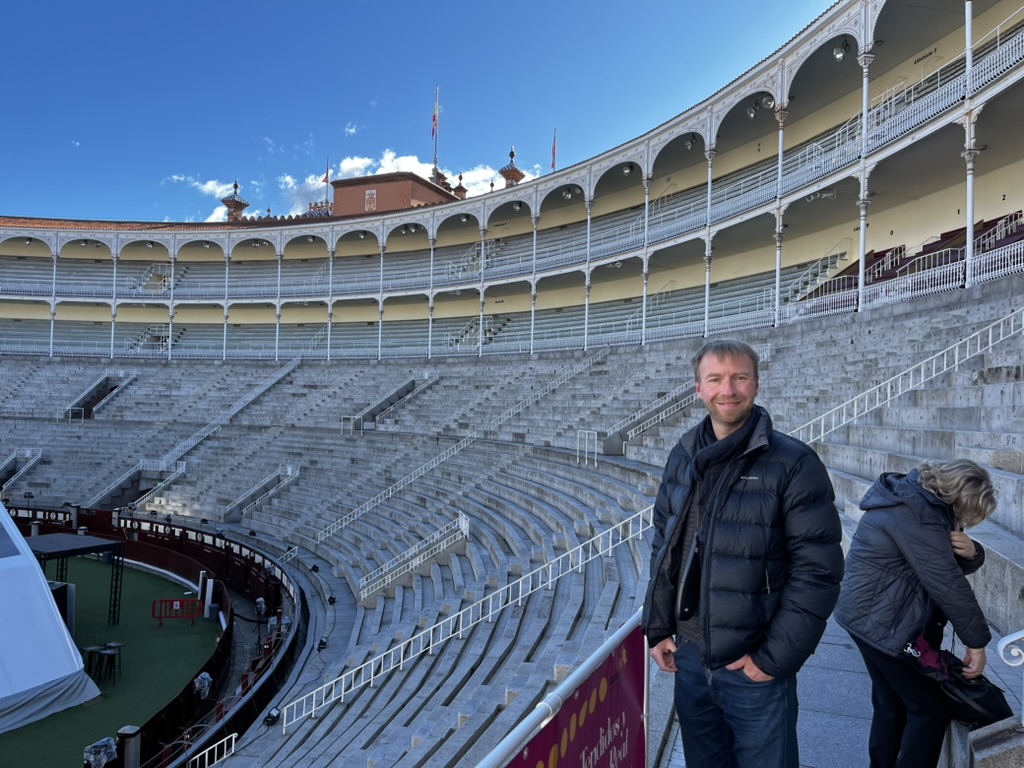
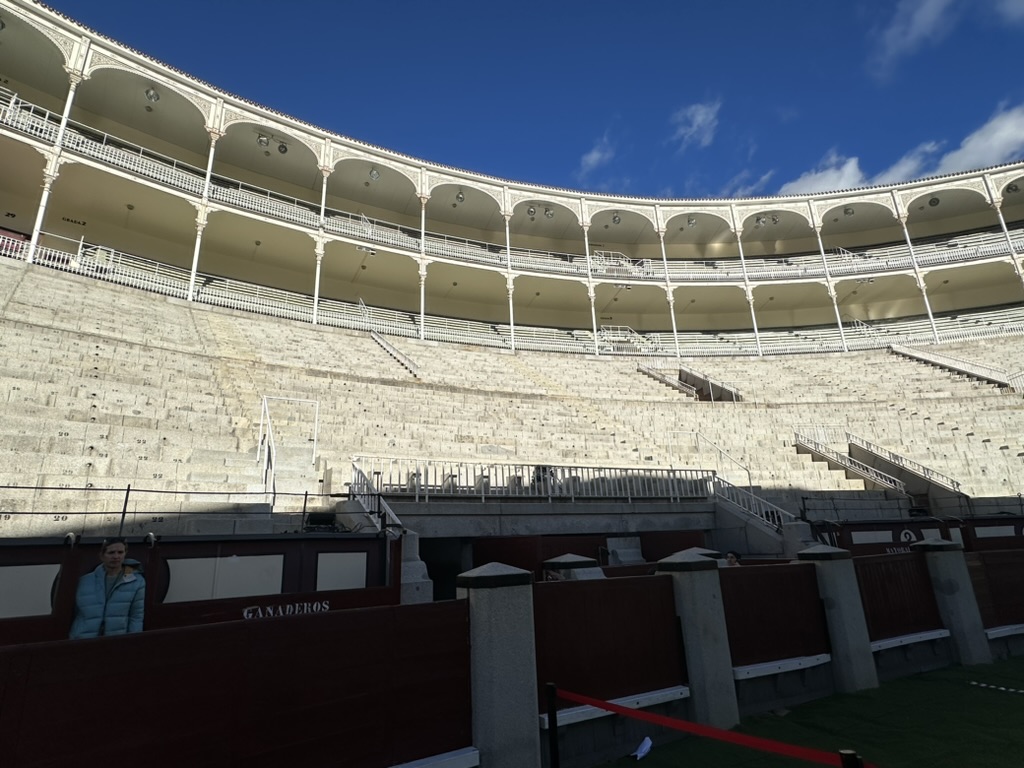
Our friend Andrew recommended going to the Los Ventas bull fighting ring. Arriving at the arena was impressive – it was a large brick structure that had the look of an imposing stadium. It was a self guided tour with an audio guide. We slowly wandered around the arena learning as we went.
- Bull fighting is a big tradition in Spain and Latin America countries
- Approximately 250,000 bulls per year are produced for bull fighting
- It takes four years to grow a bull to full size and costs approximately five thousand euros
- Matadors start with younger bulls and work their way up
- Matadors are big heroes in Spain and the best are well rewarded. After a great performance they may be carried from the arena by the crowd. They may also be rewarded with the ears (and possibly the tail) of the bull
- Las Ventos was built as the previous bull ring was too small. The arena can host 23,000 people and prices range from five euros up to 140. The arena is very well designed and has good views from all of the seats. It had a similar feel to the coliseum in Rome
- The arena had also been used for concerts such as the Beatles, Coldplay and AC/DC
- It has an infirmary for treating wounds to matadors. It includes advanced medical facilities including operating theatres. In 75 years there have been 300 injuries and five deaths
Overall it was very interesting but it didn’t really deal with the animal cruelty and ethical implications of the sport. It had such a big tradition and the bull is so ingrained in Spanish culture and history that it seems unlikely it will end any time soon. Lisa was particularly horrified by the sport.
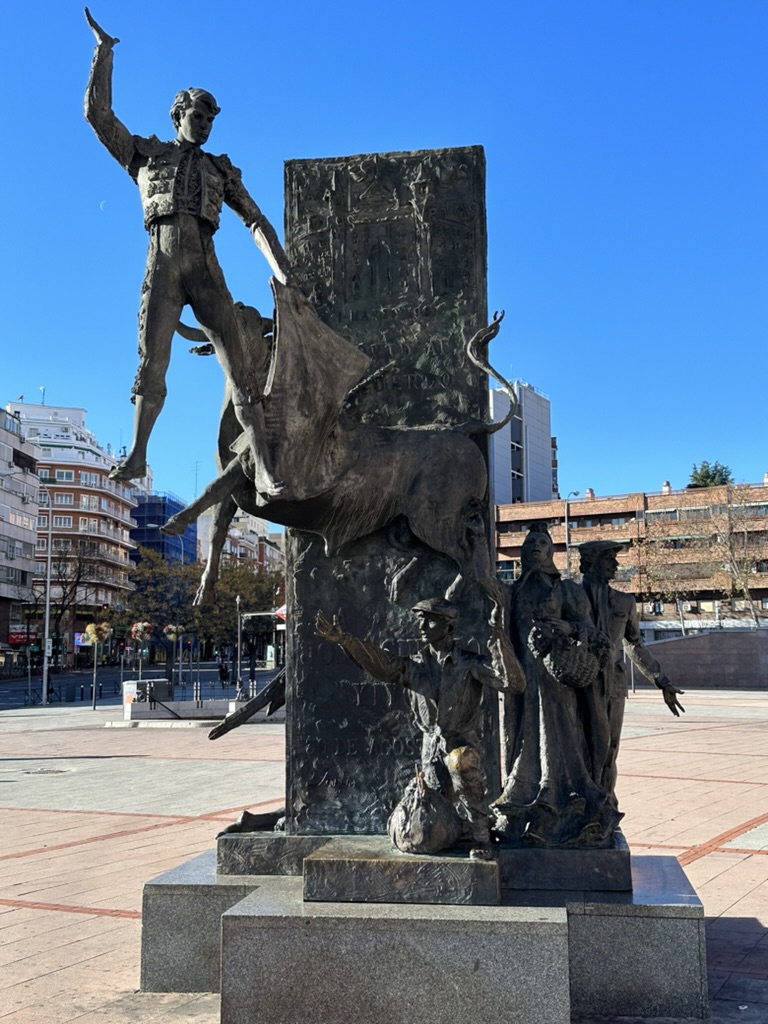
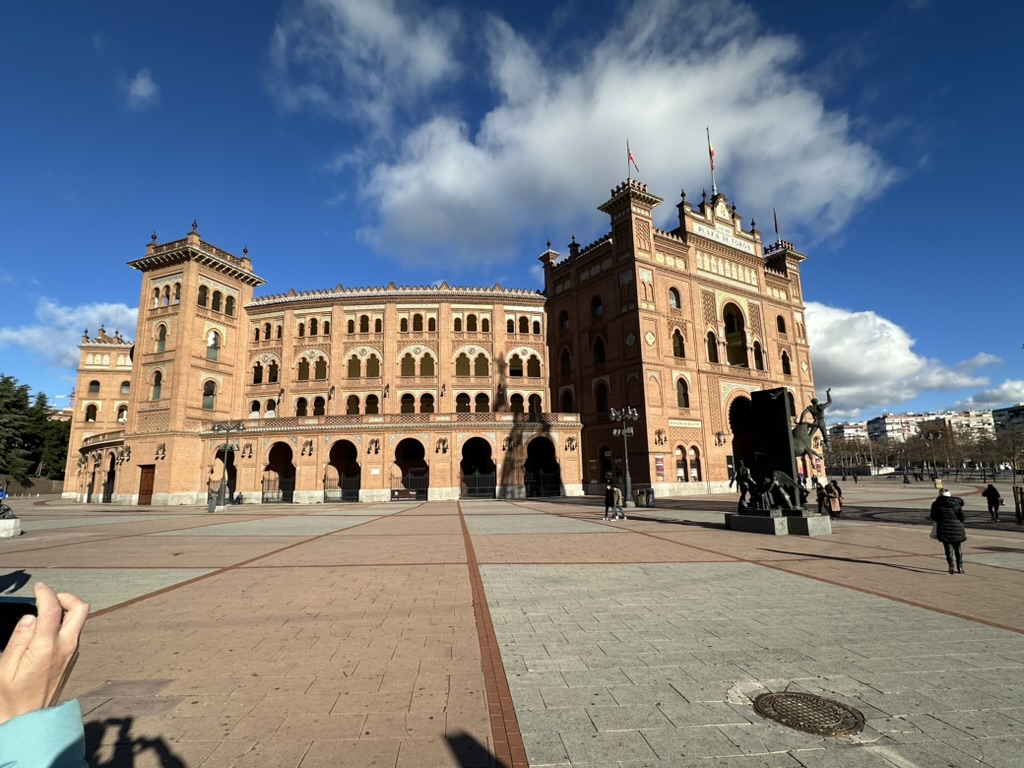
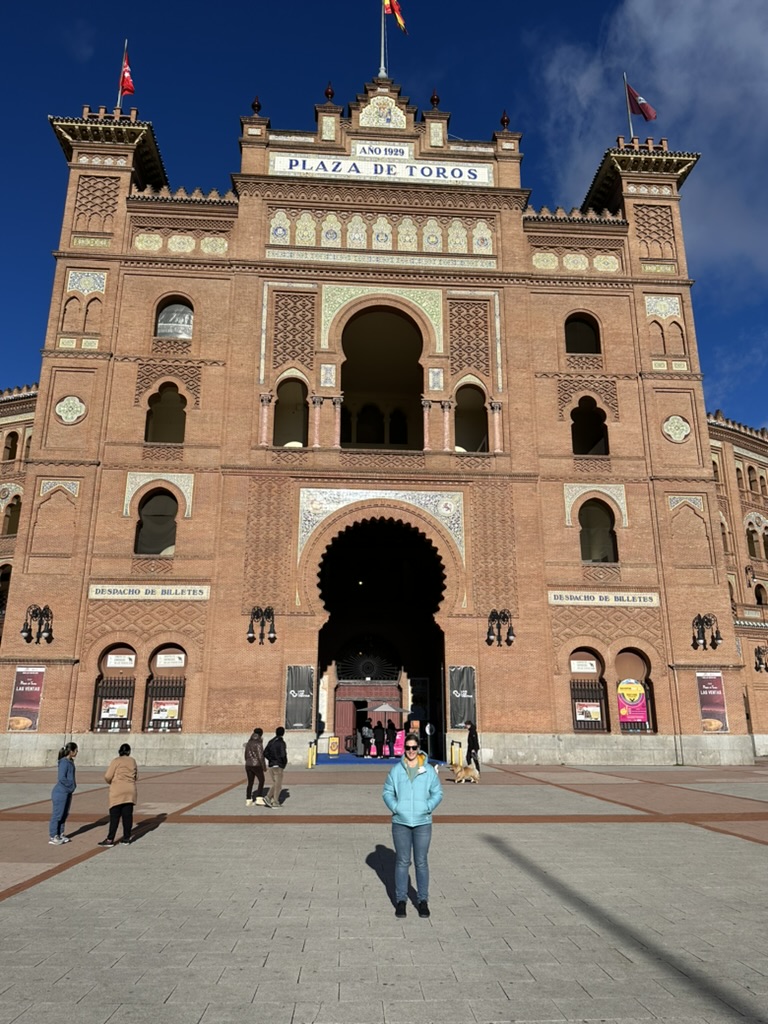
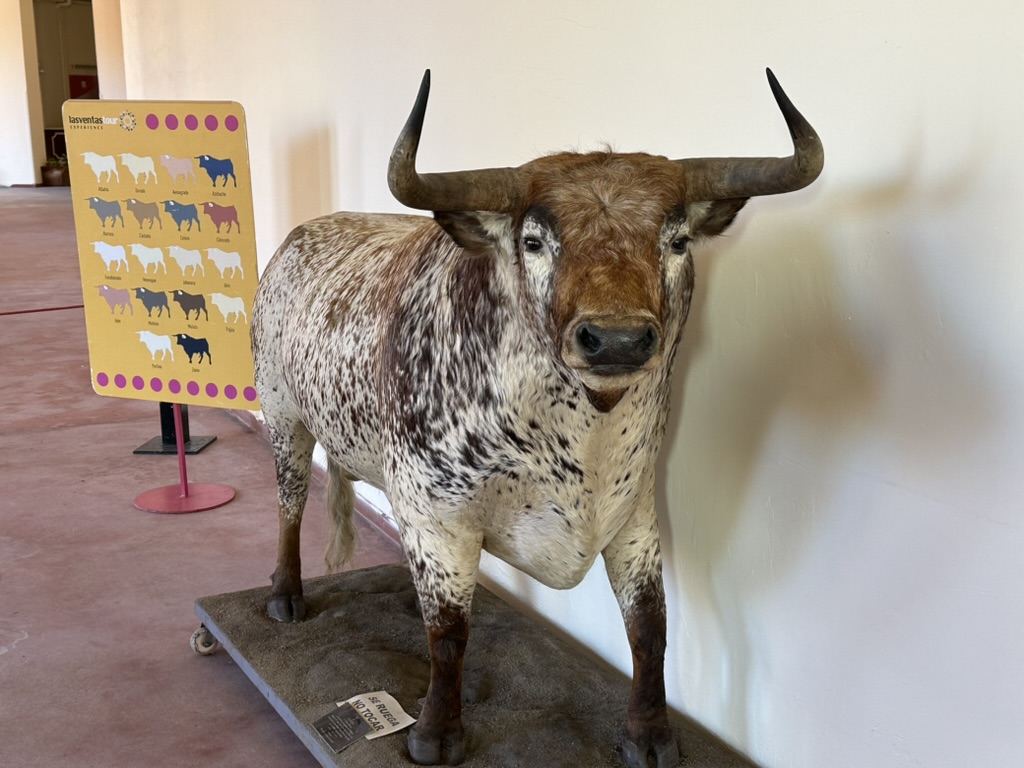
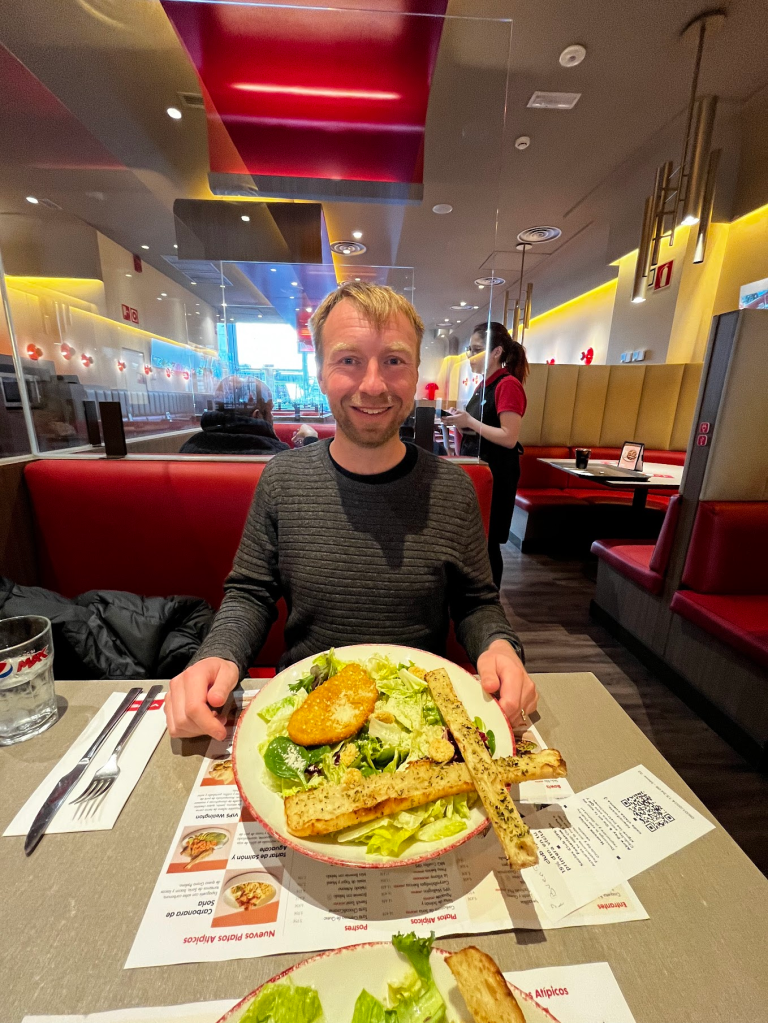
We caught the metro back to Retiro Park but needed some lunch before we explored the park. We made the mistake of going the wrong way (not that we realised it at the time) and ended up in Salamanca which is a very posh and expensive neighbourhood. As a result were struggled to find anything suitable for lunch. After walking in a different direction we came across VIPS which was like a cheap Cobb and Co. We had Caesar salads which were huge but pretty good.
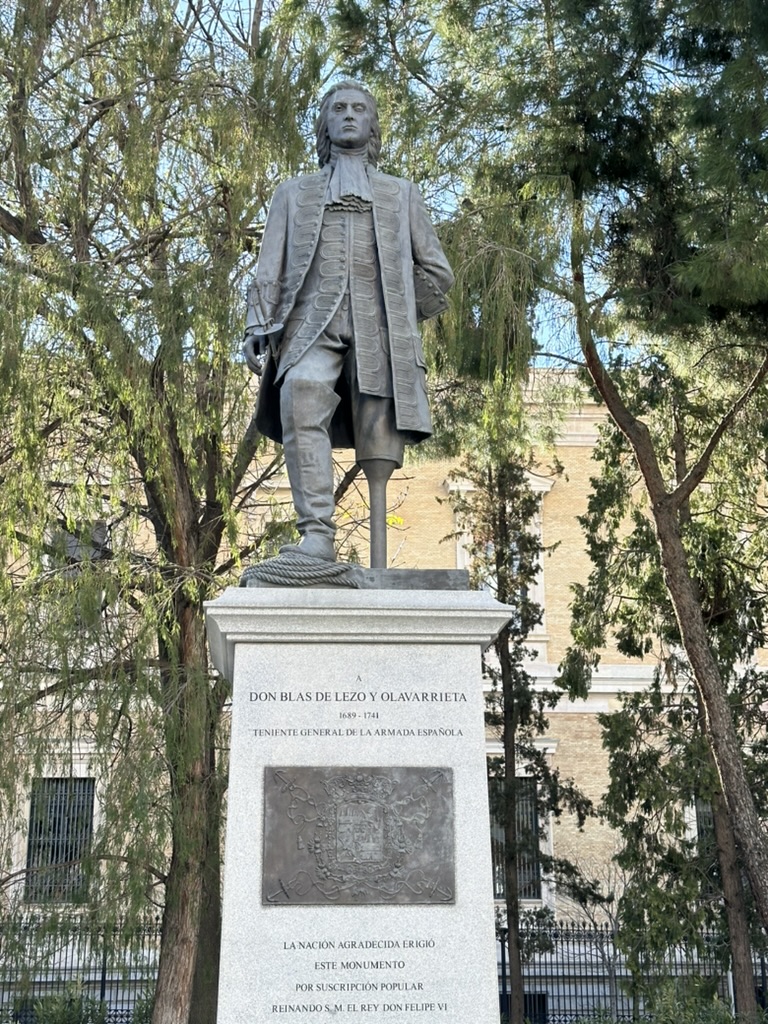
We wandered through Retiro Park which is a large park in Central Madrid. There was a large lake in the middle across from a massive monument to King Alfonso XII. Lisa had a bit of a rest and I continued onto the Crystal palace – a large glass building. It was a very nice park – a little like Central Park in New York or a more upscale version of Christchurch’s Hagley Park. On the way in we had spotted electric bikes available for hire and this looked like a great way to explore the park. However, as much as we tried we were unable to unlock the bikes. Having seen how busy the park was, getting around on bikes would have been pretty difficult.
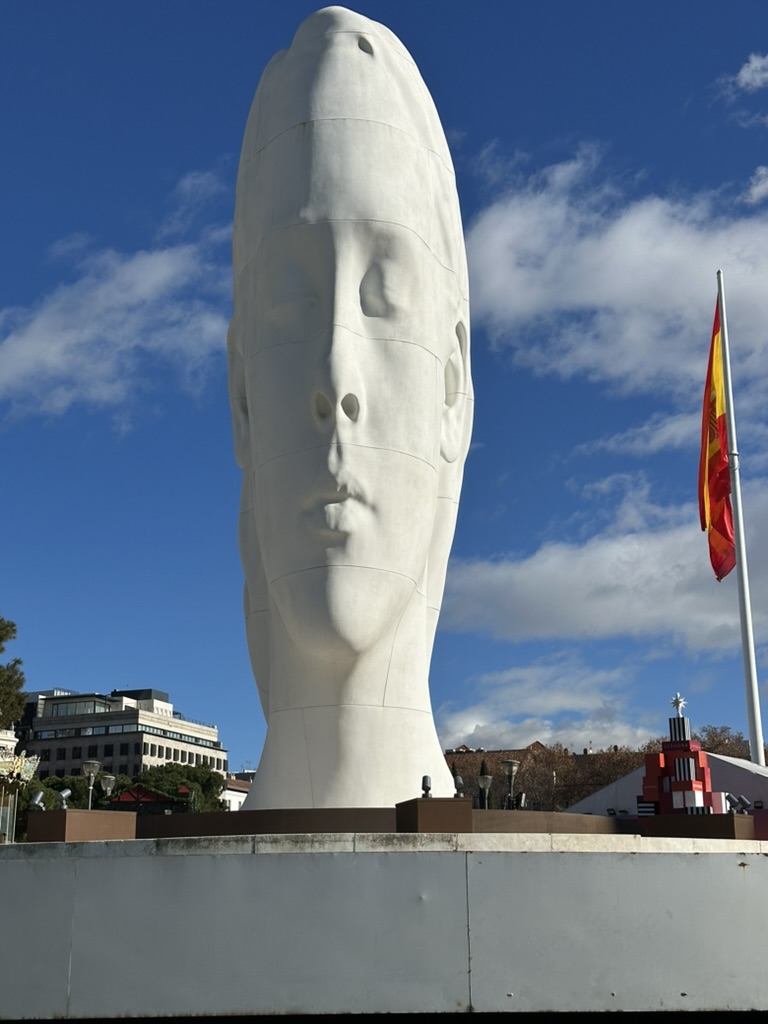
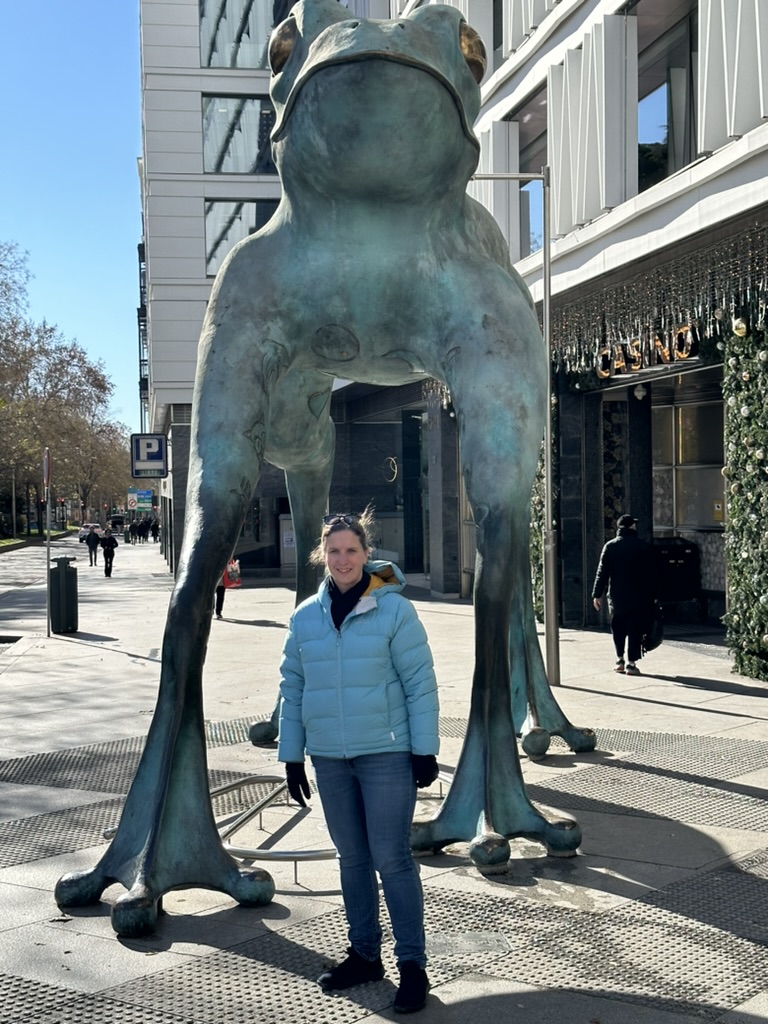
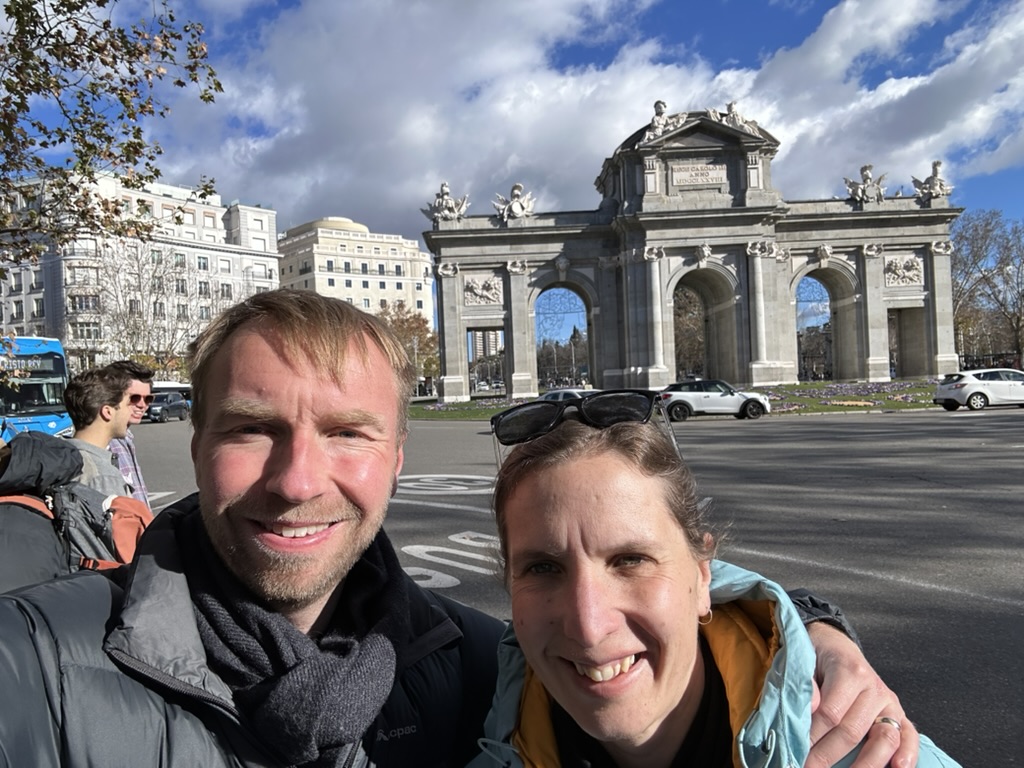
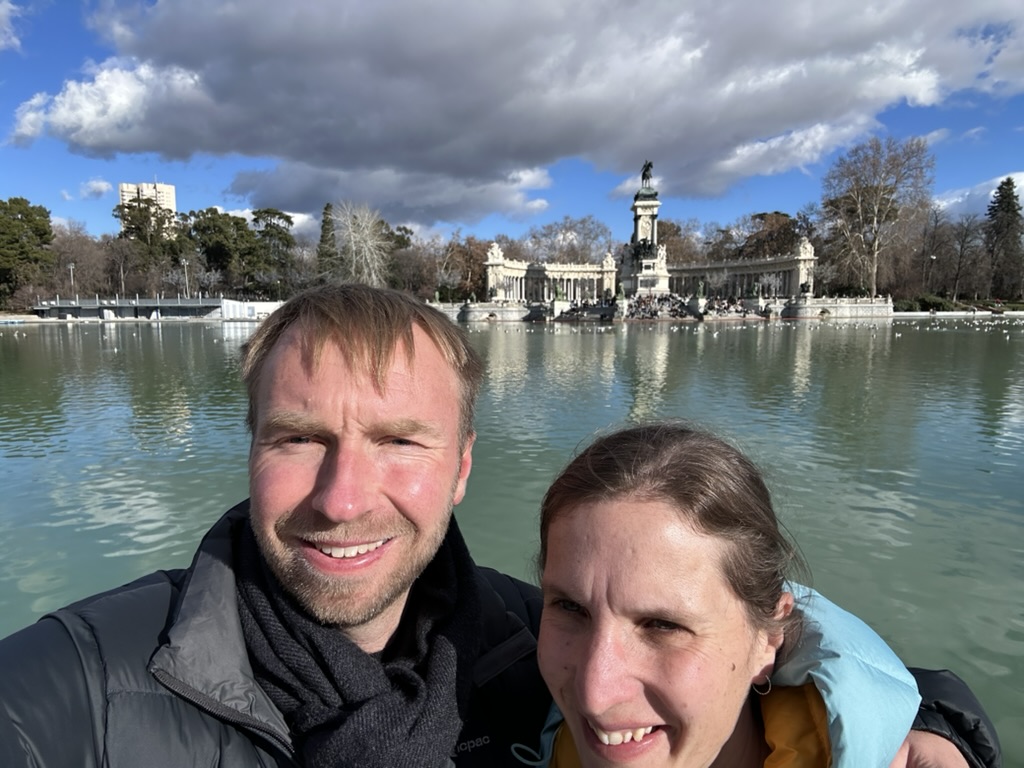
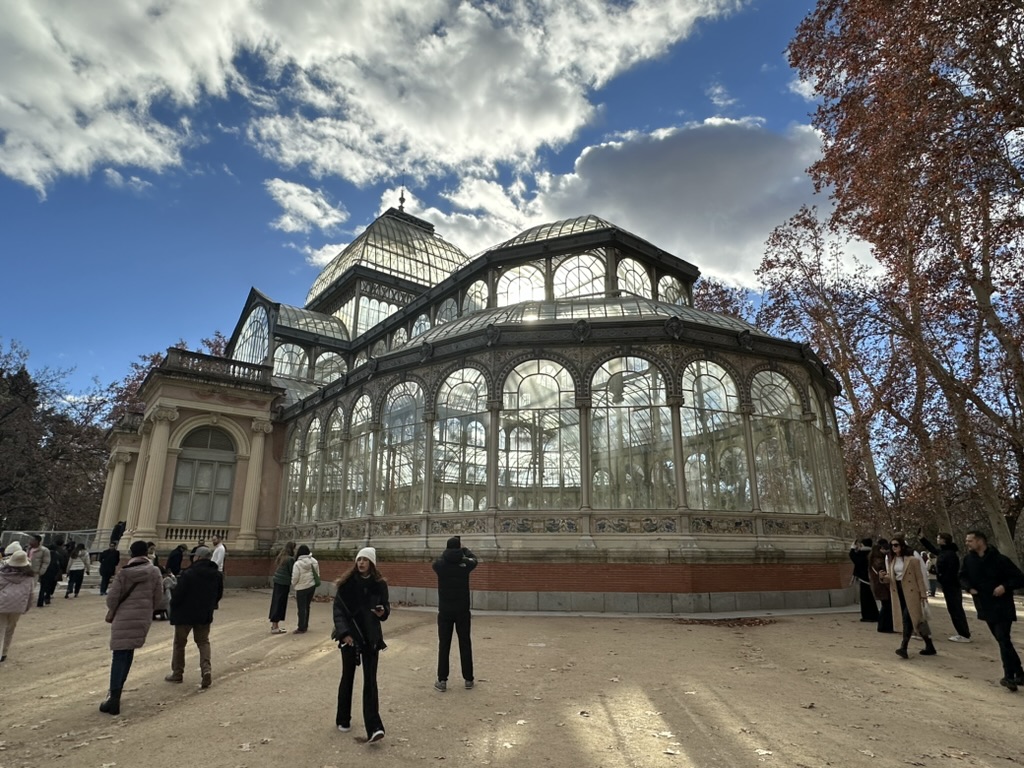
We had a quick rest at our hotel then grabbed our first gelato of the trip as we had a walking tour in the late afternoon and needed something to tide us over until dinner.
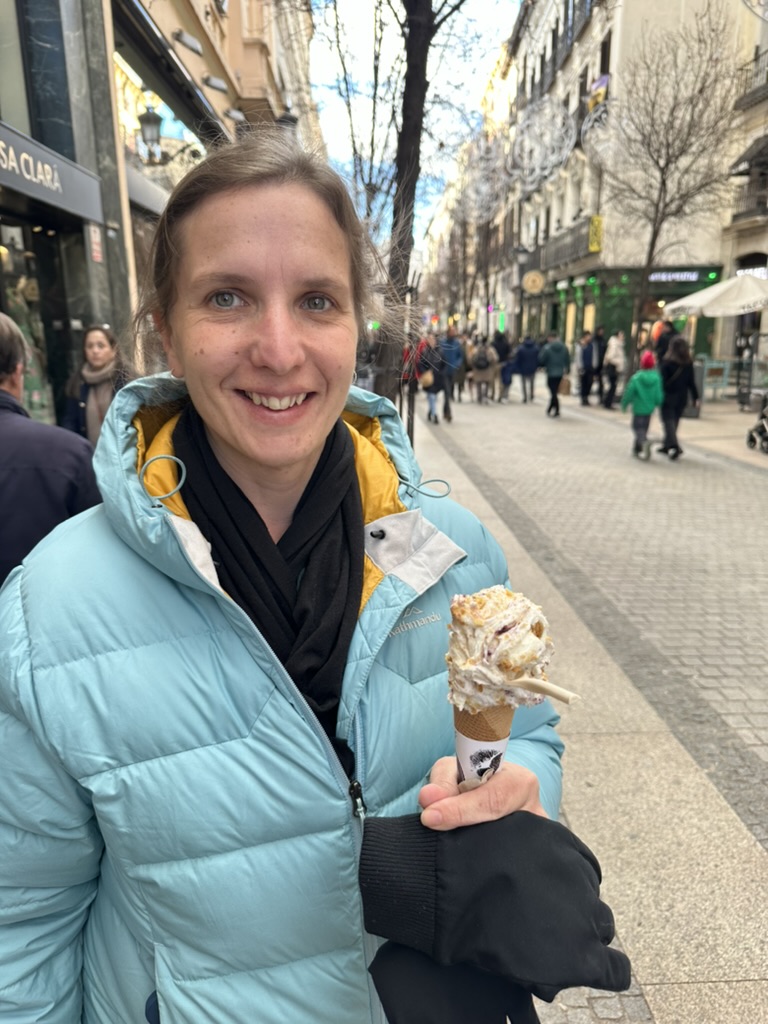

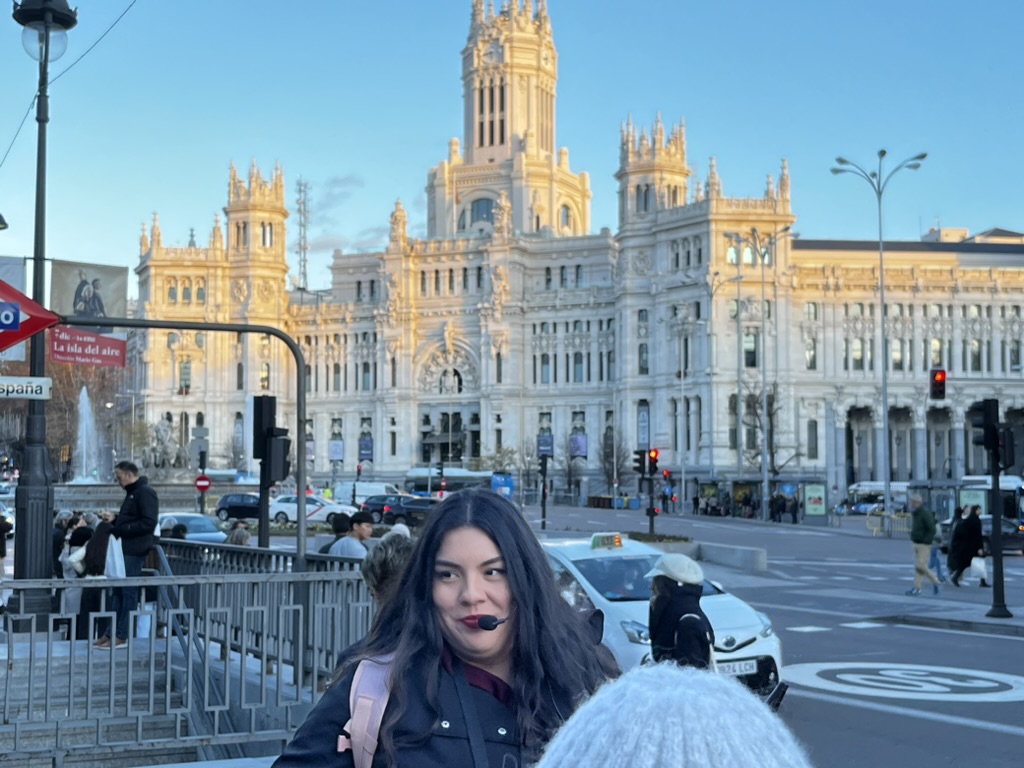
Our walking tour was again with Melissa and covered the history of the more modern Madrid under the Bourbons and then recent history. Essentially the level two after the level one (more historical) tour were had done the previous day. On both tours Melissa used a hamburger to illustrate the different eras. In the first tour this was pretty simple with the two Charles as the buns and then three Philips as the fillings. The second tour was more complicated with about seven fillings which included Napoleon (a croissant), the first and second republics and the dictatorship under Franco.
- As Madrid doesn’t have a beach people instead flock to roof top bars to enjoy the warm weather. Generally there is an entry fee but that enables you to relax on mattresses and enjoy the sun
- There are lots of statues on top of various buildings (best viewed from the other roof tops). Including gladiators on a chariot and the Roman guide Nike
- The Grand Via road was a major project during the second republic. They had to knock down a lot of buildings to build it which didn’t make them popular. It was meant to be straight but that would have required demolishing churches and the church in Spain still had enough power to prevent that, so the road has a curve to it
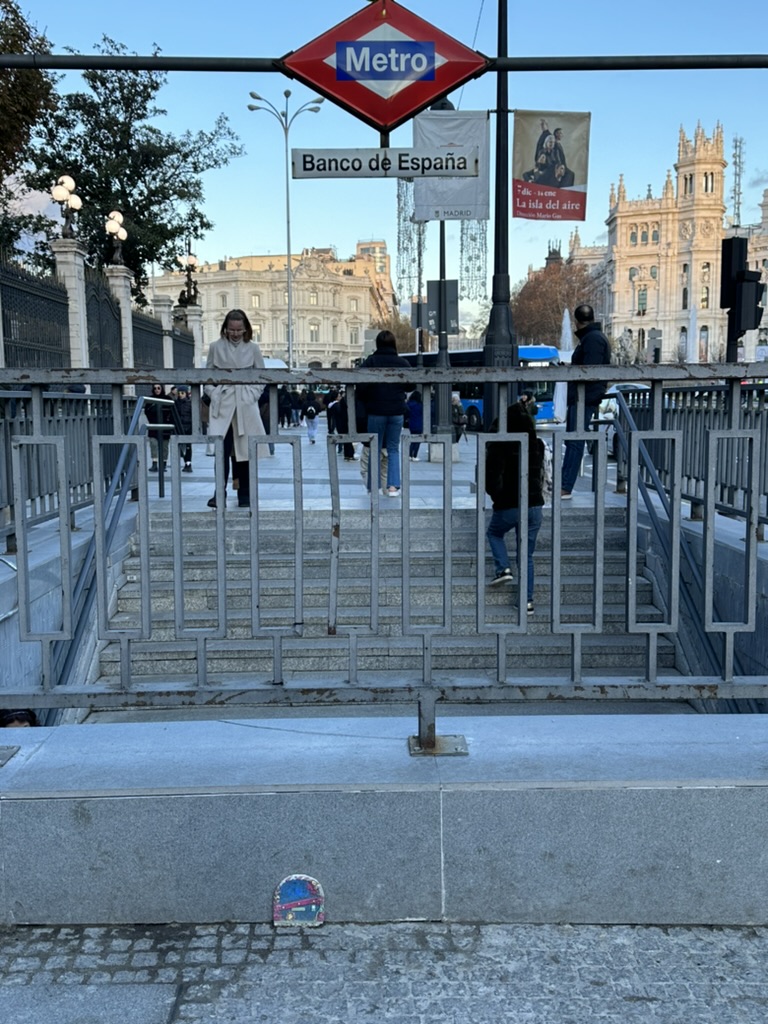
- In Spain a mouse does the job of the tooth fairy. There are little mouse doors across the country so that the mouse can get to where they need to. We saw a door near the bank of Spain. This was very important as the mouse also works across other Spanish speaking countries and so would need to exchange money on a regular basis
- The new part of the city was built outside the historic city walls. A key attraction was the old bull fighting ring. There were lots coffee shops where people from different classes could mix. This led to the creation of a fancy casino – not a place for gambling but rather a place where the rich and elite could hang out away from the pesky non-rich, non-elite people.
- We saw the fountain outside city hall where Real Madrid comes to celebrate their victories. They are greeted here by the crowds and the tradition is that the captain places a scarf on the lady in the statue and gives her a kiss.
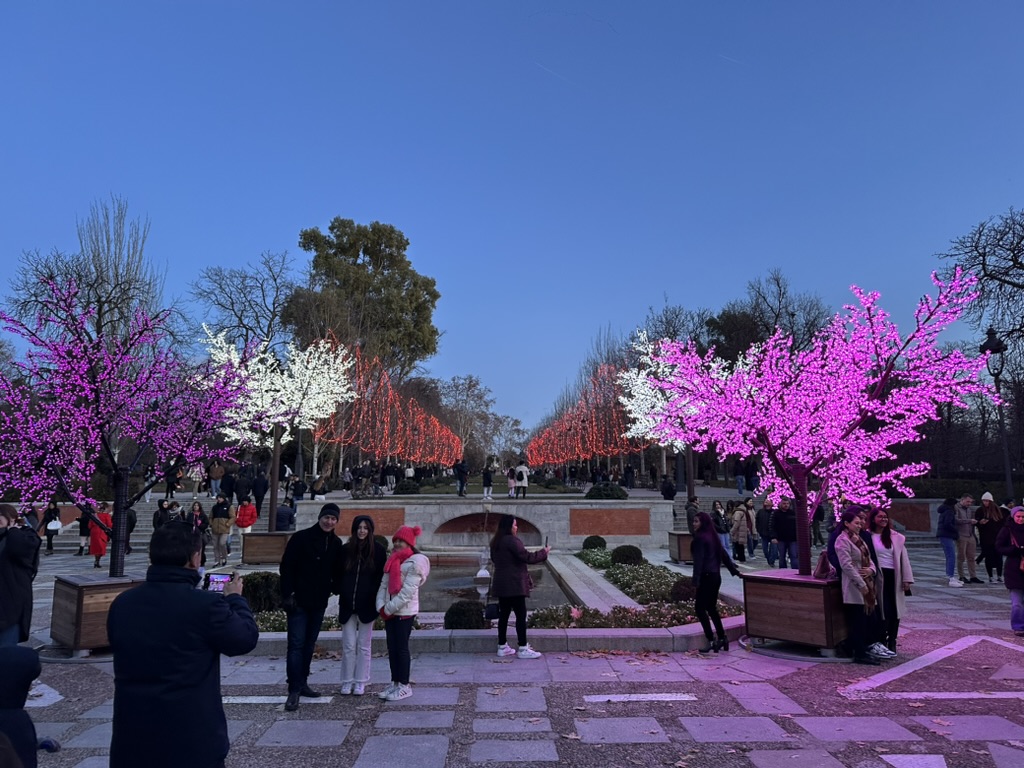
- The tour ended in Retiro Park which looked spectacular at night with lots of pretty lights on the trees and monuments.
- Melissa talked briefly about the dictatorship under Franco. She said this isn’t covered on the Spanish speaking tour as it is too controversial. There are still lots of people with strong feelings on both sides of the debate. A year prior to Franco’s death his second in command was killed in an assassination. This meant there was no one to succeed Franco and so instead he bought the king back. Technically Spain isn’t a democracy as the king still has power but (so far) he has done what parliament tells him to do
- The previous king had scandals with cheating on his wife and not paying taxes. He abdicated in favour of his son who is the current king. The new king has two daughters and the elder will one day become queen
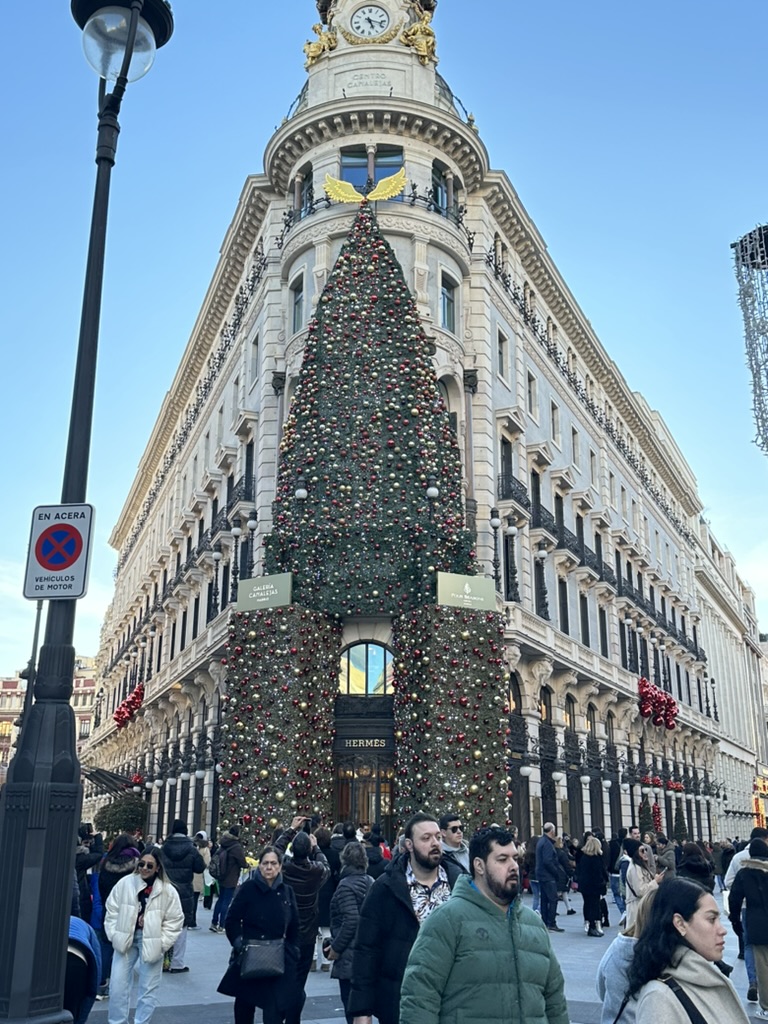
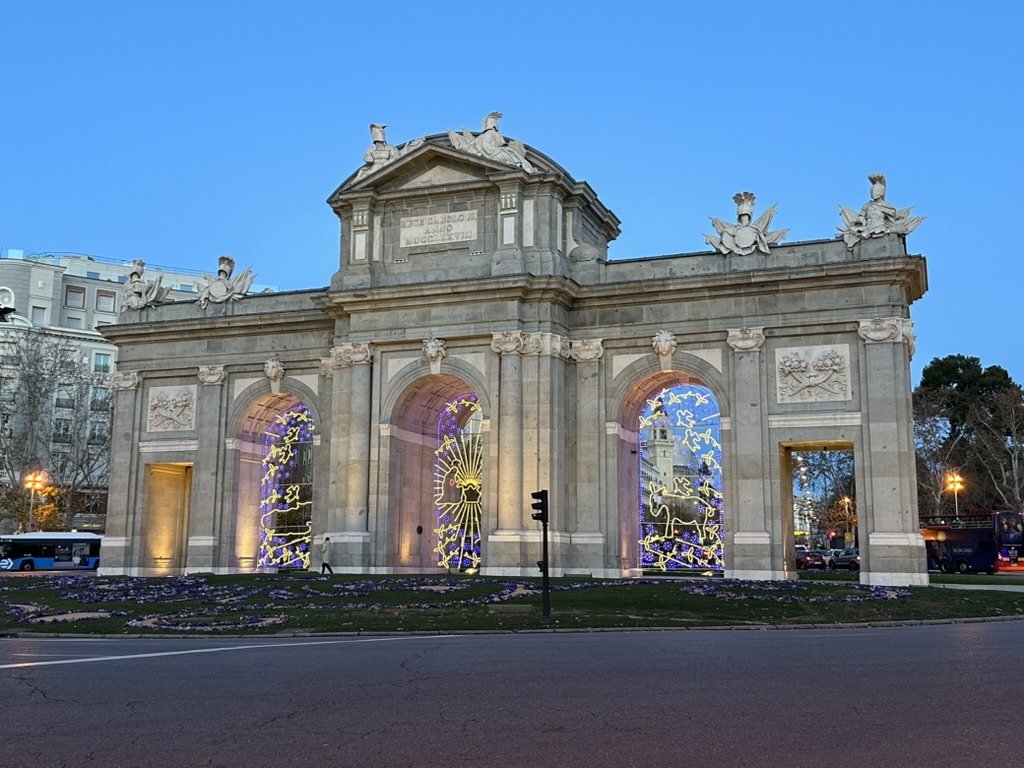
After the tour we had more challenges finding a dinner place. Spanish food just isn’t for us, and so were ended up in Italian restaurant. We shared lasagna and a pizza – it was delicious! Clearly Italian food is for us!
7 January 2024
Day trip to Segovia and Toledo – two historic Spanish towns near Madrid. It was an early start to meet our tour bus near the bull fighting ring we went to yesterday.
It was a 90 minute bus ride to Segovia. Upon arrival we did a walking tour with our guide Roccio
- The big draw card of Segovia is the aqueduct. This was built by the Romans in the first century A.D. as they needed water in the town but the ground was too rocky to dig a well. The aqueduct runs 15km from the mountains down to what was the town’s forum during the Roman times. The aqueduct is very impressive with massive arches. It was used until the 1970s when the town needed more water than it could provide. It had a 1% gradient up make sure the water kept flowing. It isn’t the biggest or most important Roman aqueduct in the world but it is one of the best preserved.
- On the aqueduct there is a statue of a lady in the highest arch. No one is sure who the woman is. The statue was commissioned by Queen Isabella. It is speculated that it is the town’s patron saint but the locals swear she doesn’t look right
- The Visigoths conquered the area which at the time was just villages. They found the place too cold and hard. Hence they were not very interested in doing much there. It was very cold when we were in Segovia too, so we could relate
- The Muslims conquered Spain next, taking the whole country in seven years. After the Christians retook the country the area around Segovia was depopulated due to all of the fighting. The king bought new nobles into the area to repopulate and have people loyal to him
- At one stage there was a war where local Spaniards fought against the emperor who wasn’t Spanish and they didn’t like. In the war the cathedral in Segovia was destroyed. The emperor won the war and to win over the locals agreed to build a new cathedral. It took 200 years to complete and was built of cheap material. As a result the cathedral requires a lot of upkeep and renovations. Sneaky move on behalf of the emperor
- The local pastry is ponche which is not found anywhere else. It has layers of pastry and custard covered in marzipan. It is very rich. We shared a piece and it felt like diabetes in your hand
- The buildings often had geometric patterns in cement on the facades. This was an approach taken from the Muslims where extra cement would be added during construction and then shaped before it dried.
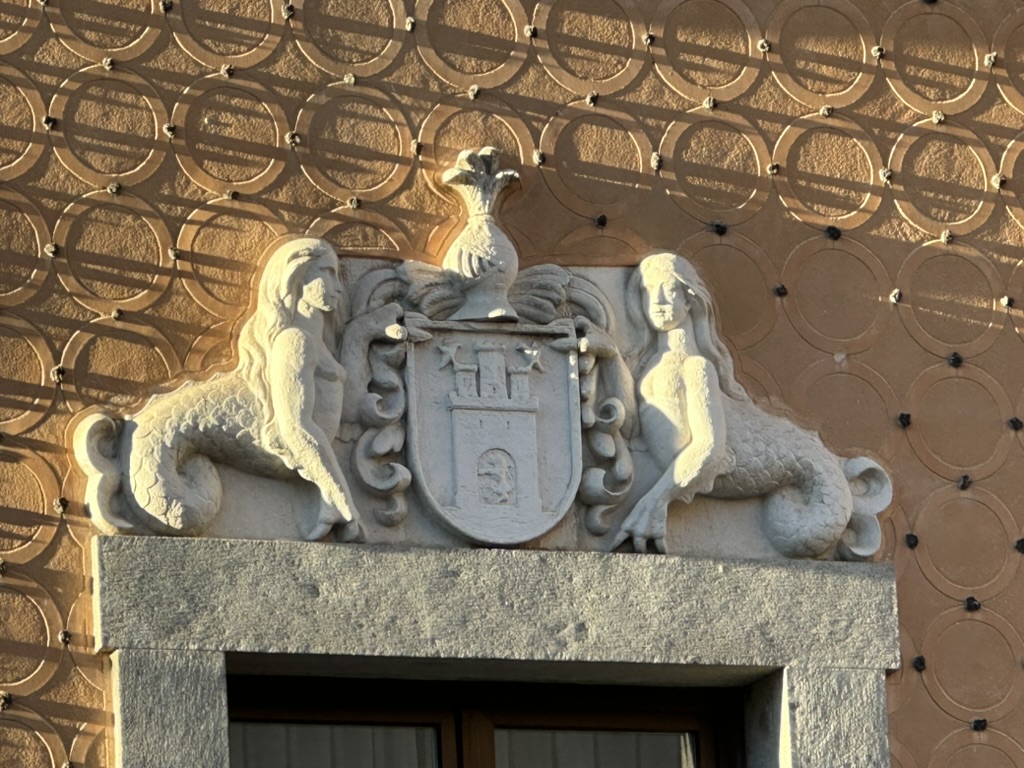
- There was some nice squares including one with mermaids above one of the doors. Segovia is a good five hours from the ocean so not sure how that happened. But Ella is always telling Lisa to be looking for mermaids so it was a good find!
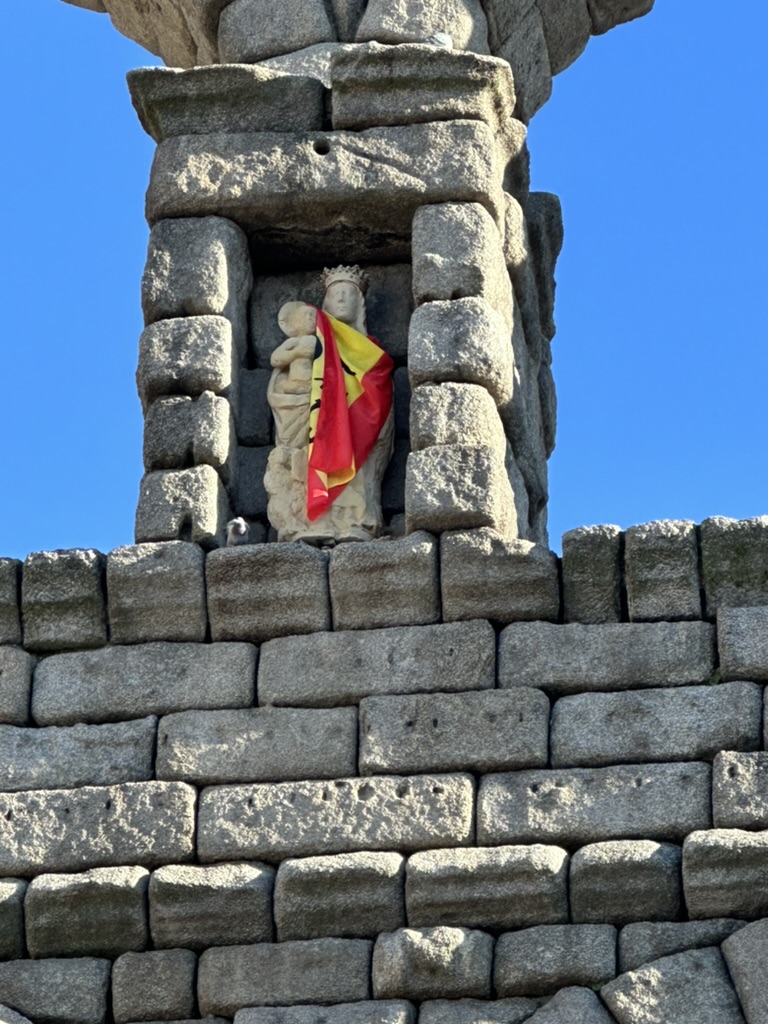
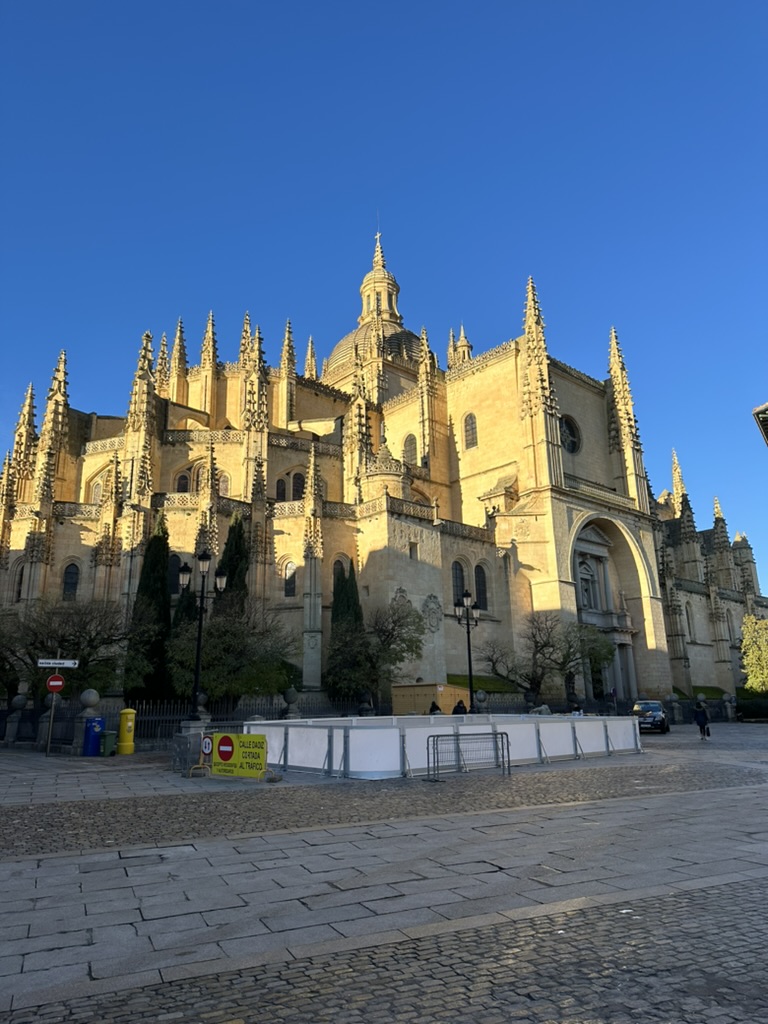
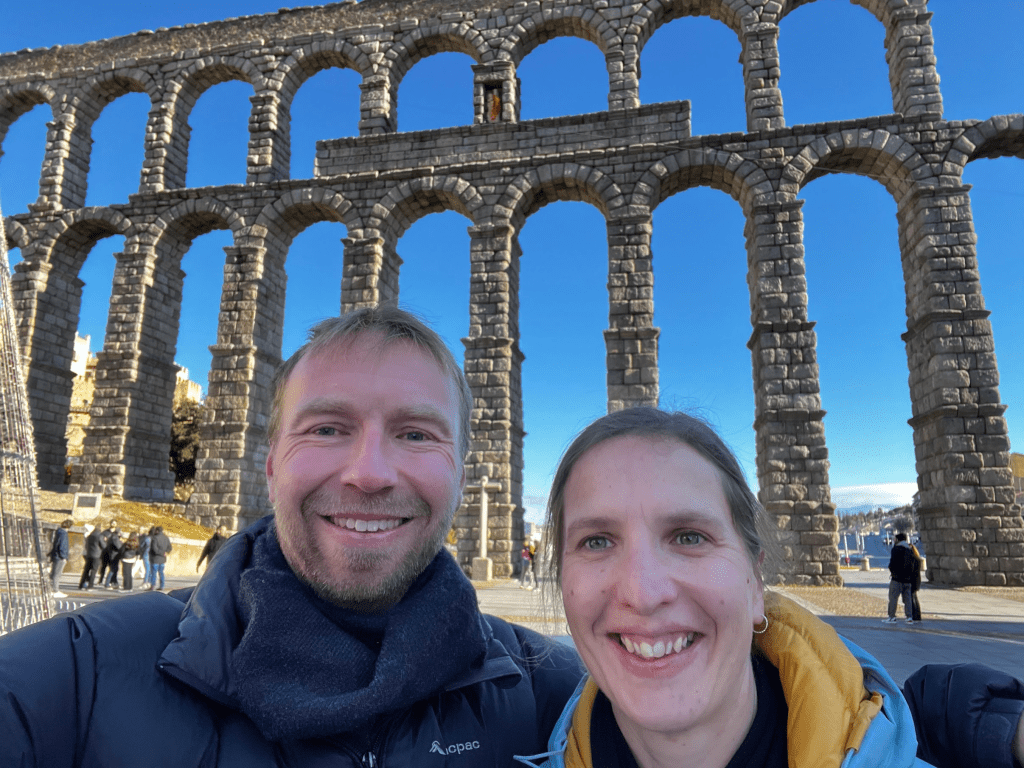
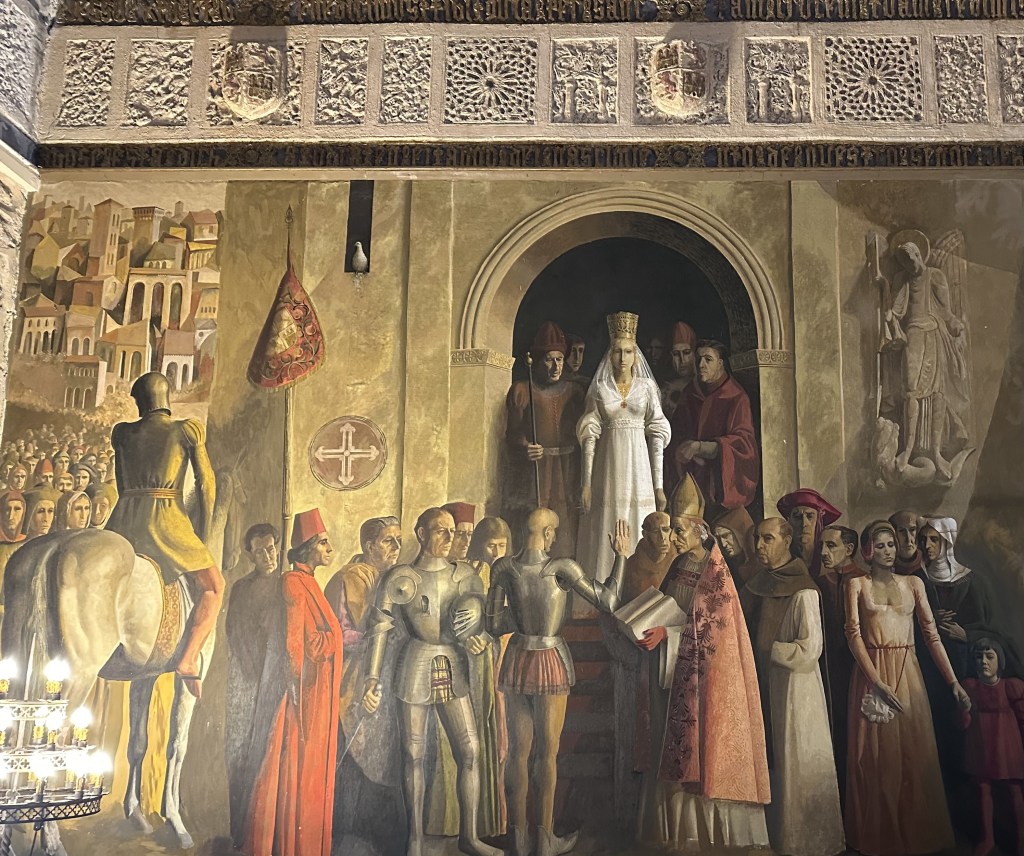
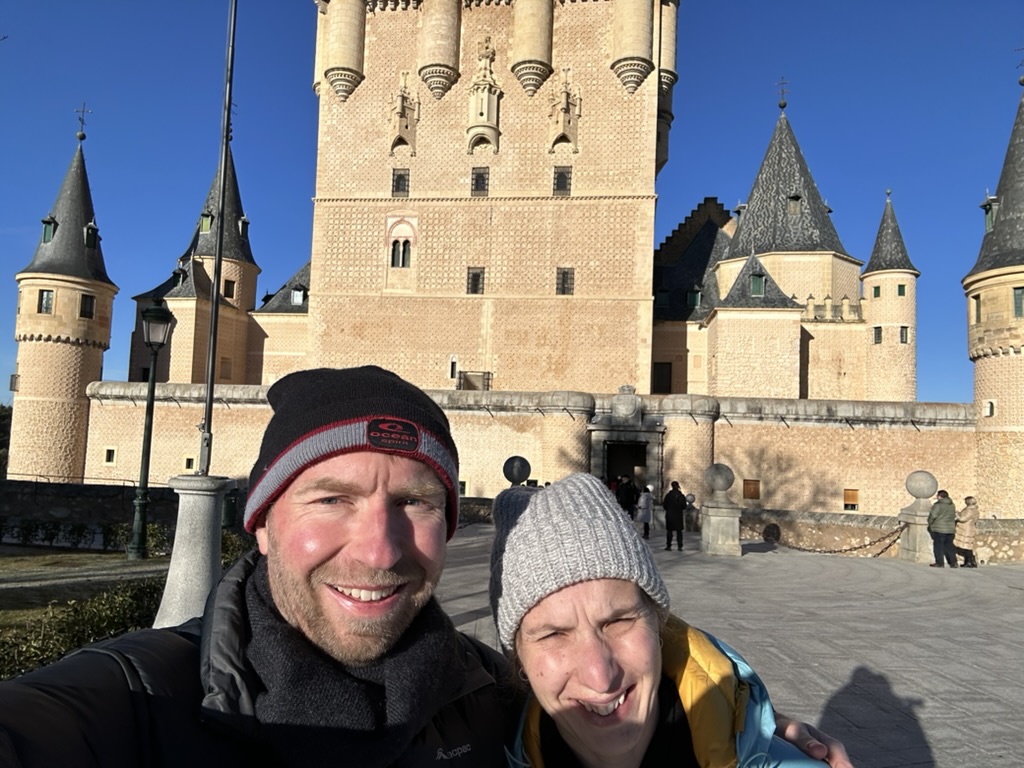
At the end of the tour we visited the Alcázar. This looks a lot like what you expect of a traditional castle – like something out of a Disney movie.
- There was a very impressive throne room. It was in this room that Queen Isabella gave the go ahead to Christopher Columbus for his voyage to the Americas
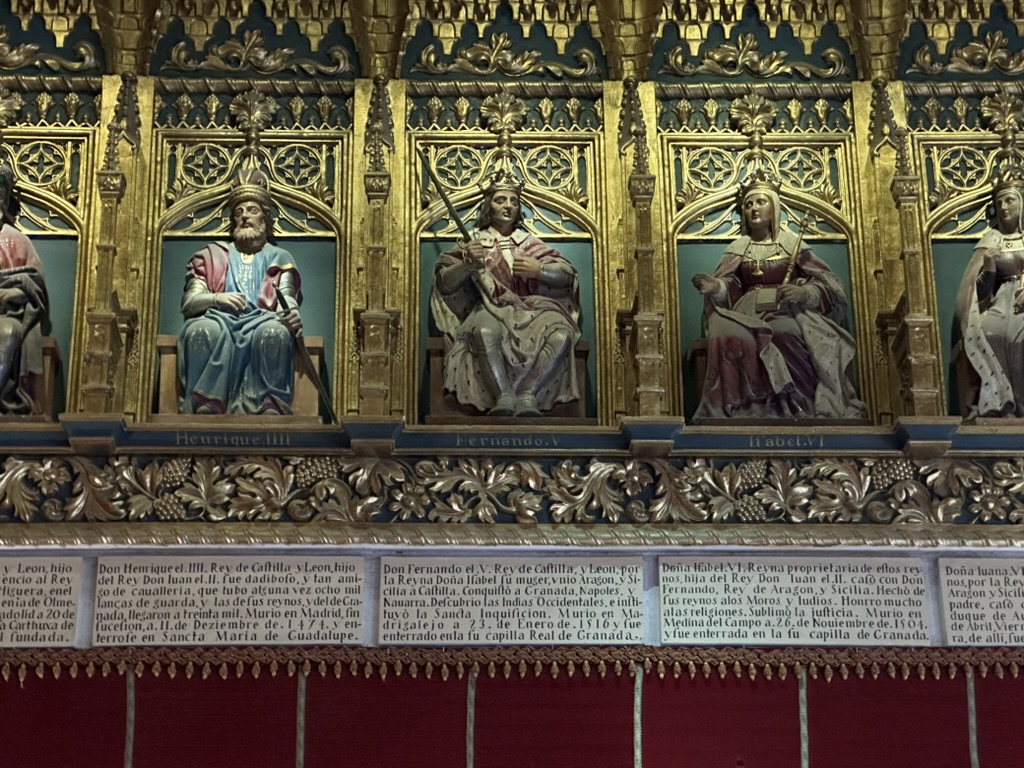
- The dining room had statues of the old kings and rulers on the tops of the walls. This was a very cool idea
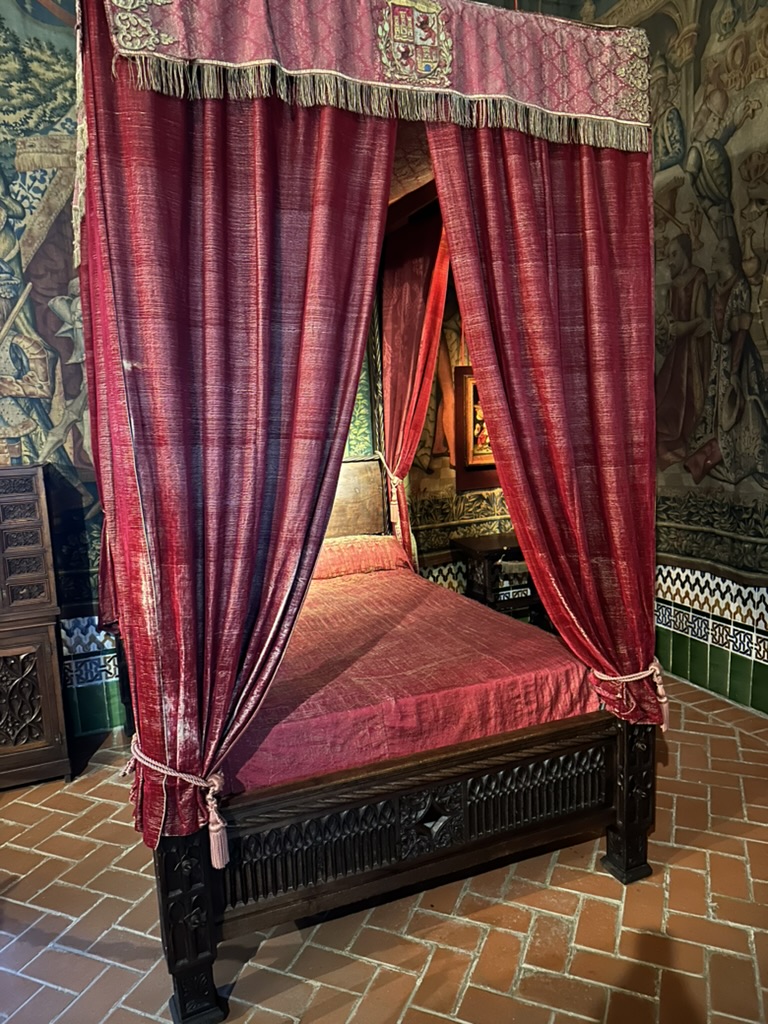
- We saw the king’s bed. It had curtains to protect people’s modesty but wasn’t very big – definitely not “king sized”
- The castle had a huge moat which along with the cliffs on the other side gave the impression of being a very formidable fortress to assault
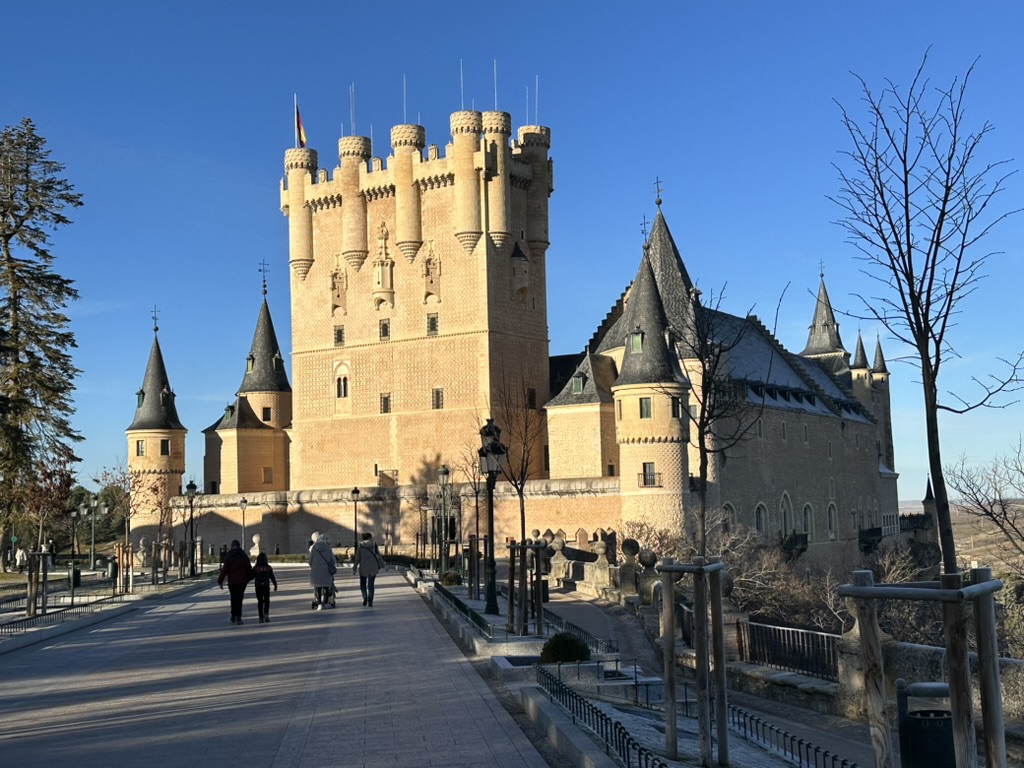
After the Alcazar we had free time in the town, just ambling about and picking up a snack for the trip. The we were back on the bus for the two hour trip to Toledo.
Toledo was founded by the Romans in the second century BC. It sits on top of a hill which gives it excellent views of the surrounding areas and a supreme defensive position. We parked at the bottom and walked up to the historic town. Once we reached the main square colloquially known as “McDonald’s square” we were released for lunch.
We found a nice restaurant that was very busy. Lisa had a ham and cheese croquet and bravos potatoes. I had oven baked pork ribs and fried potatoes – both meals were delicious.
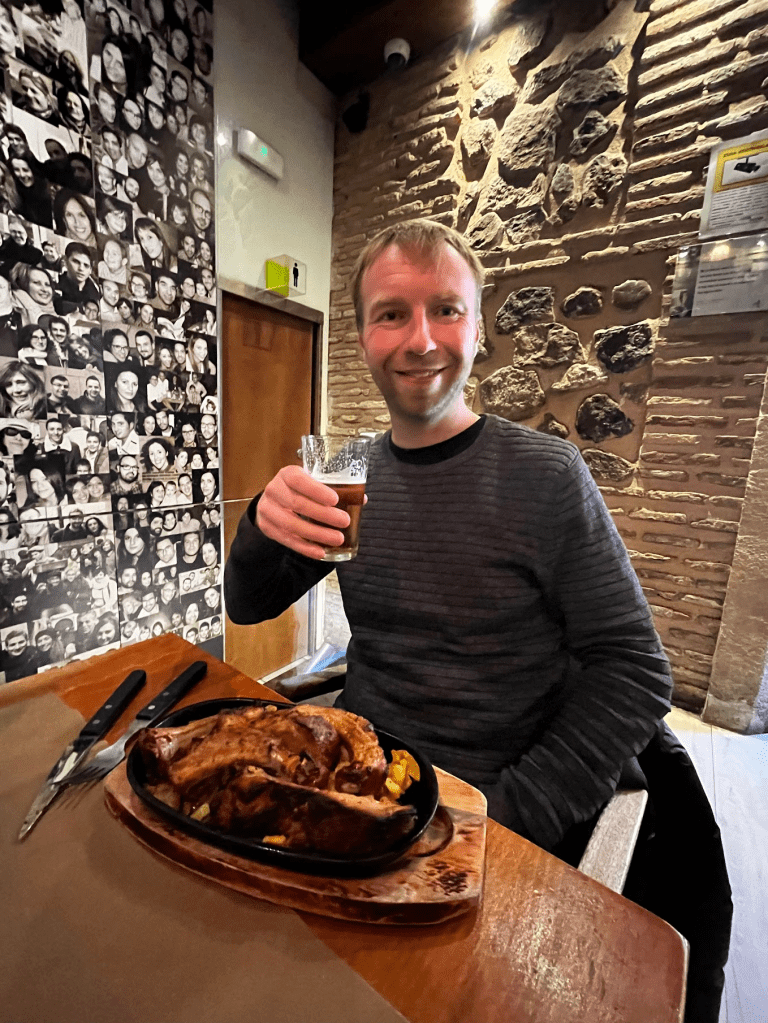
Next up a walking tour of the town
- Described as a city of three cultures – Islamic, Christian and Jewish who largely lived together in harmony. Religious services were even held across languages – Muslim services in Spanish and Hebrew for example
- The city recently wanted to honour its Jewish heritage and put in plaques to indicate the Jewish quarter with the plaques in English, Spanish and Hebrew. Unfortunately the grammar is wrong on the Hebrew version as they used Google translate rather than a human translator!
- The area is known for its swords and knives. When the Muslims came they bought their techniques for making Damascus steel. As it was so far from Syria the trade and connection between the regions dwindled and became independent. This led to the development of Toledo steel which is very strong. Toledo steel swords have been used in a lot of movies and TV shows including: Game of Thrones, Lord of the Rings and Pirates of the Caribbean. There were a lot of sword shops but there were some practical problems with getting such a purchase home!
- Marzipan is another big thing in the region with lots of shops selling it. The legend says that it was created by nuns at a local convent who combined almonds with sugar and water. Our guide pointed out that lots of Arabic sweets are made in a similar way of combining nuts with sugar and water. She suggests that the nuns might have been at least a little influenced by the Muslims. There was one shop with a marzipan replica of the imperial gate of Toledo
- The cathedral had the third largest bell in the world and it weighs 17 tons. It is made of bronze and was made by melting down and re-using existing church bells. This is a problem as bronze is made of two metals and needs a precise mixture of the two. They lifted the bell into position at the top of the cathedral and had a big celebration with an inaugural ringing of the bell. Unfortunately the bell broke. Rather than admit there was a problem the town said it was too loud and it broke all the glasses in Toledo and all the pregnant women in Toledo gave birth. Therefore they said they couldn’t ring the bell in the future as it has too much impact. They left the bell up there but added 25 smaller bells to use instead
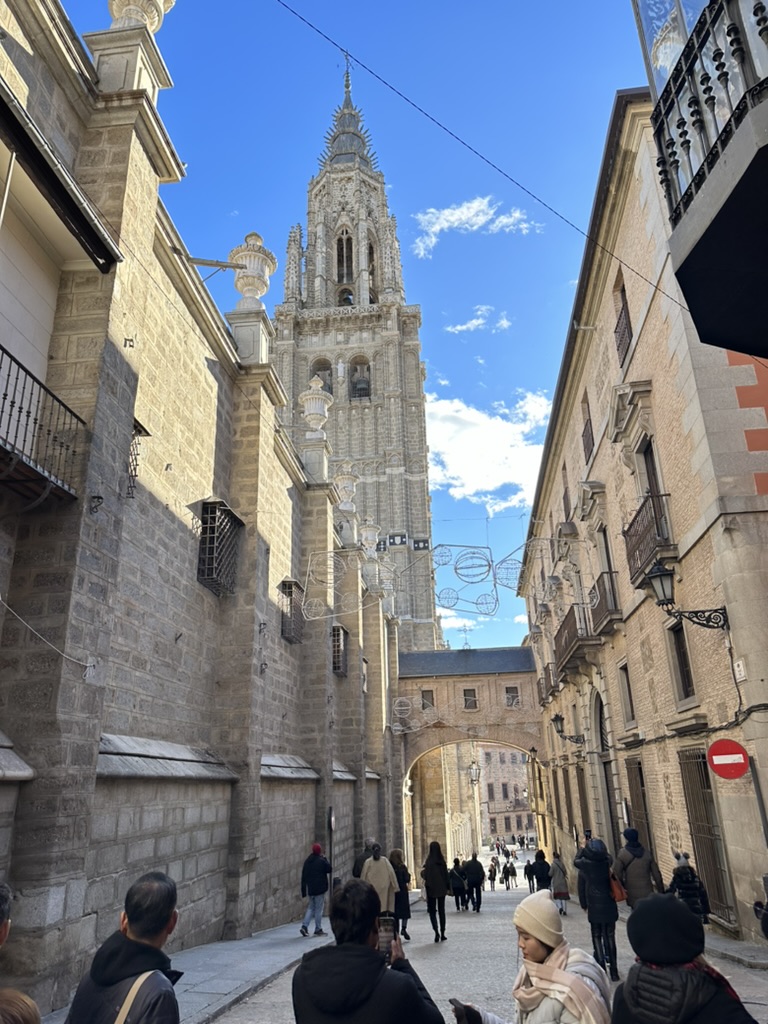
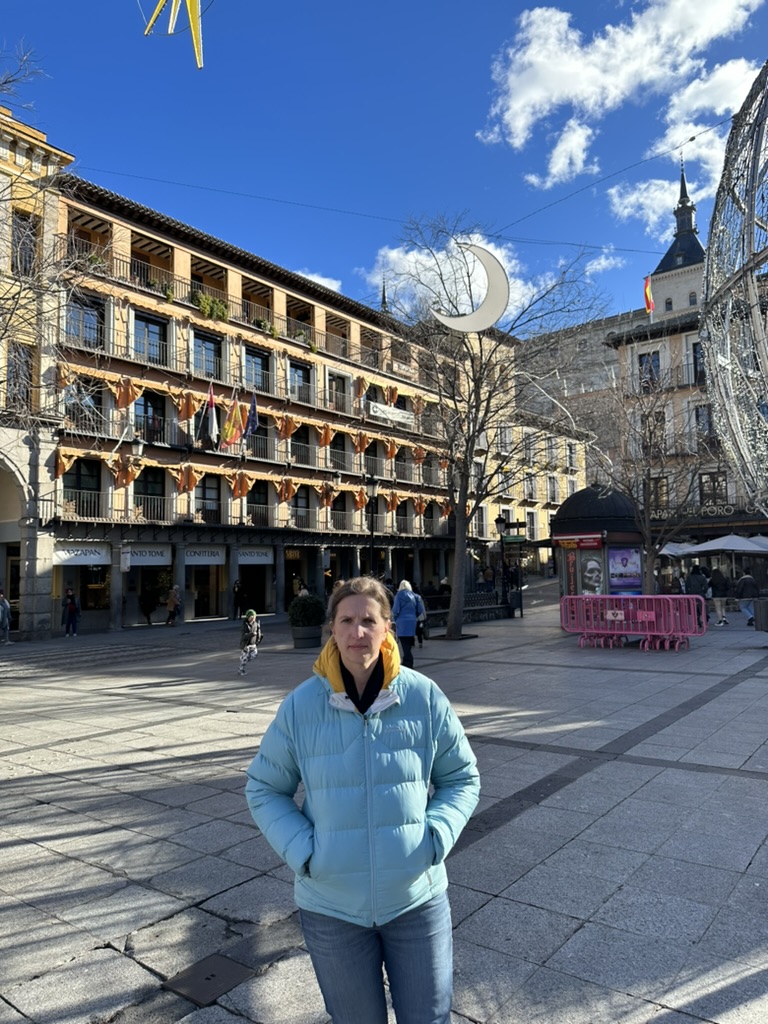
Next up the Toledo cathedral
- This was a good sized Latin cross cathedral but not as big as the one Sevilla
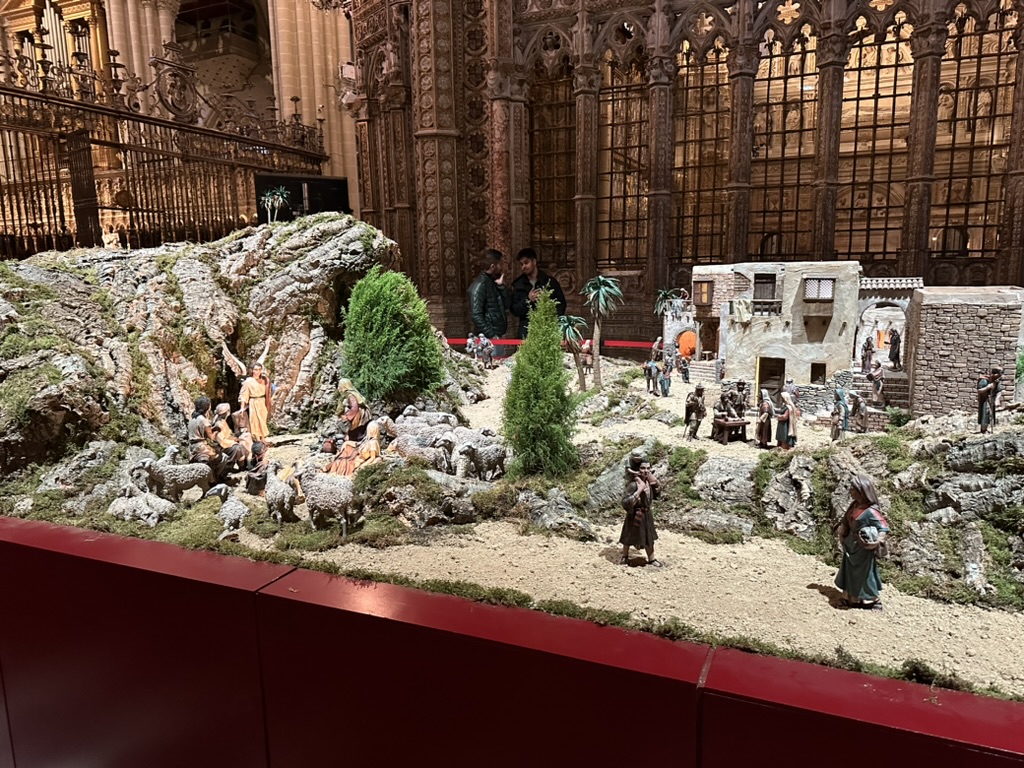
- There was a nice manger scene still up from Christmas. It spanned a whole village with different areas for the nativity, the Shepard and the wise men. It even had lights and running water
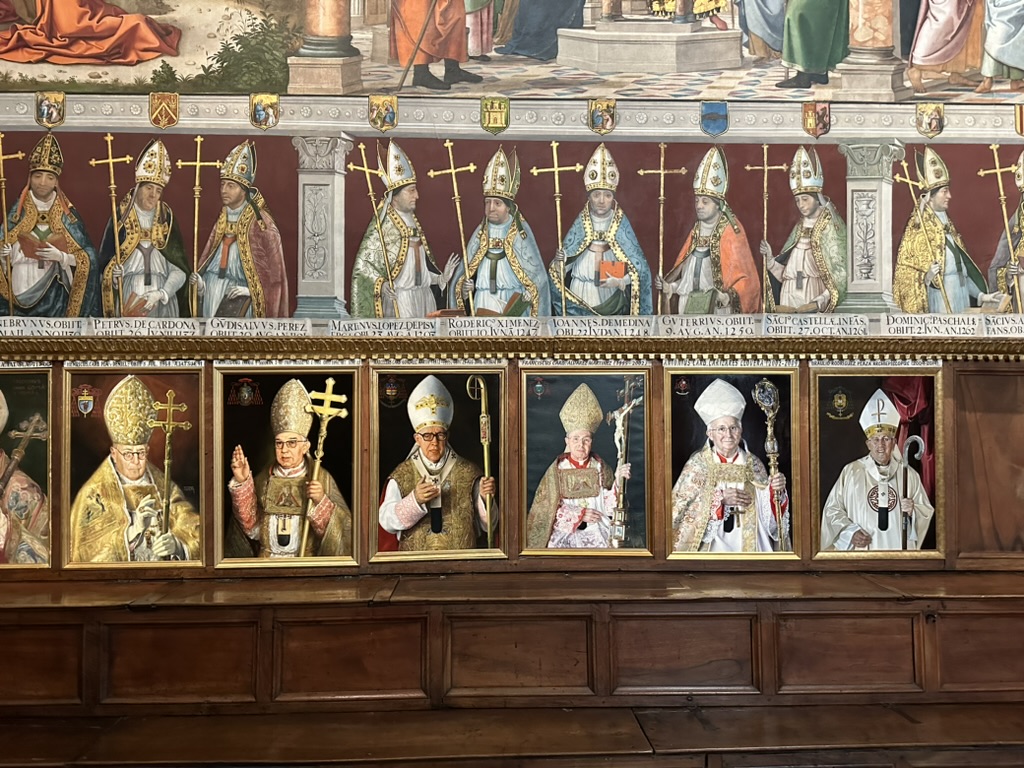
- A room with paintings of the history of the bishops. Interesting to see what styles had changed over time and what had remained consistent. There was a seat of honour (probably for the current bishop to sit in when holding court) and I had to hold Lisa back from jumping into it
- A very ornate gold and silver contraption that is paraded around the city on religious occasions to show off to the townspeople.
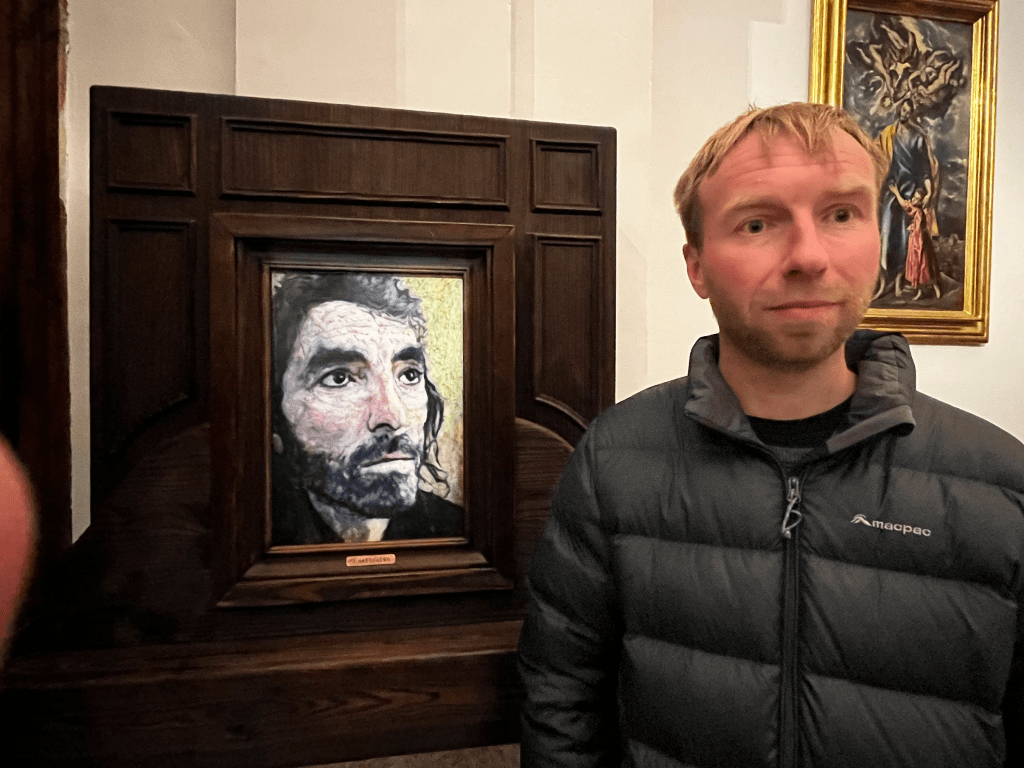
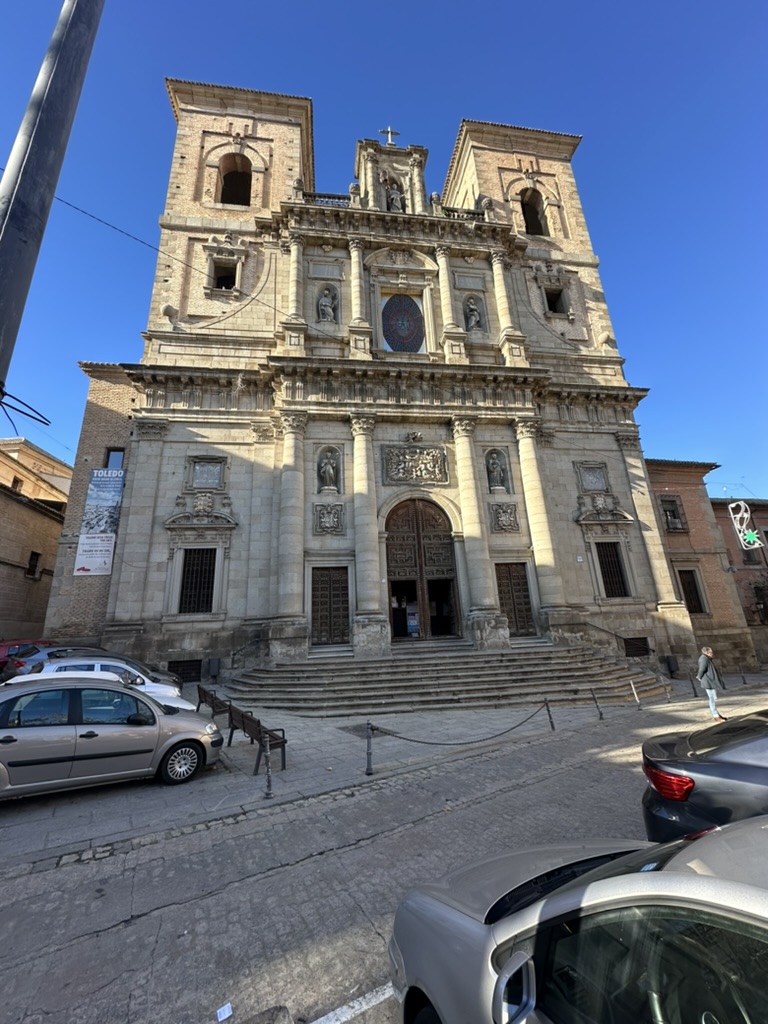
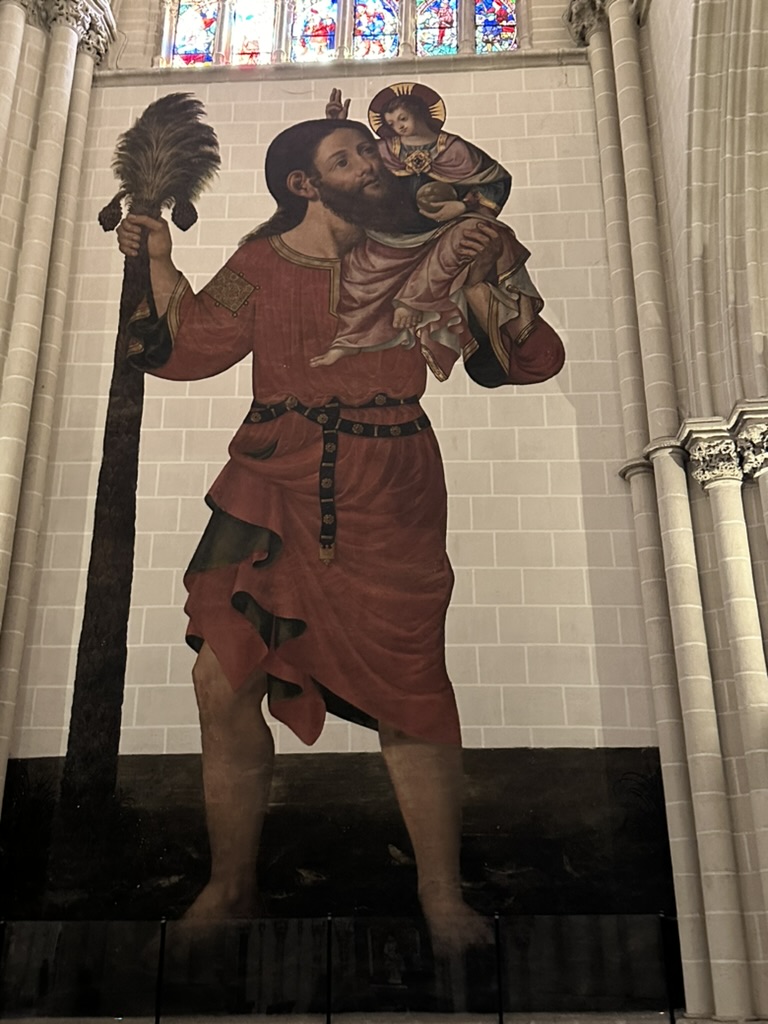

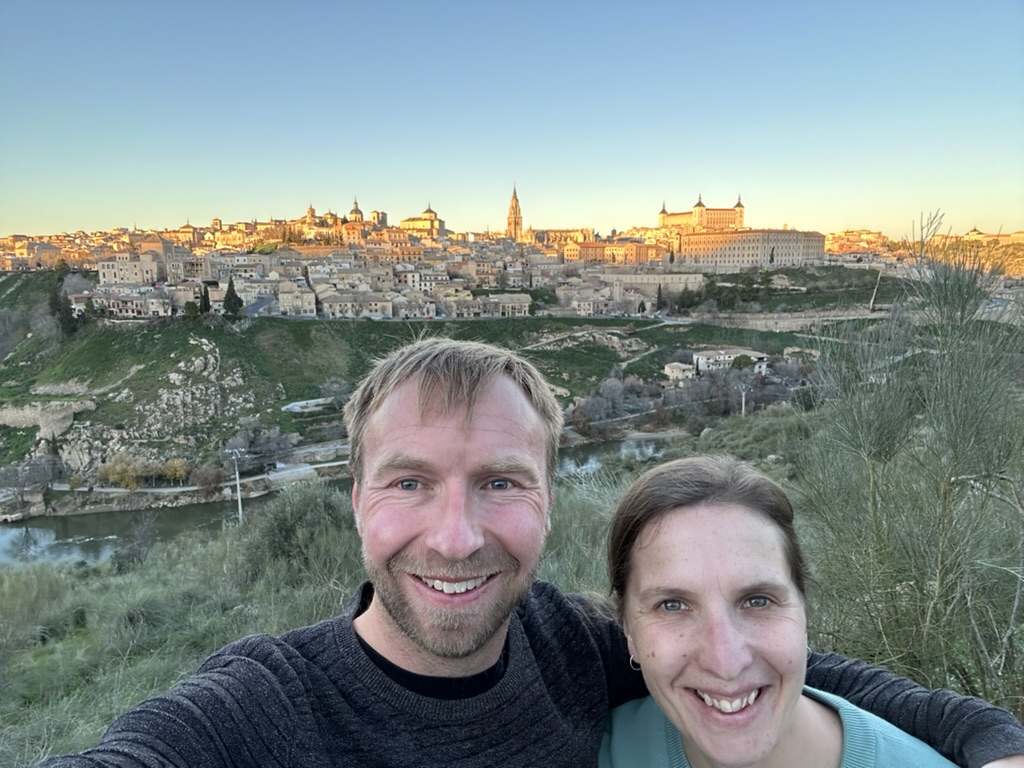
On our trip back to Madrid we drove up the hills behind the city to get some final panoramic photos of the city.
Once back in Madrid we watched everyone get off the bus and leave except for the Americans who all went and tipped the guide. Clearly not required but so ingrained that they can’t help but do it!
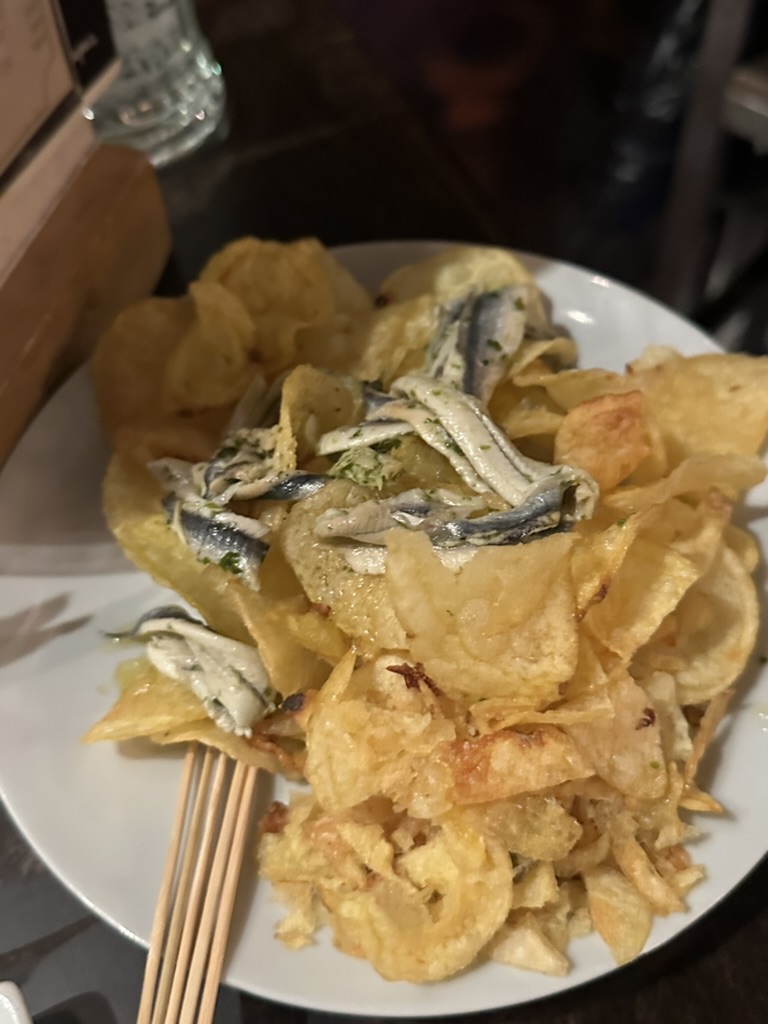
We headed to the Plaza of Santa Ana for dinner as my research had shown this as a good location with lots of restaurants. Turns out it was where we had the Italian the precious day but we hadn’t gone further beyond the first restaurant we found. We walked around the square checking out our options which were exclusively tapas places. They all looked very similar so in the end we just chose one at random. The service wasn’t great and they bought us out some fish on top of potatoes crisps – this disgusted Lisa and she refused to do anything more until I had hidden the plate behind the menu on the table so that she wouldn’t have to see it. I had a toasted sandwich with pork, onion and cheese – it was pretty tasty. Lisa had nachos with guacamole which she was not a fan of. Overall not our best meal.
8 January 2024
A bit of a lie in this morning as we didn’t have anywhere pressing to be. Did some washing at a laundromat, it feels so good to have all clean clothes again!
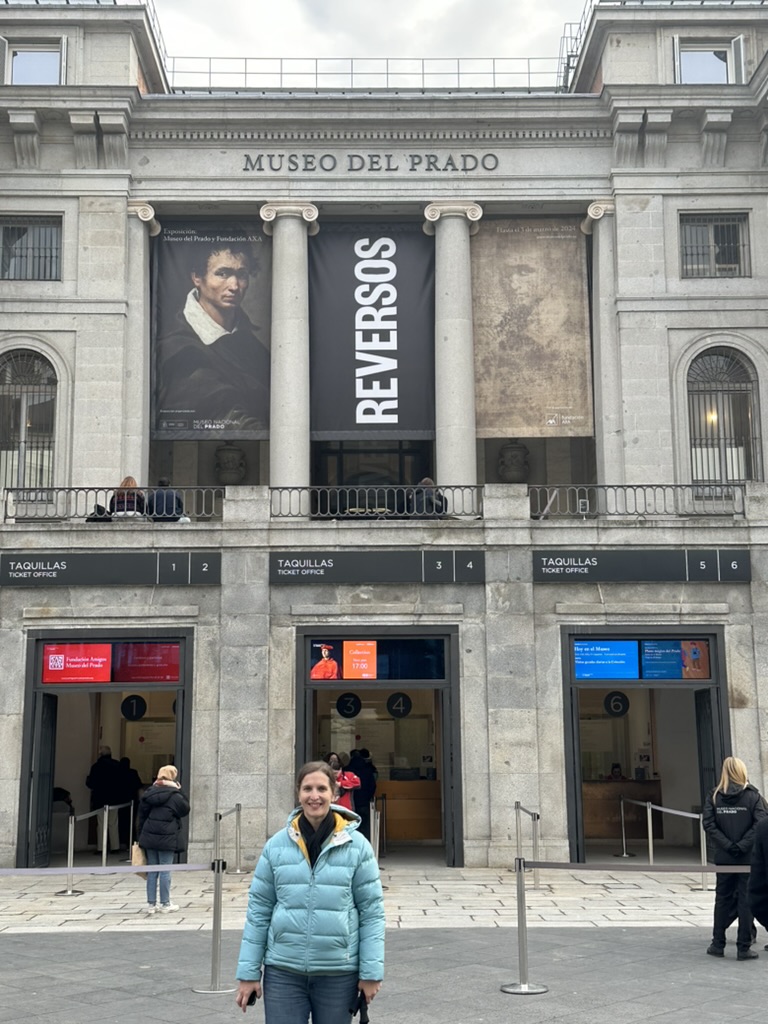
There are many great museums in Madrid but we hadn’t made it to any of them. We needed to do at least do the biggest one and so we booked in for a guided tour of the Prado which is an art museum that exhibits the Spanish royal collection. Lunch was at the museum cafe – food was ok but expensive.
The guide for our tour was Esther who worked in the museum. The tour focused on ten of the masterpieces in the collection. This was good as it kept the tour focused and enabled us to spend enough time to appreciate the paintings without feeling rushed. The museum prohibited photos, which was a weird rule and made it difficult to capture what we were seeing.
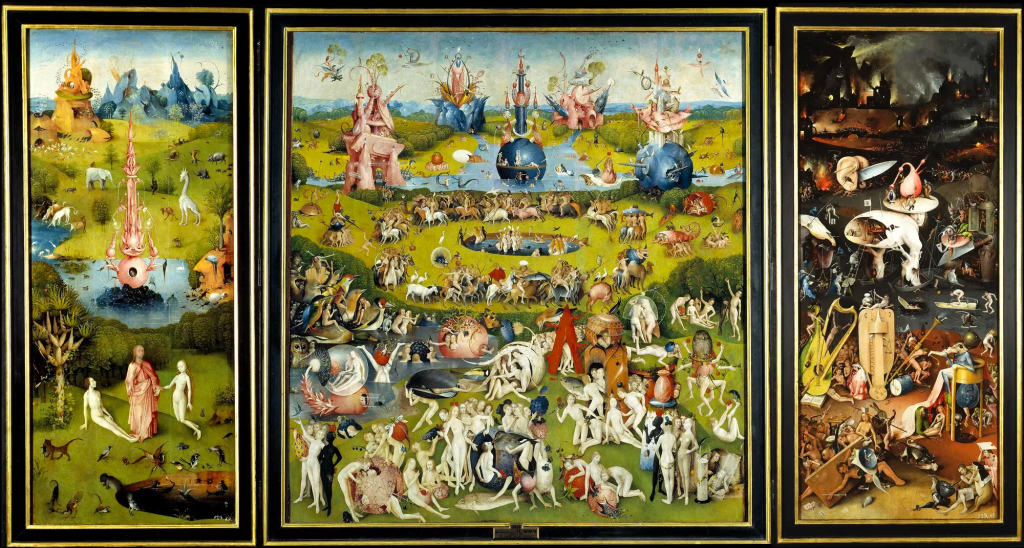
- The Garden of Earthly Delights by Bosco. Three parts to the painting – left is paradise, the middle is earth showing people trying to get ahead and being tempted by sins, then the right side shows hell and damnation. The painting is very detailed and interesting. It was painted for an uncle who gave it to his nephew as a wedding gift. It was intended to convey the importance of living a virtuous Christian life and not being tempted by sins. The three parts fold together and is meant to be opened on special occasions. The outside of the canvas also has a great painting on it
- There was a picture of Jesus being taken off the cross. This painting had amazing details in the form of the clothing, the blood and in particular the tears of the people
- A massive picture of Jesus washing feet at the last supper. This was very interesting as the perspective seemed to change as you viewed the painting from different positions. It was meant to be viewed from below on the right which has Jesus in the prime position. Viewing the painting from the other side presents a very different focus. Hard to describe but incredible to see in person
- Painting by Velazquez of the royal princesses. Was interesting as it had a mirror in the painting which shows the king and queen – this was effective for including them in the scene without them dominating. But, also the mirror invited us to imagine ourselves viewing it and being reflected back. There were also two paintings depicted on the walls within the pairing. When up close you couldn’t see any detail in these paintings but moving back the light changed to show more detail. I don’t know how that works, but it is very cool
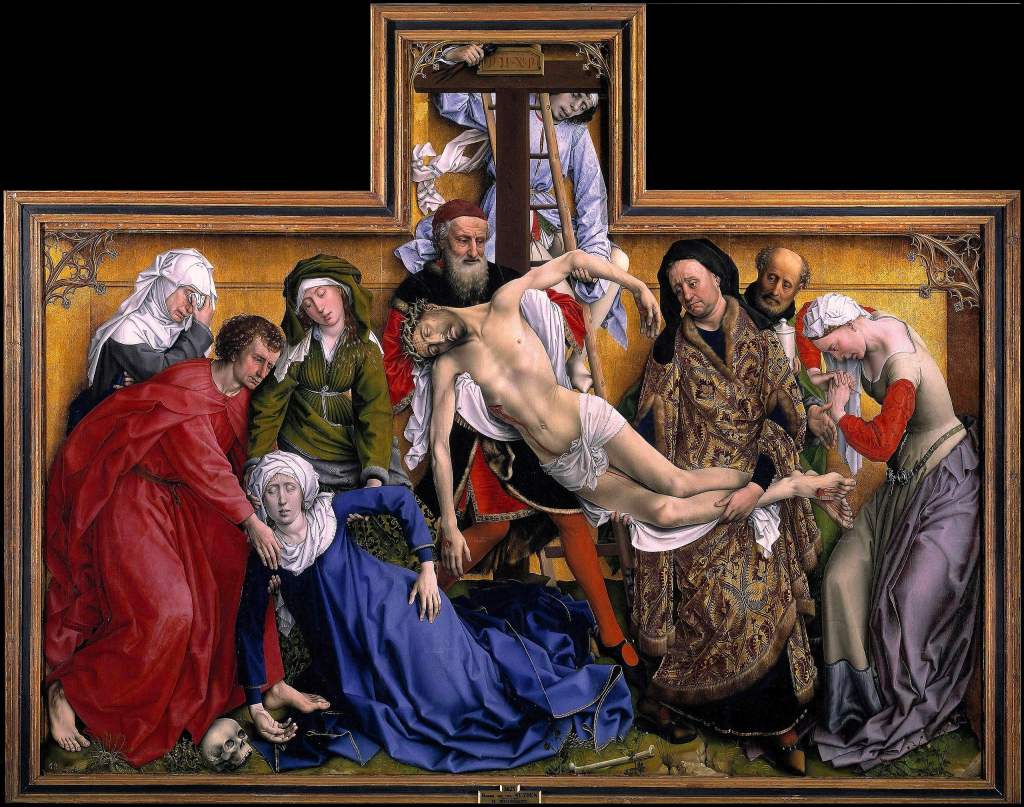
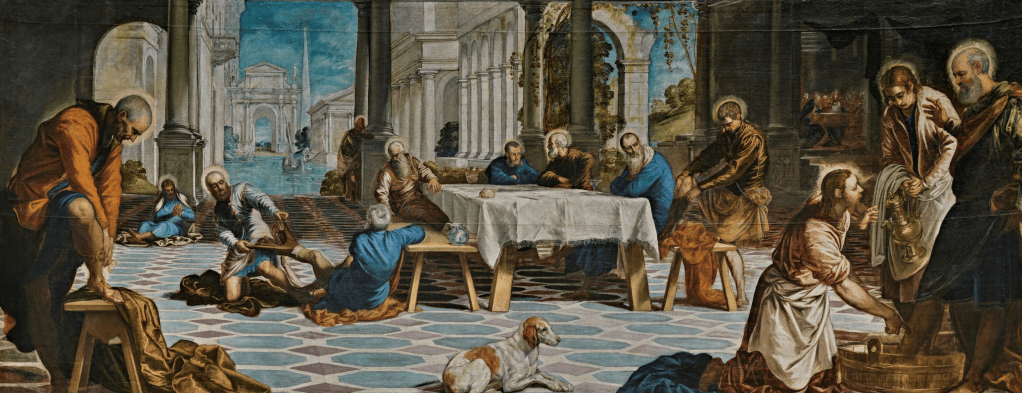
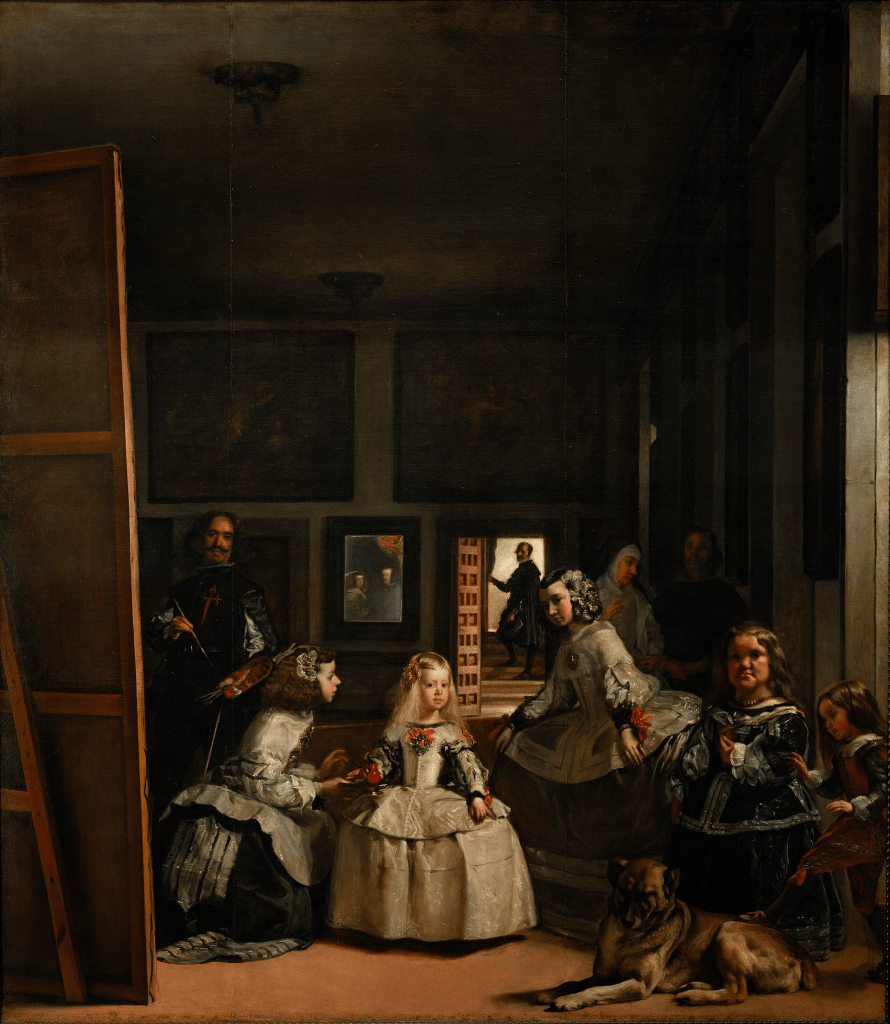
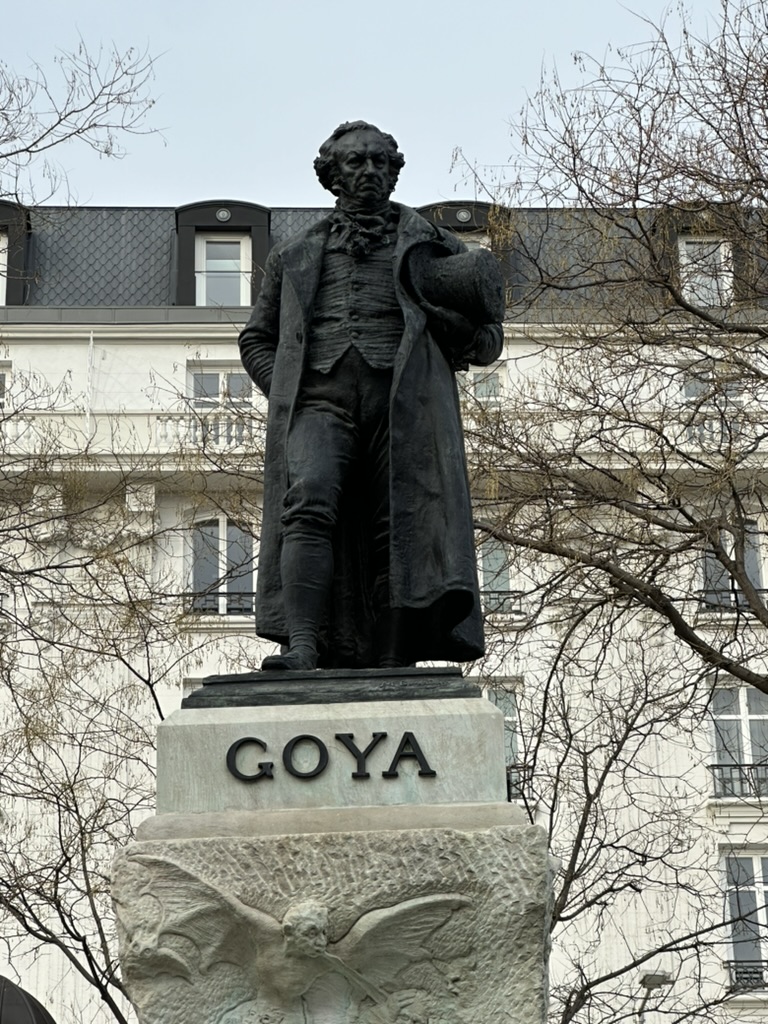
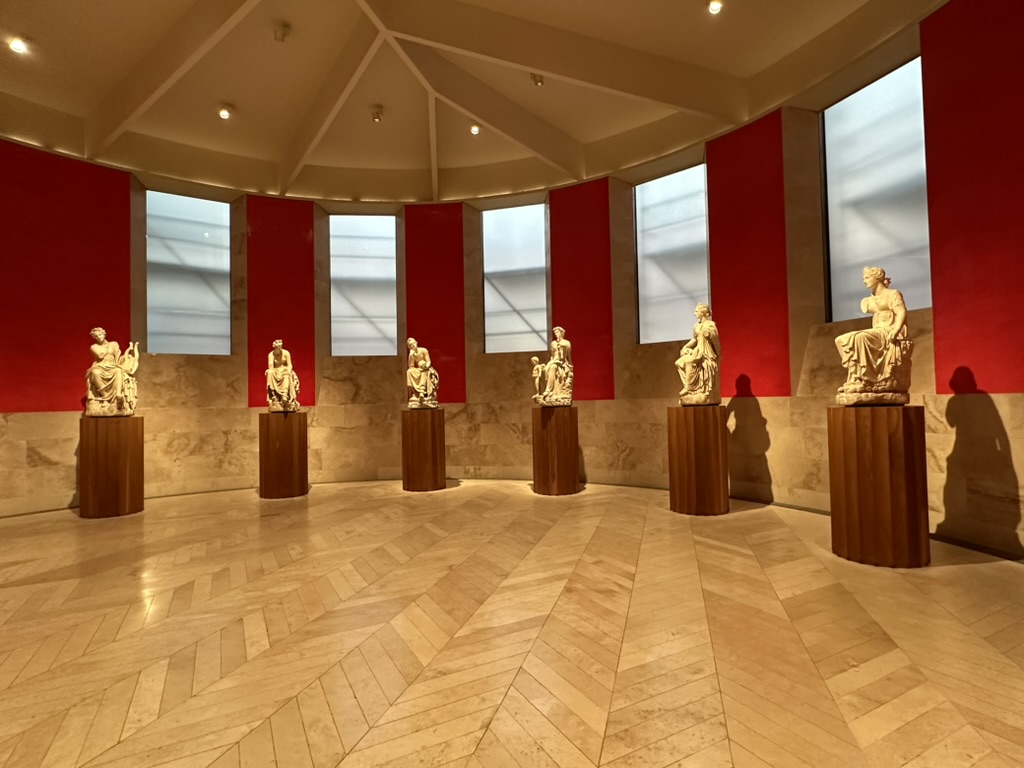
After the tour we did our own individual exploration using the audio guides. The museum mostly focused on Spanish painters and some of the included artists were: Velazquez, Goya, Bosco, El Greco, Raphael and Ruebens.
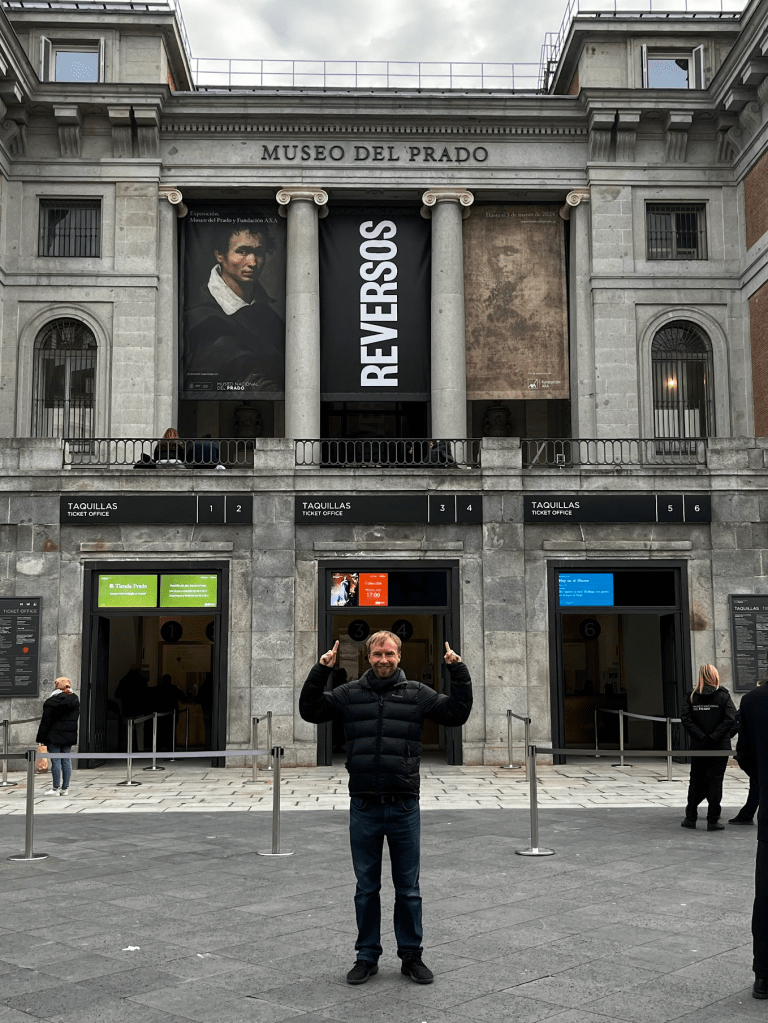
In the evening we had a tapas and drinks tour. This was meant to have been on our first night so that we could understand tapas and Spanish food. while we weren’t in the right frame of mind to do it then, it would definitely have been more useful earlier in the trip and might have avoided some of our dinner fiascos!
There were five of us on the tour including an English couple and a lady from Berlin who was originally Spanish. Our guide Genk was from Istanbul and the only person in Spain who had no interest in football!
We went to four taverns within a few hundred meters on a street that had hundreds of restaurants. This was in a non touristy area to give a more authentic experience. The taverns were up to 107 years old and often kept in the family for that whole time.
First stop
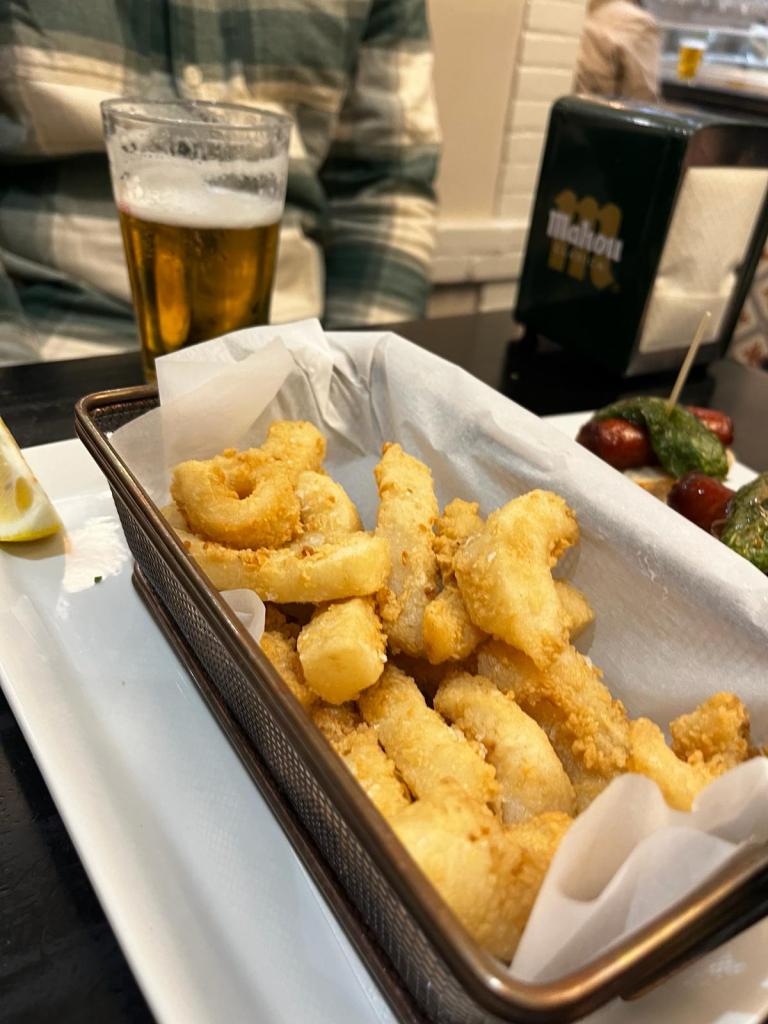
- We had one of the local Madrid beers called Mahou. It was very nice and easy to drink
- A sausage and pepper on bread – very tasty
- Calamari. Lisa had said at the start she wasn’t a seafood fan but even she had a few pieces
Second stop
- White Spanish wine. This was interesting as it was right in the middle of being dry, citrus and sweet. A nice palate cleanser
- Iberian ham on bread
- Extra virgin olive oil with bread. This was green olive oil as it was so pure
- Ham and cheese croquettes. These were absolutely delicious
Third stop
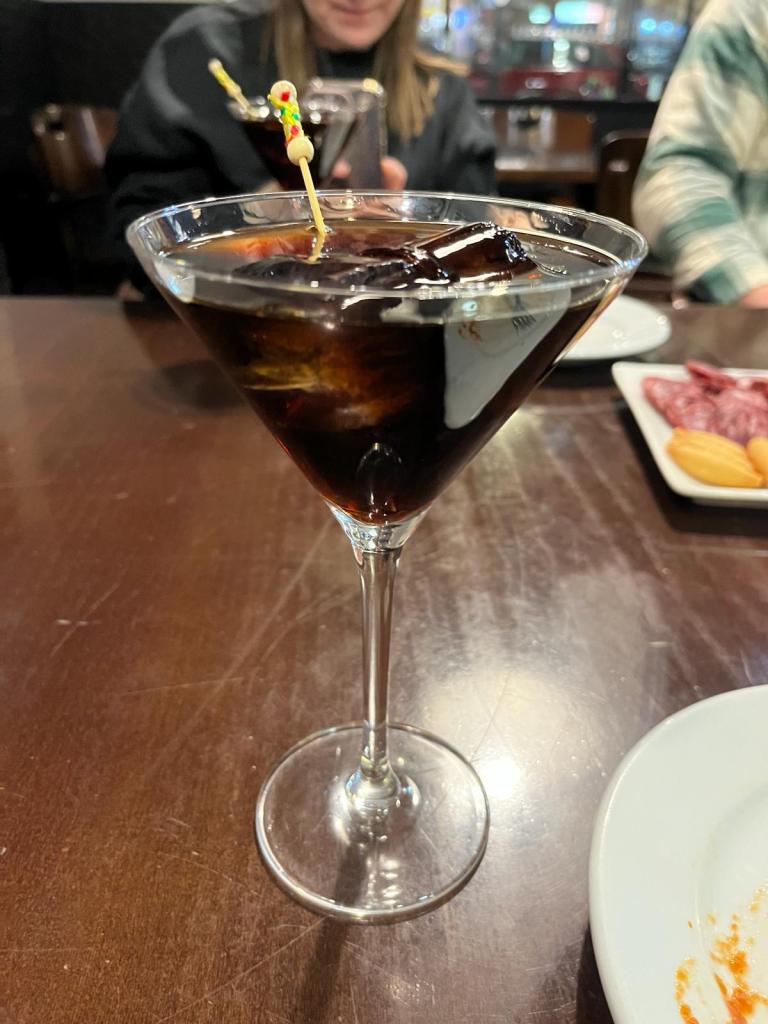
- Spanish vermouth which is apparently completely different from Italian vermouth. They had an elaborate routine for serving this. It tasted ok – familiar but I was unable to place from where. Definitely difficult to drink and not something I would order again
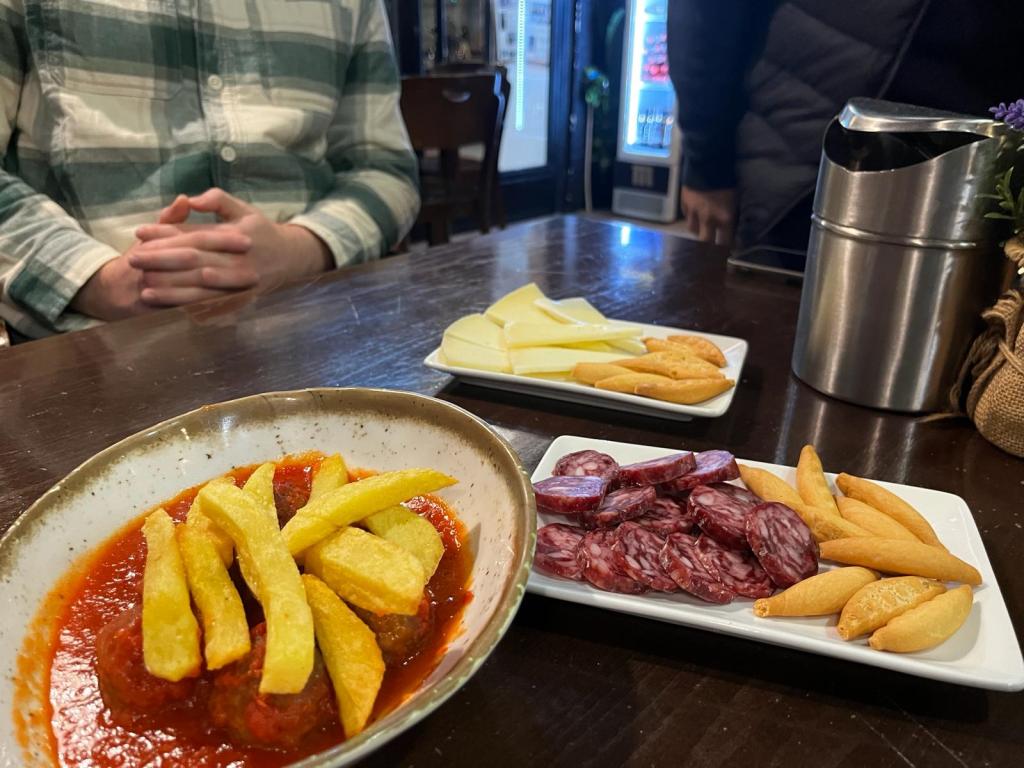
- Cheese and chorizo
- Meatballs with potatoes and a tomato sauce
Fourth stop
- Red wine sangria
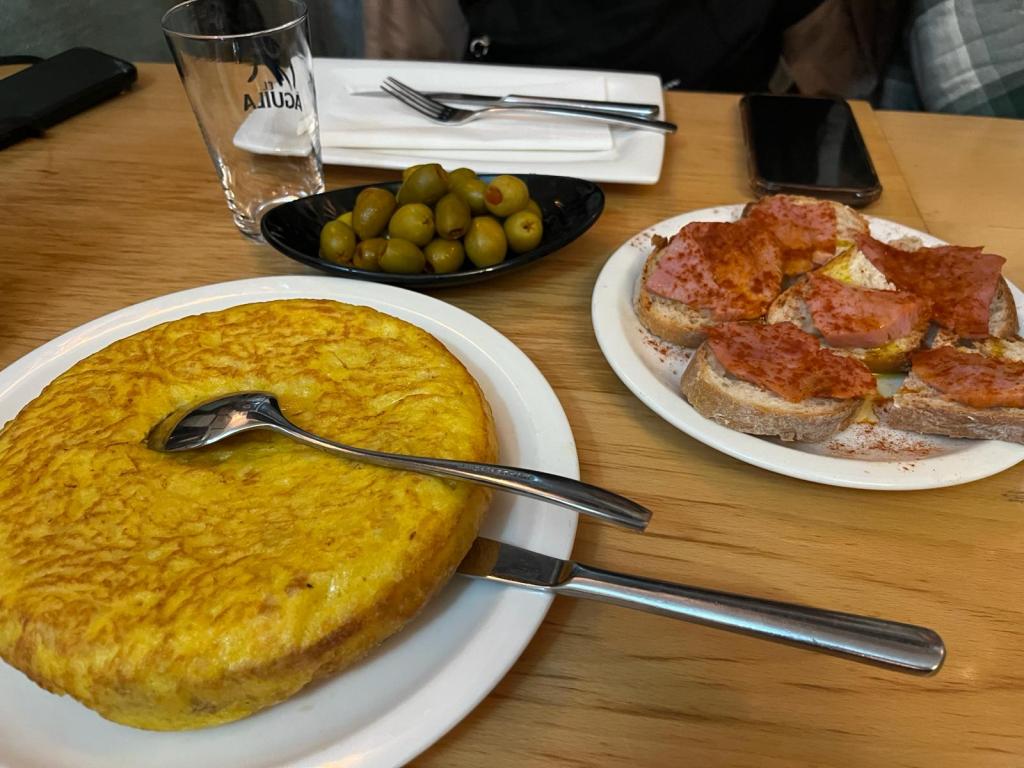
- Olives that had been marinated – I didn’t have any of these. I’m not an olive fan at all
- More Iberian ham
- Spanish omelette with potatoes. This was very nice
Fifth stop
- Jenk suggested we go for another stop for a drink at a gin and cocktail bar.
- Lisa had a gin cocktail but she didn’t enjoy it and didn’t drink much of it
- I was boring and had a beer
Overall it was a very fun tour, nice to trying the different foods/drinks. And we enjoyed getting to know the other people in our group.


Overall thoughts on Madrid
- Vibrant city. Lots of people out and about, particularly later at night which is a very Spanish approach
- People were friendly – hearing “hola” somehow just sounds friendly and inviting
- History and architecture were very interesting. Particularly the Muslim influence combined with Christianity
- Very LGBT friendly – which is unexpected for such a Catholic country. This was very similar to Barcelona last year. We did see more gay men than lesbians this time
- The metro system was really good for getting around except for the tickets. The zones didn’t make a lot of sense and when we purchased a ticket it was to a particular stop but there was no checking on exit. And when we added a ticket it was only valid for that day – which was really frustrating. In hindsight we souls have purchased a ten trip pass but didn’t realise that at the start
 Matt and Lisa's Adventures
Leave a comment